Betsy DeVos entered national politics with a financial background that already placed her among the wealthiest figures to hold public office in the United States. Unlike many political leaders who build wealth gradually through careers in law or business, DeVos’s financial standing is closely tied to family fortune, long-term investments, and her marriage into another influential business dynasty.
Her appointment as Secretary of Education under Donald Trump brought her into the national spotlight, where her policies and decisions were widely debated. However, her net worth tells a broader story about the intersection of wealth, influence, and political power.
Understanding Betsy DeVos’s financial profile requires examining both her personal business background and the extensive resources of her family network. Her career highlights how private wealth can shape public roles while also influencing policy, philanthropy, and long-term legacy.
Early life and family background shaped her financial foundation
Betsy DeVos was born into the Prince family, a name closely associated with significant business success in the United States. Her father, Edgar Prince, was the founder of a major manufacturing company that contributed to the family’s wealth. This early exposure to business and finance provided a strong foundation for her future endeavors.
Growing up in a financially secure environment allowed DeVos to develop an understanding of wealth management and investment strategies from an early age. This background also gave her access to networks that would later support her career.
Her upbringing emphasized both business and philanthropy, reflecting a common approach among wealthy families. These values would later influence her involvement in charitable initiatives and political activities.
The Prince family’s financial success created opportunities that extended beyond traditional career paths. For DeVos, this meant entering adulthood with resources and connections that many individuals do not have.

This foundation played a crucial role in shaping her net worth. It established a baseline of wealth that would continue to grow through investments and partnerships.
Marriage into the DeVos family expanded her financial reach
Betsy DeVos’s marriage to Dick DeVos significantly expanded her financial influence. The DeVos family is best known for its association with Amway, a global business that has generated substantial wealth over decades.
Through this marriage, DeVos became part of one of the most prominent business families in the United States. The combined resources of the Prince and DeVos families created a powerful financial network.
The DeVos family’s wealth is not limited to a single company. It includes investments across various sectors, including manufacturing, real estate, and finance. This diversification contributes to long-term financial stability.
Marriage into such a network provides access to additional opportunities for growth. It also enhances influence in both business and political circles.
For Betsy DeVos, this partnership has been a key factor in her net worth. It illustrates how wealth at this level is often interconnected through family relationships and shared ventures.
Betsy DeVos’s net worth reflects a vast and diversified portfolio
Betsy DeVos’s net worth is widely estimated to be in the range of $1 billion to $2 billion, though exact figures vary depending on financial disclosures and market conditions. This places her among the wealthiest individuals to serve in a U.S. cabinet position.
Her financial assets include investments in a wide range of industries. These include manufacturing, technology, and financial services, among others. Such diversification is typical of high-net-worth individuals seeking to maintain and grow their wealth.
In addition to investments, her net worth includes real estate holdings and other tangible assets. These properties contribute to both financial stability and long-term value.
Public financial disclosures during her confirmation process provided insight into the scale of her wealth. These documents revealed extensive holdings across multiple sectors.
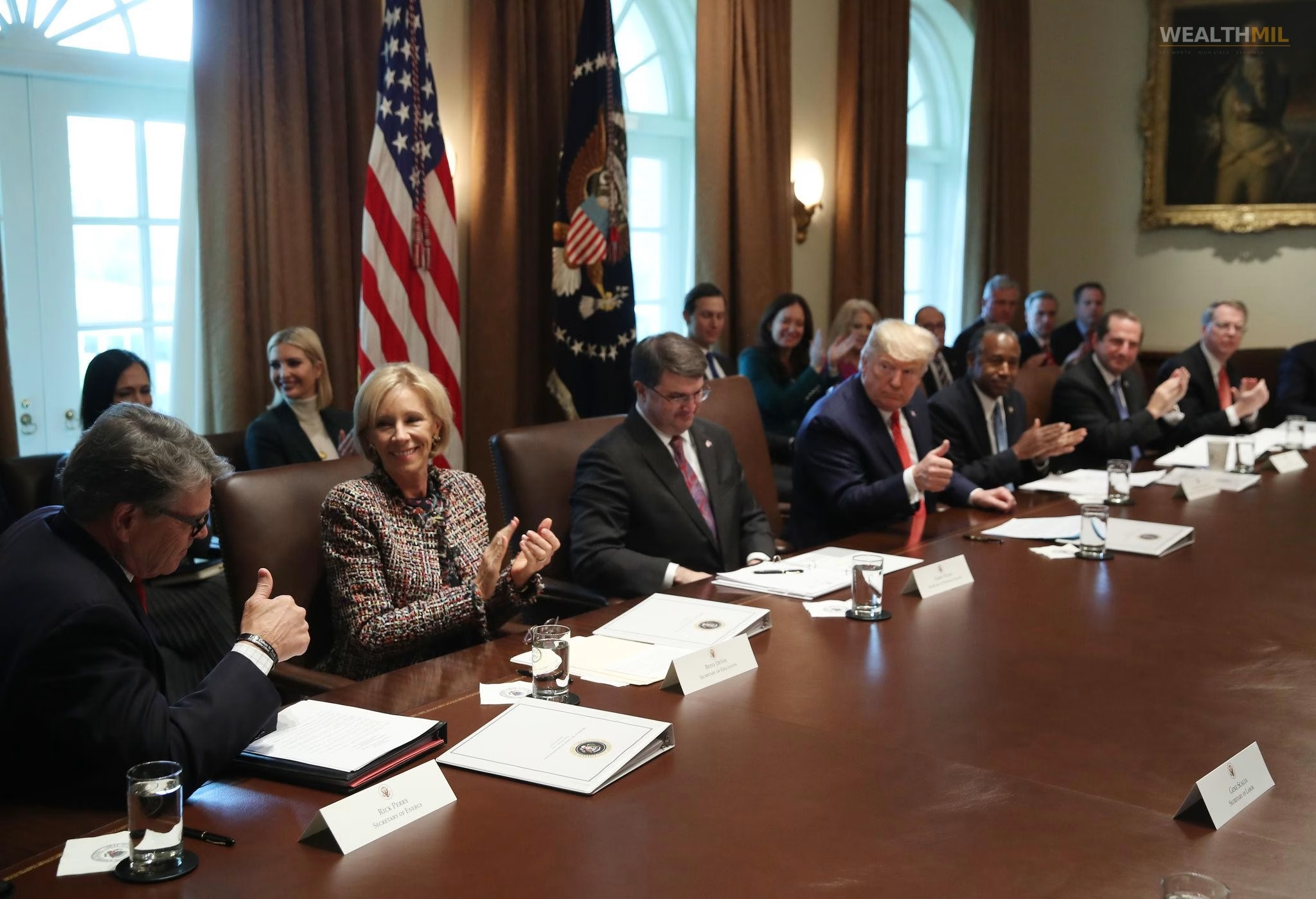
Her net worth reflects not only personal earnings but also the cumulative impact of family wealth and strategic investment. It highlights how large fortunes are often built and sustained over generations.
Transition from business influence to political power
Before entering government, Betsy DeVos was actively involved in political advocacy and philanthropy. She supported various initiatives related to education reform, particularly school choice and charter schools.
Her appointment as Secretary of Education marked a significant shift from private influence to public authority. In this role, she was responsible for shaping national education policy.
This transition brought increased scrutiny to her financial background. Critics and supporters alike examined how her wealth might influence her decisions.
Her tenure in government demonstrated the complexities of balancing private wealth with public responsibility. Policies and decisions were often viewed through the lens of her financial background.
Despite these challenges, her role highlighted how individuals with significant resources can move into positions of political power. It also underscored the importance of transparency in such transitions.
Policy influence and public perception
Betsy DeVos’s policies as Secretary of Education were often closely tied to her long-standing advocacy for school choice. She supported initiatives that expanded charter schools and voucher programs.
These policies generated significant debate. Supporters argued that they provided more options for families, while critics raised concerns about their impact on public education.
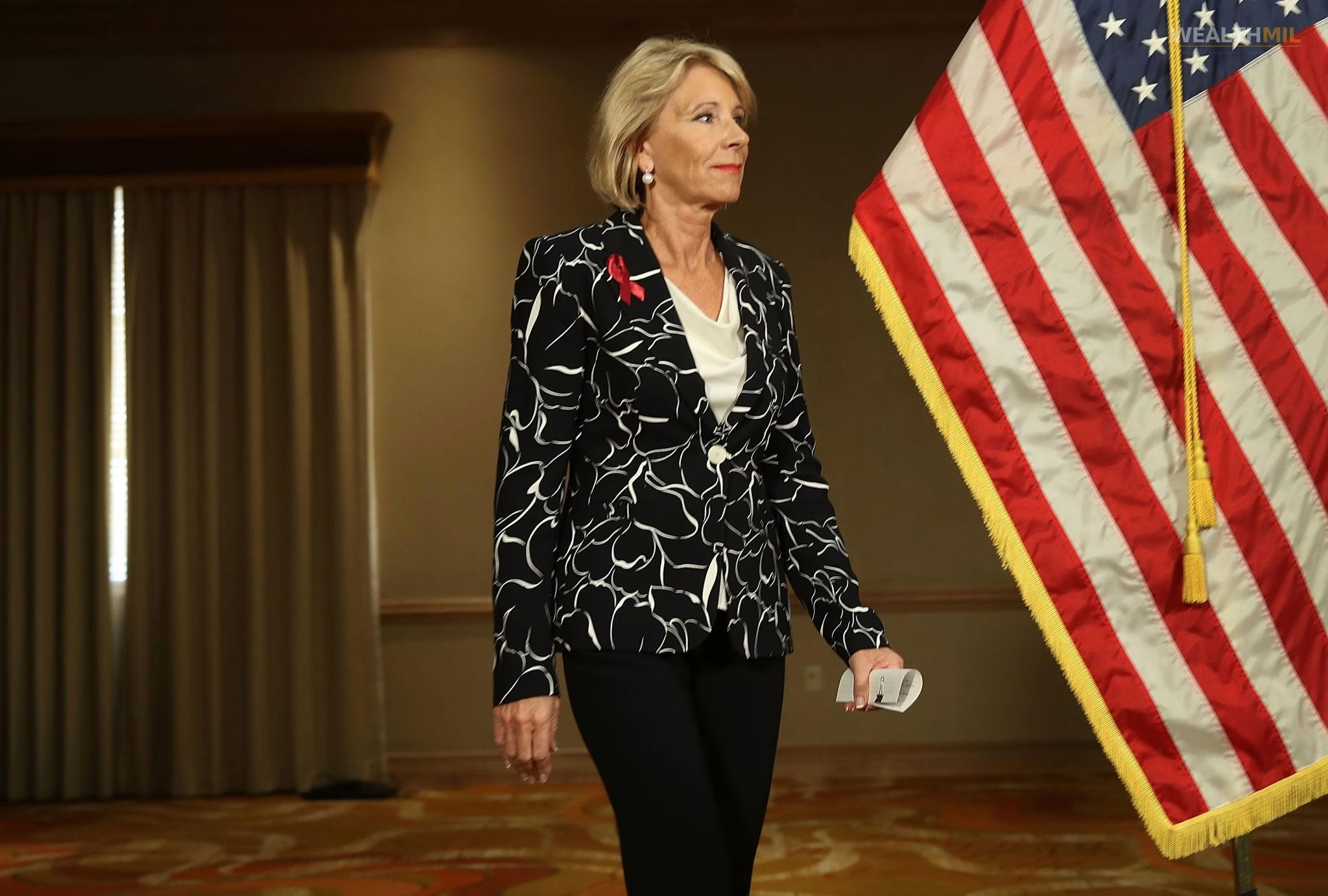
Her financial background played a role in shaping public perception. Some viewed her wealth as a sign of independence, while others saw it as a potential conflict of interest.
Media coverage frequently highlighted her net worth, linking it to her policy positions. This attention reflects the broader relationship between wealth and influence in politics.
Public perception is a critical factor in political careers. For DeVos, managing this perception was an ongoing challenge throughout her tenure.
Philanthropy and charitable contributions
Philanthropy has been a significant part of Betsy DeVos’s career. She and her family have donated to various causes, particularly in education and community development.
Charitable giving is often a key component of wealth management for high-net-worth individuals. It allows them to contribute to social causes while also shaping their public image.
The DeVos family has supported institutions and initiatives that align with their values. These contributions have had a measurable impact on communities and organizations.
Philanthropy also extends influence beyond business and politics. It allows individuals to shape conversations around important issues.
For DeVos, charitable work is both a reflection of her values and a strategic use of resources. It highlights how wealth can be leveraged for broader societal impact.
Financial transparency and ethics in public office
Serving in a government role requires a high level of financial transparency. Betsy DeVos was required to disclose her assets and divest from certain holdings to avoid conflicts of interest.
These requirements are designed to ensure that public officials act in the best interests of the country. They also provide insight into the financial backgrounds of those in power.
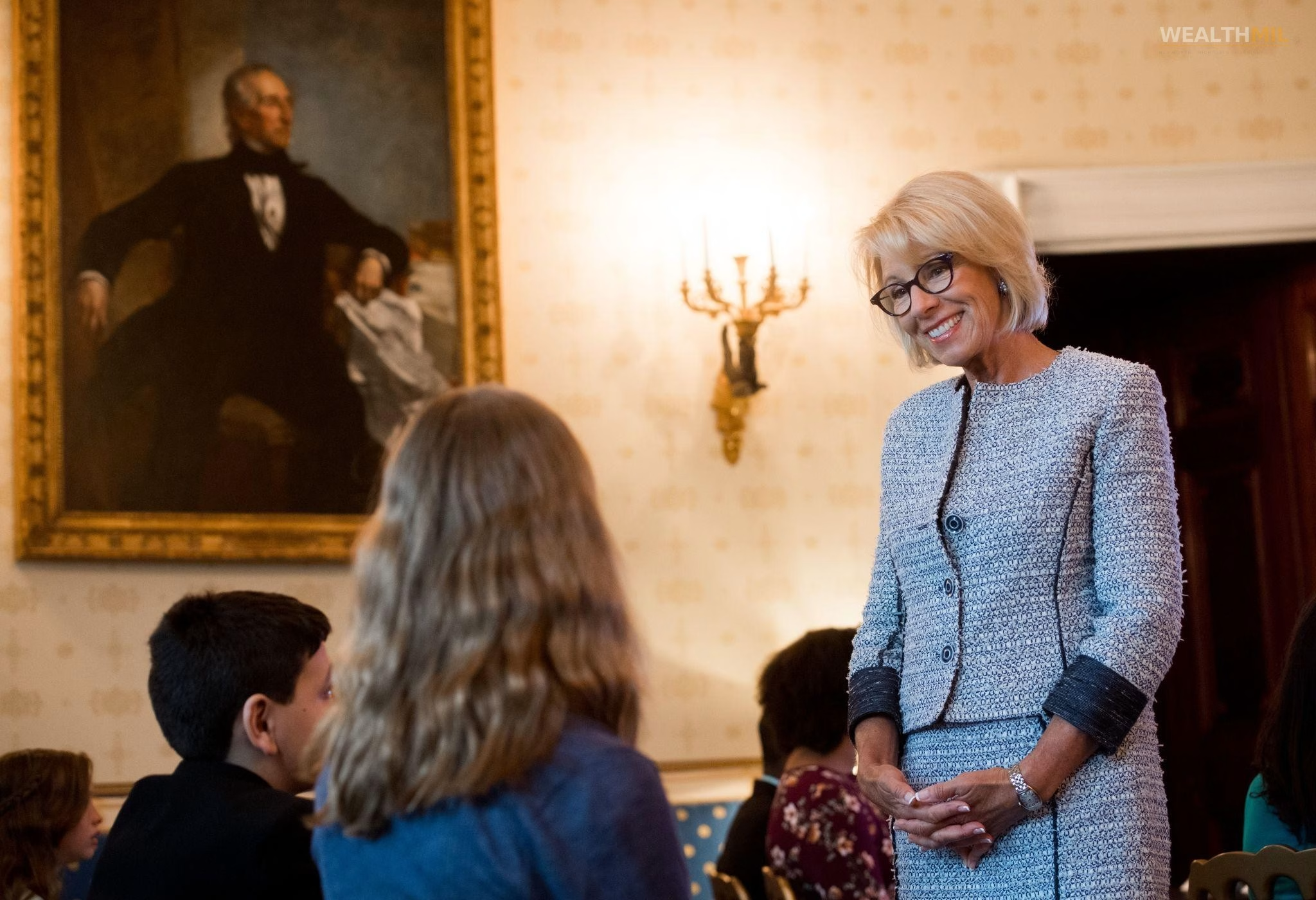
DeVos’s disclosures revealed the complexity of managing a large fortune while serving in government. Divestment and compliance with ethics rules can be challenging for individuals with extensive assets.
Transparency is essential for maintaining public trust. It allows citizens to understand how financial interests may influence policy decisions.
Her experience highlights the importance of clear guidelines and accountability in political systems. It also demonstrates how wealth can complicate public service roles.
The role of family wealth in shaping political influence
Family wealth plays a significant role in Betsy DeVos’s career. The combined resources of the Prince and DeVos families provide a foundation that extends beyond individual achievements.
This wealth enables participation in political activities, including campaign contributions and advocacy. It also provides access to influential networks.
The relationship between wealth and politics is a topic of ongoing debate. Some argue that financial resources allow for greater participation, while others raise concerns about inequality.
DeVos’s career illustrates how family wealth can shape opportunities and influence outcomes. It highlights the broader dynamics of power in political systems.
Understanding this context is essential for evaluating her impact. It provides a clearer picture of how financial resources intersect with public roles.
Betsy DeVos built a career that reflects wealth, influence, and policy impact
Betsy DeVos’s journey from business and philanthropy into national politics demonstrates the complex relationship between wealth and public service. Her net worth reflects a combination of family fortune, strategic investments, and long-term financial planning.
Her role as Secretary of Education brought her financial background into the public spotlight, influencing how her policies were perceived. This intersection of wealth and governance is a defining feature of her career.
At the same time, her philanthropic efforts and advocacy work highlight the broader impact of her resources. She has used her platform to support causes that align with her values.
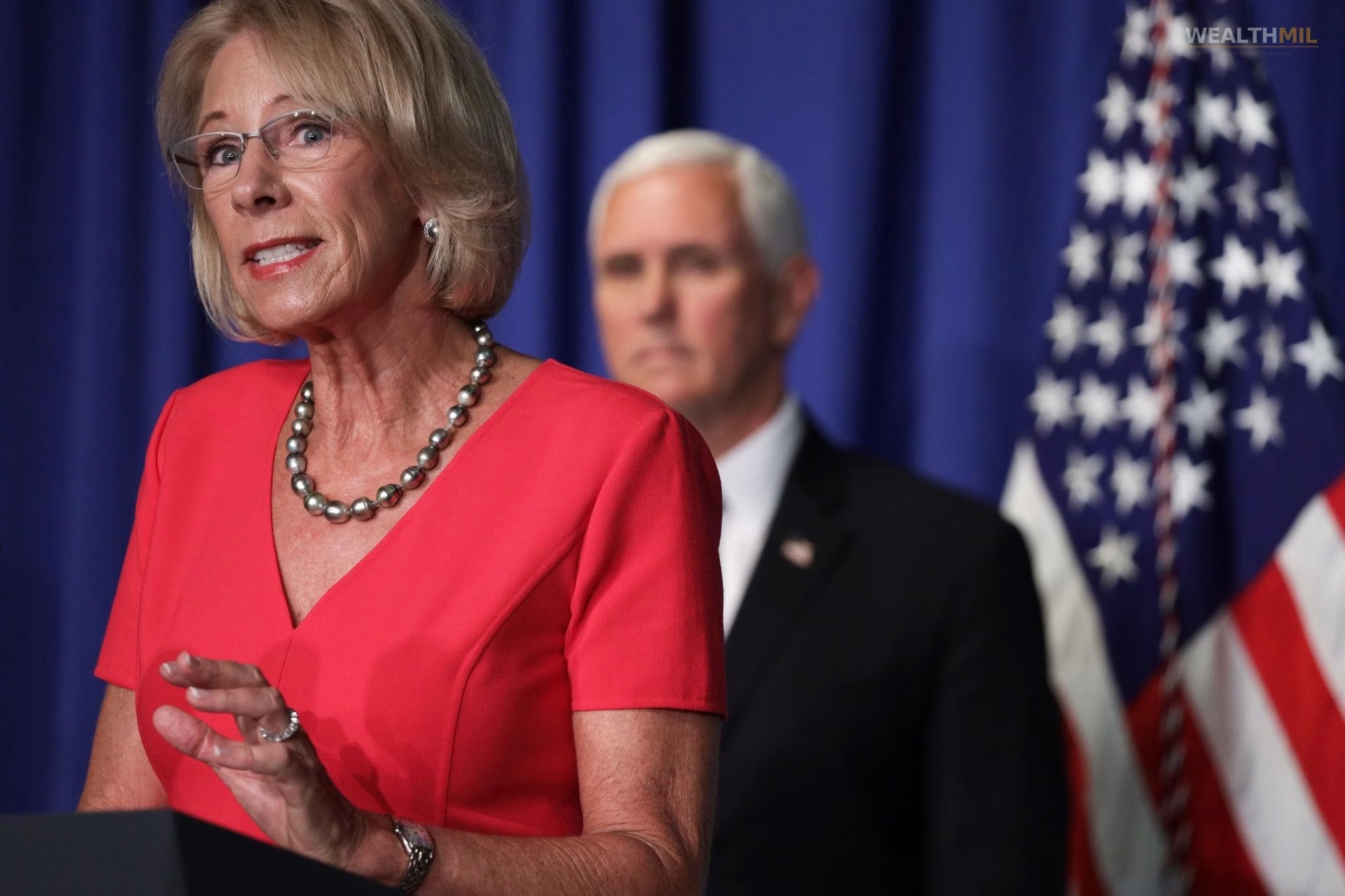
Her story provides insight into how financial power can shape political careers. It also underscores the importance of transparency and accountability in public office.
Ultimately, Betsy DeVos’s net worth is more than a measure of wealth. It reflects a life shaped by family legacy, business acumen, and the ability to operate at the highest levels of both finance and politics.4
Another important aspect of Betsy DeVos’s financial profile is how her wealth continues to evolve even outside of public office. After leaving her role in government, she returned to private life with access to the same extensive investment networks and family resources that shaped her earlier career.
This allows for ongoing growth through diversified portfolios, strategic partnerships, and long-term asset management. Unlike many former officials who rely on speaking engagements or consulting, her financial independence provides flexibility in choosing future ventures. This reinforces how large-scale wealth, especially when rooted in family fortunes, can sustain influence and opportunity well beyond a single political tenure.