Not every great business idea starts in a boardroom. Some start the moment a champagne bottle runs dry at a party and someone thinks, there has to be a better way. Stason Strong was celebrating with friends and family when he felt the disappointment of running out of champagne just as the fun was beginning.
Wondering how to extend the experience of spraying champagne, Strong used his mechanical engineering background to design a device that could do exactly that. What began as a personal project became a product, and that product eventually landed on one of the most watched business pitching stages in television history.
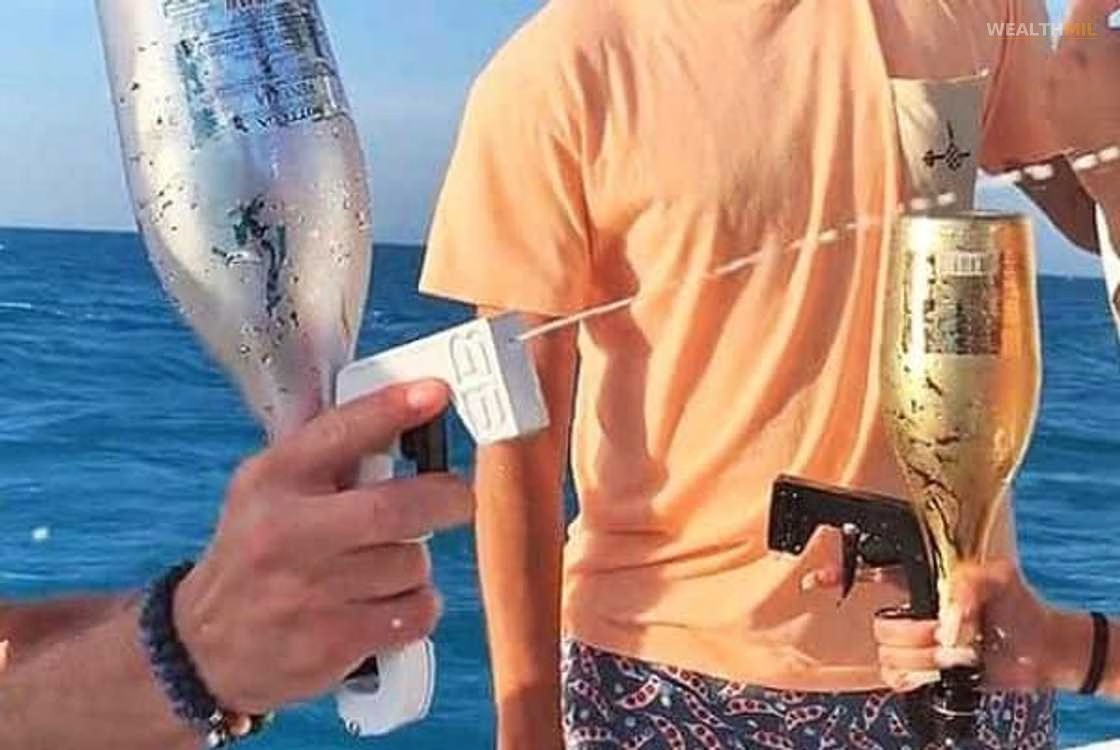
Bubbly Blaster is an attachment that fits onto a champagne bottle and makes it shoot out like a water gun, allowing the party to last longer. By the time Stason Strong and Brad Hall walked into Shark Tank, they had already built something worth paying attention to.
From a SpaceX Engineer’s Backyard to a $600,000 Valuation
Strong’s initial prototype caught the attention of his friends at SpaceX, and together they created a more advanced 3D-printed version of the device. As the invention gained popularity, Strong partnered with MBA graduate Brad Hall to turn it into a formal business, and Bubbly Blaster was officially created. The pairing made practical sense: Strong brought the engineering and the product, while Hall brought the business structure needed to scale it.
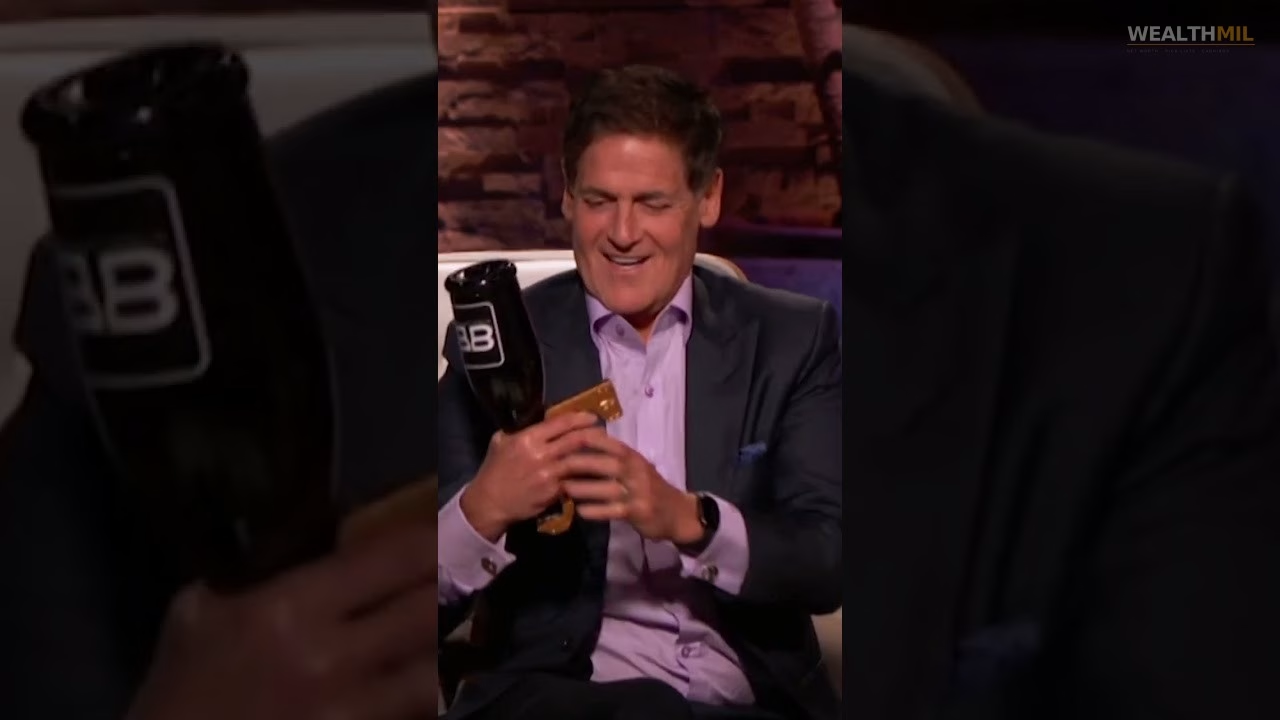
The two raised $120,000 to launch Bubbly Blaster in 2017, and around a year later the business had made $560,000 in sales through Amazon and their website. That figure was not the result of a major retail partnership or a celebrity endorsement. It came from organic demand for a product that genuinely solved a problem, which made their eventual Shark Tank pitch far more compelling than most novelty items that appear on the show.
The device can be used one-handed and is controllable and efficient thanks to a pressure-sensitive trigger. It lets users squirt up-close accurate streams or long-distance shots up to 30 feet away, and it also works as an airtight bottle stopper when not in use, which preserves the champagne. The product was not just fun, it was functional, and that combination of entertainment value and practical design gave Strong and Hall a story worth pitching.
What Happened Inside the Tank
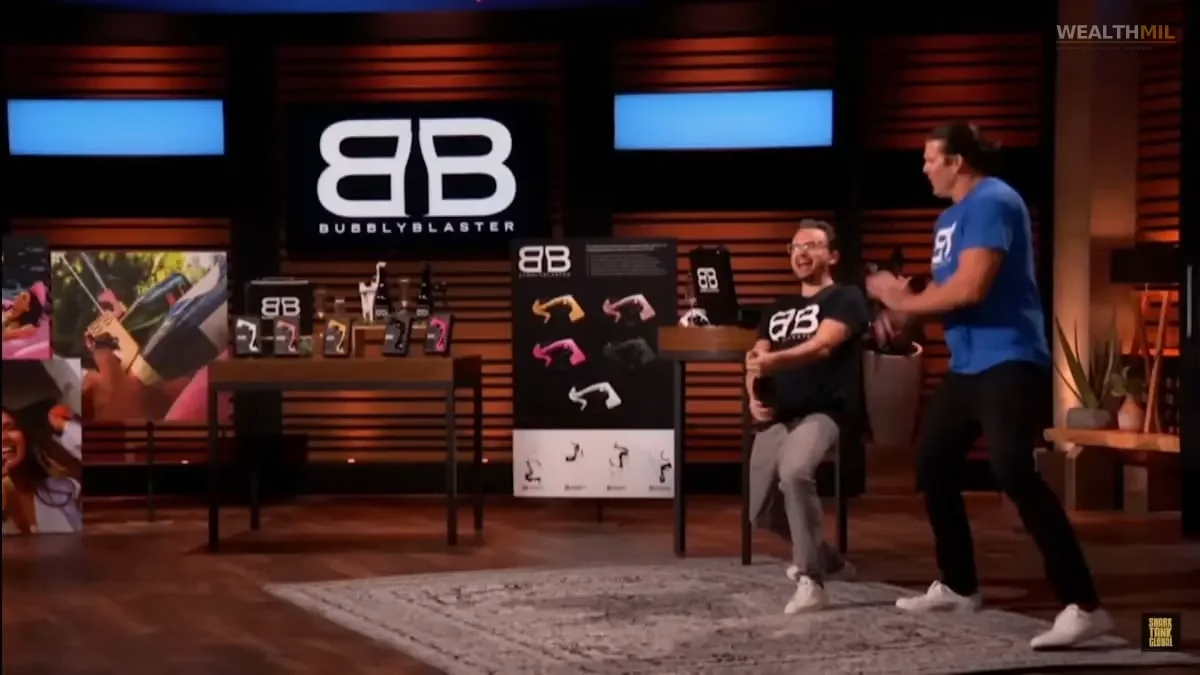
In Season 12, Episode 10 of Shark Tank, Strong and Hall presented their product to the panel of investors, seeking $120,000 for 20% equity, valuing the company at $600,000. Their pitch highlighted the product’s potential to transform celebratory events, from sports victories to weddings, by offering a cleaner and more efficient way to enjoy champagne. The founders had clearly done their homework on their audience.
Strong and Hall revealed that each Bubbly Blaster costs approximately $18 to produce and retails for $100, indicating a healthy profit margin that impressed the Sharks during the pitch. A manufacturing cost of $18 against a retail price of $99.99 is the kind of margin that makes investors lean forward, and it did exactly that inside the Tank.
Lori Greiner, Kevin O’Leary, and Barbara Corcoran opted out, citing concerns about the product’s niche market and potential scalability. Mark Cuban did not share those concerns. Cuban was first to make an offer of $120,000 for 25% equity, and when Alex Rodriguez expressed interest too, the two decided to join forces. Given that Mark owns the NBA’s Dallas Mavericks and Alex Rodriguez is a former MLB legend, the partnership felt natural for a product built around championship celebrations.
Strong and Hall countered with a request for $180,000 for the same 30% equity stake, and the Sharks agreed, finalizing the deal at $180,000 for 30% equity. The celebration that followed, complete with champagne sprayed across the set, was one of the more fitting moments in recent Shark Tank history.
What Actually Happened After the Cameras Stopped Rolling
The on-screen deal was only the beginning of the story, and like many Shark Tank agreements, the fine print told a different version. Bubbly Blaster does not appear on either Cuban or Rodriguez’s websites under the list of companies they invested in from Shark Tank, which suggests the deal may not have formally closed after the show for reasons that remain unclear. It is a reminder that a handshake on television and a signed term sheet are two very different things.
Despite the uncertainty around the investment, the Shark Tank appearance itself delivered results. After the episode aired, Bubbly Blaster saw a significant increase in website traffic, sales, and social media exposure. The show’s platform did what it almost always does for products that resonate with viewers: it turned a regional product into a nationally recognized brand almost overnight.
As of 2023, annual revenue sits between $900,000 and $1 million, and the company continues to operate with a functional website and expanding product line. Some of the newer product lines include entertainment packs, customizable aluminum fins, and ball caps, all of which are available through Bubbly Blaster’s website, Amazon, and Walmart stores. The product range has grown well beyond a single champagne attachment.
One ongoing challenge the company faces is strong competition from imitation products. Despite Bubbly Blaster holding trademarks and patents for its champagne-spraying device, a quick search on Amazon reveals many knockoff champagne guns being sold at significantly lower prices. This is a familiar problem for any Shark Tank product that demonstrates real market demand, because that demand inevitably attracts cheaper alternatives.
Bubbly Blaster’s story is ultimately about what happens when a genuinely clever product meets the right stage at the right time. Strong and Hall have since launched another company called SONU Sleep, a mattress designed with an arm slot, suggesting that both founders continue to pursue product-based entrepreneurship beyond champagne guns.
The champagne gun may not have the explosive post-Shark Tank trajectory some expected, but with annual revenues pushing toward the million-dollar mark and a product still in active circulation across major retail platforms, Stason Strong and Brad Hall proved that a party gimmick, backed by real engineering and real sales, can become a real business.
Shark Tank episodes are available to watch on ABC and Hulu.