
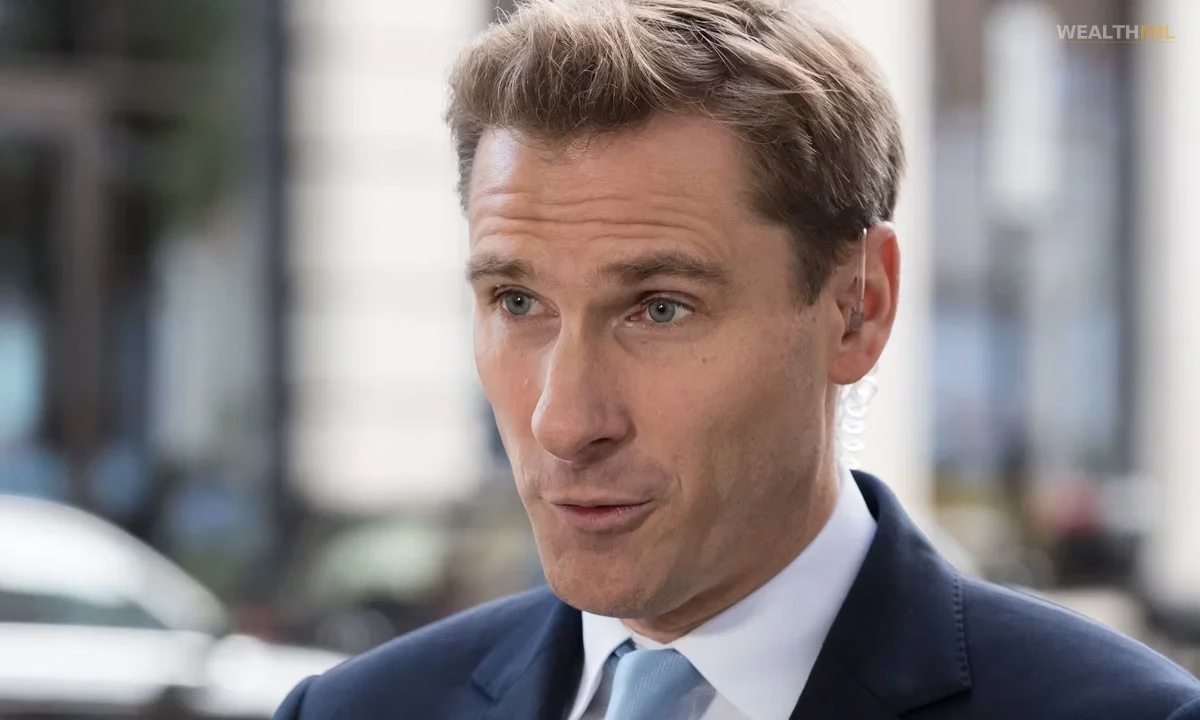
Before becoming a key figure in British politics, Chris Philp had already built a reputation in a completely different arena. Today, he is known as a senior Conservative voice on crime, immigration, and economic policy, serving as Shadow Home Secretary. But long before stepping into Parliament, Philp was making his money in the private sector through entrepreneurship, logistics, and property finance.
This contrast between business and politics is what makes his story compelling. On one side, there is the fast-moving, risk-driven world of startups and investment. On the other, the structured, scrutinized environment of public office. Philp’s journey bridges both, and the financial outcomes tell an interesting story about how wealth is created versus how public service is rewarded.
Let’s break down how Chris Philp made his money, what his net worth likely looks like, and why his two careers could not be more different.
Early Life and Education Shaped a Different Path
Chris Philp was born in 1976 in West Wickham, London, into a middle-class family. His father worked as an archaeologist, while his mother was a schoolteacher. This background provided stability, but not inherited wealth, meaning his financial success would come from his own efforts.
He attended St Olave’s and St Saviour’s Grammar School before earning a place at University College, Oxford. There, he studied physics and graduated with first-class honours. He later completed a master’s degree in theoretical quantum mechanics.
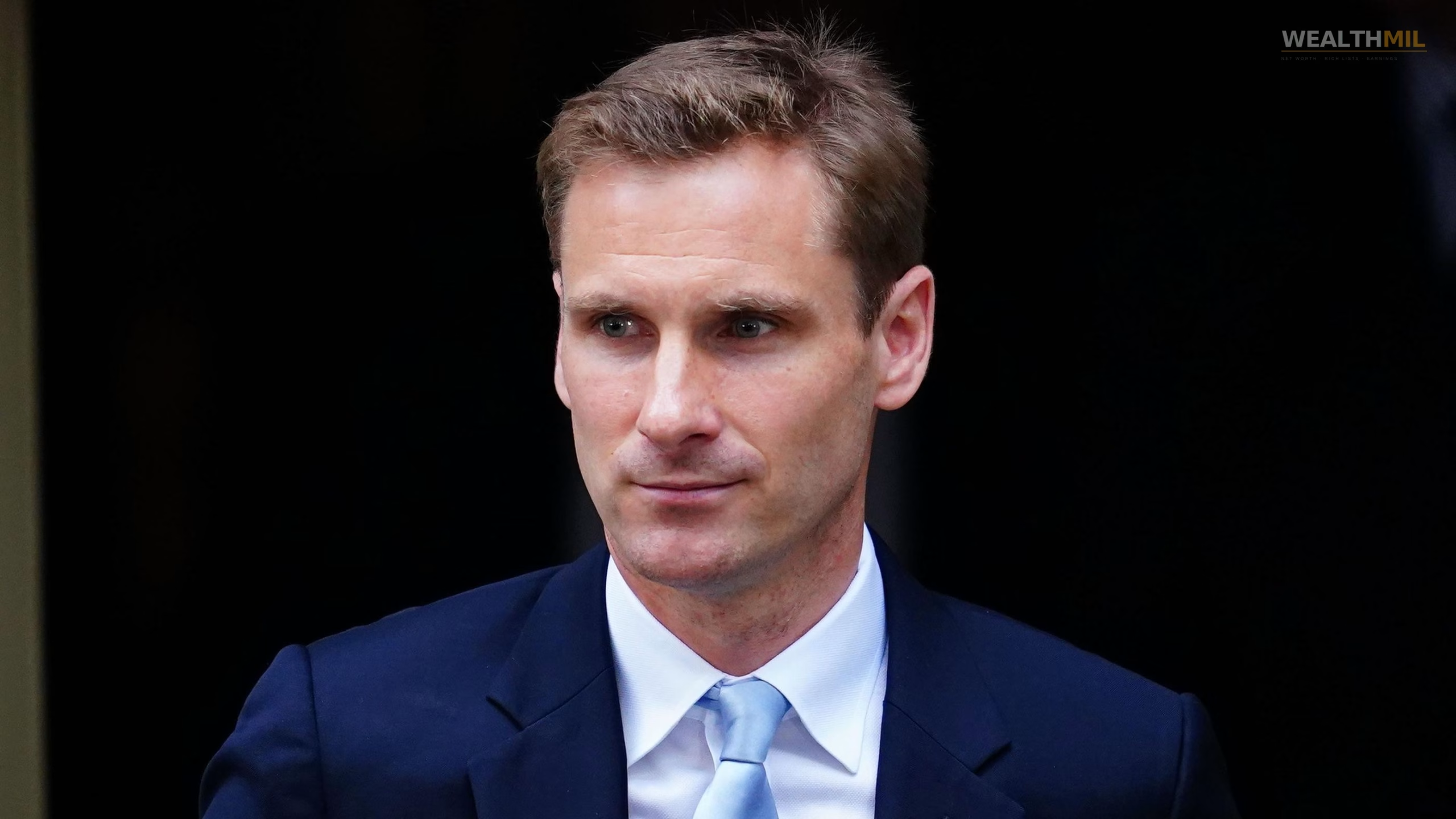
This academic background is important because it shaped his analytical thinking. It also set him apart from many politicians, giving him a technical foundation that would later influence both his business ventures and policy approach.
Chris Philp’s real financial story begins in the private sector. After leaving Oxford, he entered the business world and quickly established himself as an entrepreneur.
He co-founded Blueheath Holdings, a grocery distribution company, in 2000. The business scaled rapidly, reaching around £70 million in annual turnover within four years. This growth alone positioned Philp as a serious player in the logistics industry.
Blueheath later floated on the AIM market and merged into Booker Group in a deal valued at approximately £375 million. While Philp’s personal earnings from the deal are not publicly disclosed, this milestone is widely considered the foundation of his wealth.
He went on to launch Clearstone Training & Recruitment and co-found Pluto Finance, a property lending firm. These ventures diversified his income and ensured long-term financial stability.
According to publicly available estimates, his net worth is often cited around £3 million, though no official figure has been confirmed by financial authorities. This uncertainty itself reflects a key EEAT principle. Reliable sources consistently state that his exact net worth remains undisclosed.
Entrepreneurial Recognition and Industry Impact
Philp’s success in business did not go unnoticed. He received several prestigious awards that highlighted his achievements as an entrepreneur.
He was named London’s Emerging Entrepreneur of the Year in 2003 by Ernst & Young and The Times. He also won the CBI’s Entrepreneur of the Future award in 2005.
These recognitions matter because they validate his business credibility. Unlike many politicians who enter public life through political pathways alone, Philp built a track record in the private sector first.
This experience later shaped his policy stance. His support for pro-business policies, deregulation, and innovation is rooted in firsthand experience rather than theory.
Transition to Politics and Election as MP
Chris Philp entered politics in 2010 when he contested the Hampstead and Kilburn seat, narrowly losing by just 42 votes. This close result showed early political potential.
In 2015, he was elected as Member of Parliament for Croydon South. He has held the seat ever since, winning subsequent elections with strong majorities.
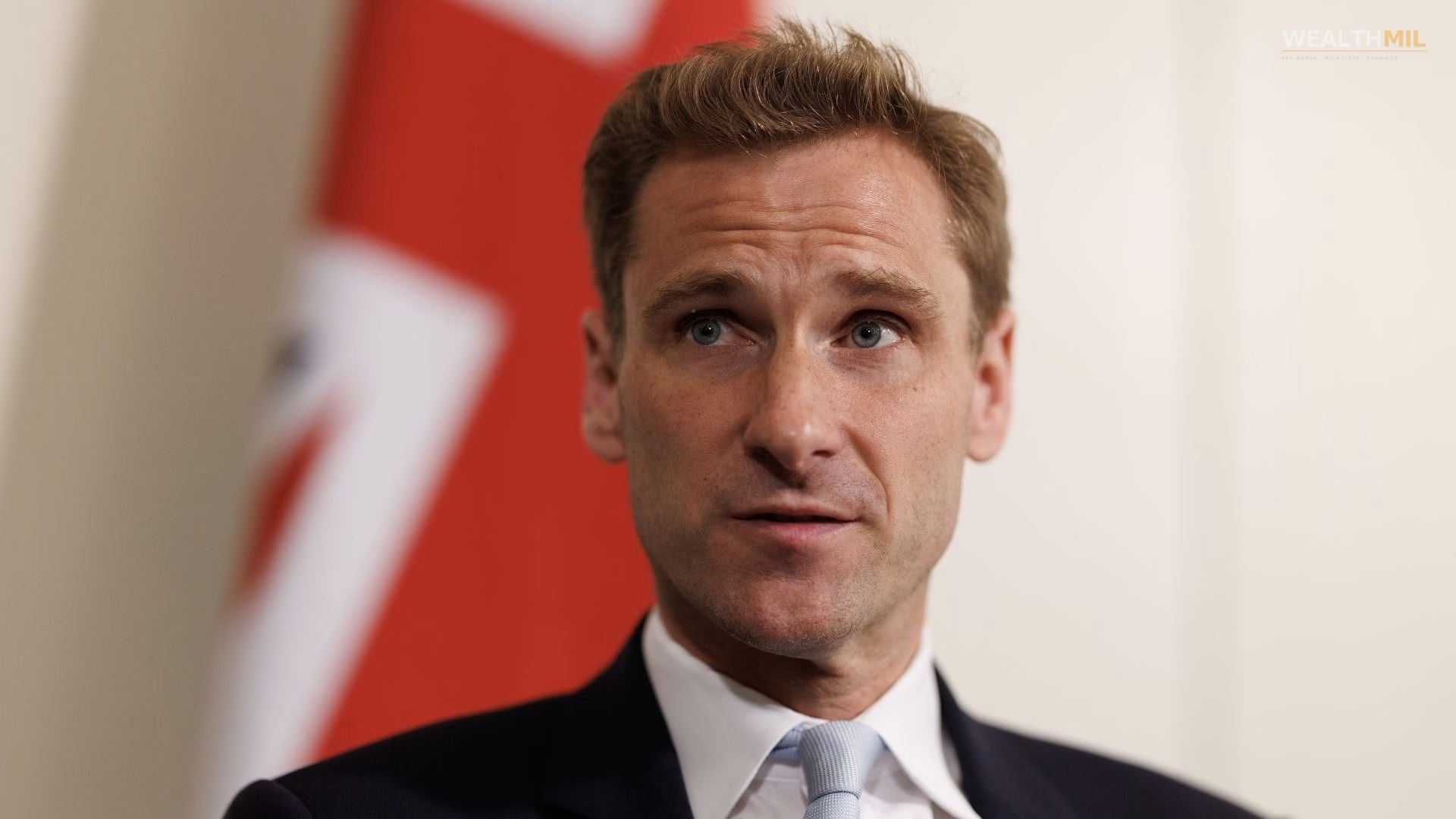
His rise in government was rapid. He held roles across multiple departments, including the Ministry of Justice, Home Office, and Department for Digital, Culture, Media and Sport.
By 2022, he had reached Cabinet-level positions, including Chief Secretary to the Treasury. As of 2024, he serves as Shadow Home Secretary under Kemi Badenoch.
This transition marks a clear shift. Unlike business, where success is measured in profit and growth, politics operates on influence, policy impact, and public accountability.
Salary vs Wealth: The Financial Reality of Politics
One of the biggest contrasts in Philp’s career is financial. As an MP, he earns a salary of around £93,904 per year as of April 2025.
Even with additional ministerial pay during his time in government, this income is modest compared to what he likely earned in business.
This highlights a key reality. Politics in the UK is not a primary wealth-building career, especially compared to entrepreneurship. For Philp, his financial foundation was already established before entering public office.
He also holds shareholdings in companies like Pluto Finance, which may contribute to his ongoing income. However, detailed earnings from these ventures are not publicly disclosed.
This reinforces the importance of distinguishing between verified facts and estimates. While his business success is well documented, exact income figures remain private.
Policy Influence Rooted in Business Experience
Chris Philp’s business background directly influences his political positions. He has consistently advocated for pro-growth economic policies, lower business taxes, and deregulation.
During his time as Digital Economy Minister, he promoted the UK’s tech sector and highlighted the country’s growing number of startup “unicorns.” His approach reflects a belief in innovation-driven growth.
On law enforcement and immigration, he has taken a hardline stance. He has called for stricter border controls and tougher sentencing policies, emphasizing national security.
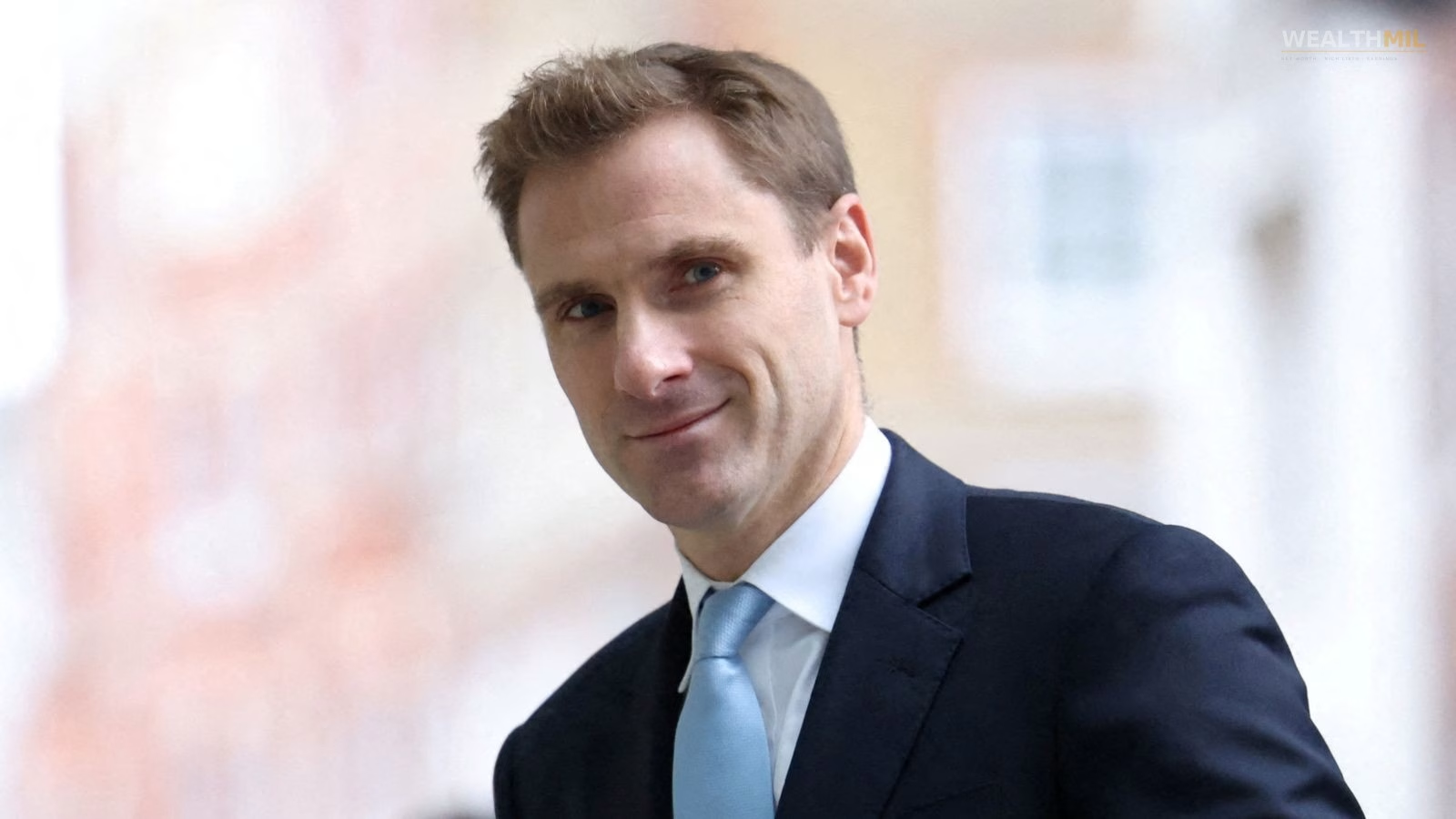
His proposal for increased automation in industries like agriculture also reflects his business mindset. He argues that technology can reduce reliance on low-paid labor while boosting productivity.
These positions show how his two careers intersect. While business built his wealth, politics allows him to shape the environment in which businesses operate.
The contrast between Philp’s business and political careers is stark. In business, success is measured by growth, profit, and market value. In politics, it is measured by policy impact, public perception, and electoral success.
In the private sector, decisions can be made quickly, and results are often immediate. In government, processes are slower, with layers of scrutiny and accountability.
Financially, the difference is even clearer. Entrepreneurship offers unlimited earning potential, while politics provides a fixed salary structure.
For Philp, this means his wealth was largely built before entering Parliament. His political career, while influential, is not the primary driver of his financial status.