
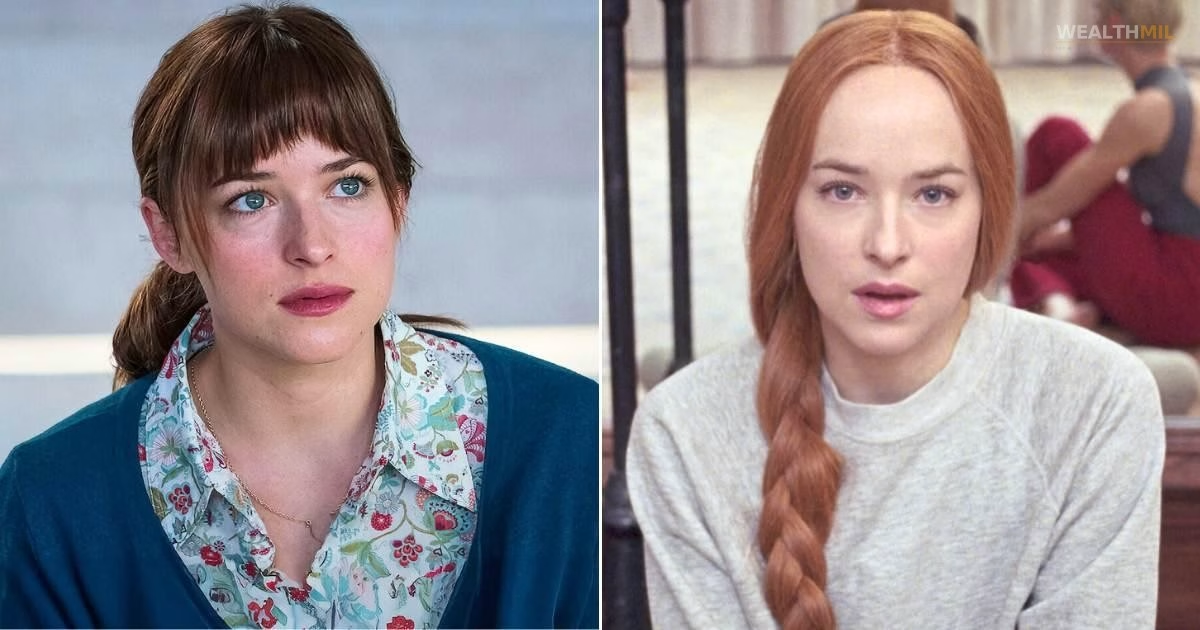
Dakota Johnson entered Hollywood with a recognizable last name, but her rise into global stardom came from something much bigger than industry connections. When she was cast as Anastasia Steele in Fifty Shades of Grey, the role instantly pushed her into worldwide fame and made her one of the most talked-about actresses of the decade. The franchise became a massive commercial success, and it dramatically changed both her career trajectory and earning power.
What makes Johnson’s story particularly interesting is what happened after the franchise ended. Many actors tied to blockbuster phenomena struggle to redefine themselves, but Johnson moved in a different direction. She balanced studio films with critically respected independent projects, launched her own production company, and gradually built a reputation for choosing unconventional roles. Her estimated net worth today reflects more than just the success of Fifty Shades. It represents a carefully managed career that evolved from mainstream fame into long-term Hollywood relevance.
Johnson’s financial growth also highlights how modern actors increasingly rely on multiple revenue streams. Acting remains her biggest source of income, but producing, fashion partnerships, endorsements, and business investments have helped strengthen her wealth over time. Her journey shows how one breakout role can become the foundation for a sustainable entertainment career when paired with smart professional decisions.
Fifty Shades of Grey changed Dakota Johnson’s career overnight
Before Fifty Shades, Johnson was still trying to establish herself as a leading actress in Hollywood. She had appeared in films like The Social Network and 21 Jump Street, but most audiences barely recognized her at the time. Her breakthrough came when she landed the lead role opposite Jamie Dornan in the adaptation of E.L. James’ bestselling novel.
The first Fifty Shades movie became a worldwide box office hit despite mixed reviews from critics. Reports show the film grossed nearly $570 million globally against a relatively modest budget, turning the franchise into a financial powerhouse for the studio. That level of commercial success instantly elevated Johnson into A-list territory and made her a recognizable name around the world.
Johnson reportedly earned around $250,000 for the first film, largely because she was still an emerging actress at the time. However, the success of the movie dramatically changed her negotiating position. By the time sequels like Fifty Shades Darker and Fifty Shades Freed entered production, reports suggested she secured seven-figure salaries along with possible backend bonuses connected to box office performance.

The trilogy also gave Johnson something equally valuable beyond money: visibility. Even people who never watched the films knew her name, and that level of recognition created opportunities across Hollywood. Franchise fame can sometimes trap actors in one image, but Johnson later used that exposure to explore more ambitious and diverse projects.
Dakota Johnson avoided becoming trapped by franchise fame
One of the biggest reasons Johnson’s net worth continued growing after Fifty Shades is that she avoided relying entirely on blockbuster filmmaking. Instead of chasing only commercial projects, she deliberately mixed mainstream roles with smaller artistic films that strengthened her credibility as an actress. That strategy helped her avoid being permanently defined by Anastasia Steele.
Soon after the franchise exploded, Johnson appeared in projects like A Bigger Splash and Black Mass. Critics frequently pointed to these performances as evidence that she had far more range than audiences initially associated with the Fifty Shades franchise. She later expanded that reputation through films such as Suspiria, Bad Times at the El Royale, and The Peanut Butter Falcon.
Johnson’s willingness to take creative risks became an important part of her Hollywood identity. Rather than aiming for safe commercial roles alone, she consistently chose films that allowed her to experiment with different genres and directors. That decision helped her build respect among filmmakers and critics, which can often lead to longer career longevity in Hollywood.
Her performance in The Lost Daughter particularly reinforced that transition. The psychological drama received major awards attention and allowed Johnson to work alongside highly respected actors and filmmakers. By that point, she was no longer viewed only as the star of a controversial romance franchise. She had become an actress associated with prestige projects and creative ambition.
That balance between commercial fame and artistic credibility is a major reason her career remained financially strong long after Fifty Shades ended. Many actors experience a sharp decline once a blockbuster franchise concludes, but Johnson managed to convert that temporary spotlight into long-term relevance.
Dakota Johnson’s net worth comes from more than acting alone
Most estimates place Dakota Johnson’s net worth around $14 million in recent years, though exact numbers vary depending on the source and current projects. Much of that wealth comes directly from her acting career, but her financial portfolio has gradually expanded beyond traditional film salaries.

One of Johnson’s smartest career moves was launching TeaTime Pictures alongside producer Ro Donnelly in 2019. The company allowed her to move behind the camera and gain more creative control over the projects she develops. In modern Hollywood, ownership and producing credits often generate long-term financial value beyond acting paychecks alone.
TeaTime Pictures became associated with projects like Cha Cha Real Smooth, which reportedly secured a major distribution deal with Apple TV+. Producing projects gives Johnson access to backend profits, licensing opportunities, and long-term business relationships that actors without production companies often miss.
Johnson has also expanded into brand partnerships and fashion work. She has long maintained strong relationships with luxury fashion brands and has become closely associated with high-profile campaigns and events. Reports in recent years linked her to major luxury collaborations, including work connected to Valentino.
Another area contributing to her financial growth involves business investments. Johnson reportedly became involved with the sexual wellness brand Maude as both an investor and creative collaborator. Celebrity-backed business ventures have become increasingly important for actors looking to diversify income streams beyond film work alone.
Real estate has also played a role in her wealth profile. Johnson purchased a notable Hollywood Hills property several years ago, and the home later attracted significant attention in architectural and celebrity design publications. While acting remains the center of her career, these additional ventures help explain why her financial position has remained stable even during periods when she releases fewer mainstream films.
Madame Web showed the risks of blockbuster filmmaking
Johnson’s career has not been without setbacks, and perhaps the clearest recent example came with Madame Web. The superhero film received overwhelmingly negative reviews and struggled commercially, becoming one of the more criticized comic-book releases of recent years. However, the project still demonstrated how established stars can command major salaries even when films fail critically.
Reports suggested Johnson may have earned several million dollars for starring in the movie, though exact figures were never fully confirmed. Even unsuccessful studio films can significantly contribute to an actor’s net worth because blockbuster contracts often include large upfront payments. For established performers, financial success and critical reception do not always move together.

Interestingly, Johnson handled the backlash surrounding Madame Web with humor and honesty during interviews, which many fans appreciated. Instead of appearing defensive, she openly acknowledged the unpredictable nature of Hollywood filmmaking. That authenticity has become one of her strongest public traits and helps distinguish her from more carefully manufactured celebrity personas.
Despite the film’s poor reception, Johnson quickly returned to projects that better matched her established strengths. Upcoming films and producing efforts suggest she remains focused on balancing commercial visibility with creative credibility. That approach has consistently helped her recover from weaker projects throughout her career.
Hollywood history is filled with actors whose careers collapsed after a major flop, but Johnson’s diversified résumé and business ventures make her less dependent on any single film’s performance. Her financial stability today reflects that broader foundation.
Dakota Johnson built a modern Hollywood career on flexibility
Johnson’s staying power comes partly from her ability to move comfortably between different corners of the entertainment industry. She can appear in an indie psychological drama one year and a major studio film the next without completely losing her audience. That flexibility has become increasingly valuable in modern Hollywood, where streaming services, theatrical releases, and prestige television constantly reshape the industry.
She has also benefited from working with respected directors across multiple genres. Collaborations with filmmakers like Luca Guadagnino helped lift her artistic reputation, while romantic comedies and franchise films maintained mainstream visibility. That combination widened her audience and strengthened her long-term career prospects.
Johnson’s public image also evolved significantly over time. Early in her career, media coverage often focused heavily on her famous family or her role in Fifty Shades. Today, conversations about her career increasingly center on her producing ambitions, creative choices, and distinctive interview personality. That evolution matters because celebrity branding often directly impacts endorsement opportunities and career longevity.

Another important factor is consistency. Johnson may not dominate headlines every month, but she has remained steadily active in film and entertainment for years. Longevity in Hollywood frequently depends less on one giant hit and more on maintaining relevance across multiple cycles of audience trends. Johnson has managed that balance effectively.
Her upcoming projects also suggest continued momentum rather than career slowdown. Roles in new films and expanded production work indicate that she is entering a phase where creative control may become just as important as acting itself. For many successful actors, that transition often marks the difference between temporary fame and long-term industry influence.