

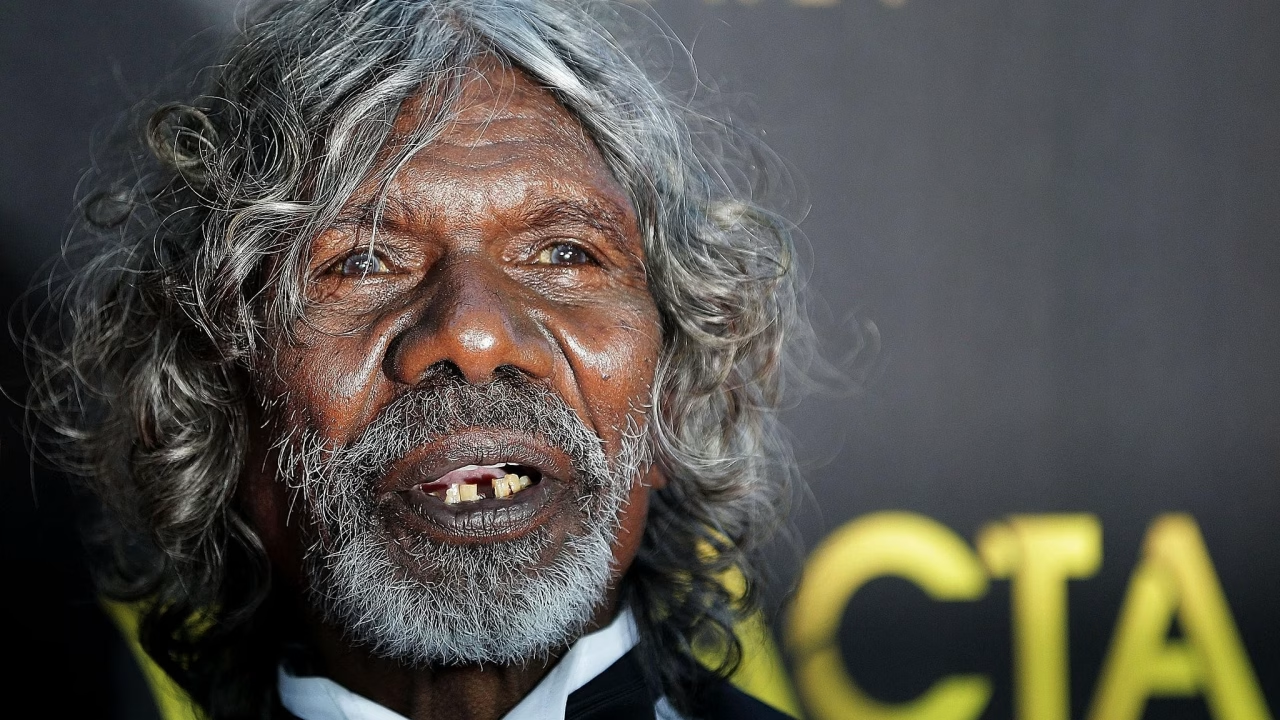
David Gulpilil was not just an actor, he was a cultural bridge between Indigenous Australia and the global film industry. For more than five decades, his performances brought authenticity, spirituality, and lived experience to the screen in a way few actors ever have. From his breakout role in Walkabout to his later critically acclaimed work in Ten Canoes and The Tracker, Gulpilil shaped how Indigenous stories were told and understood worldwide.
Yet behind this extraordinary artistic legacy lies a difficult truth. Despite his influence and global recognition, his financial situation did not reflect the magnitude of his contribution. Reports indicate that at various points in his life, he struggled financially, even as his work defined Australian cinema.
Let’s break down how David Gulpilil’s career evolved, what he earned, and why the industry’s financial return did not match his cultural impact.
Early Life and a Breakthrough That Changed Australian Cinema
David Gulpilil was born in Arnhem Land in Northern Australia and grew up immersed in Yolŋu culture. Before entering film, he was a traditional dancer and hunter, deeply connected to his heritage. This cultural grounding became the defining element of his acting.
His life changed dramatically when he was cast in Walkabout. The film introduced international audiences to an Indigenous Australian perspective rarely seen on screen. Gulpilil’s performance stood out not because it was theatrical, but because it was authentic.
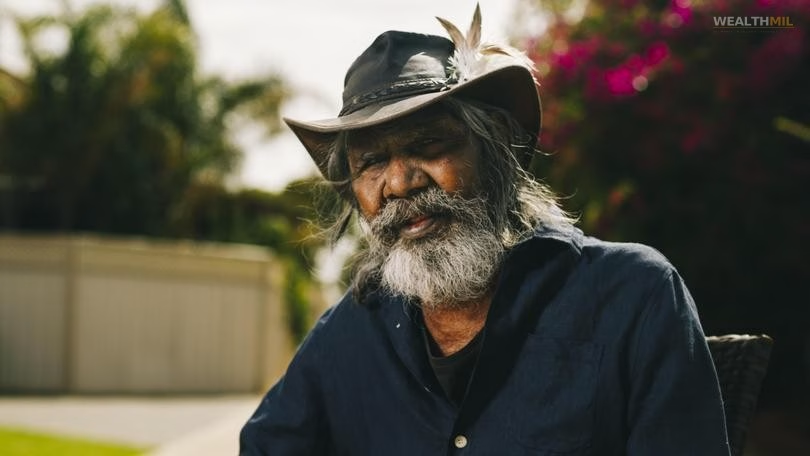
This debut did more than launch his career. It reshaped Australian cinema by proving that Indigenous stories could resonate globally. However, like many actors at the time, especially those from marginalized communities, financial compensation did not match the film’s long-term success.
Over the next five decades, Gulpilil built an extraordinary filmography. He appeared in projects like Storm Boy, Crocodile Dundee, and The Tracker. Each role reinforced his reputation as a performer who brought depth and authenticity to every project.
His work in Ten Canoes was particularly significant. The film, told in an Indigenous language, became a landmark achievement for Australian cinema and highlighted the importance of cultural storytelling.
Gulpilil was widely respected within the industry and received numerous awards, including the prestigious AACTA Award for Best Actor. Despite this recognition, the financial rewards remained inconsistent, reflecting broader inequalities within the film industry.
Net Worth and Financial Challenges
Estimates of David Gulpilil’s net worth vary, but most sources suggest it was relatively modest, often reported to be around $1 million or less at the time of his passing in 2021. This figure stands in stark contrast to the cultural and artistic value he brought to the industry.
Reports indicate that Gulpilil faced financial difficulties later in life. One contributing factor was his generosity. He was known for sharing his earnings with family and community members, a reflection of his cultural values rather than financial strategy.
Additionally, the structure of film payments played a role. Many of his early projects did not include significant residuals or long-term royalties. As a result, even films that achieved international success did not provide ongoing income.

This highlights a broader issue in the entertainment industry, where pioneering actors often do not benefit financially from the long-term success of their work.
While financial rewards were limited, Gulpilil did receive significant recognition. He was honored with lifetime achievement awards and celebrated as one of Australia’s greatest actors. His contributions to Indigenous representation in film are widely acknowledged.
However, recognition and financial compensation are not the same. Awards celebrate legacy, but they do not address the economic realities faced by artists. In Gulpilil’s case, the gap between these two forms of recognition is particularly striking.
This disparity raises important questions about how the industry values cultural contributions. Actors who bring authenticity and representation often carry the weight of storytelling without receiving proportional financial rewards.
Personal Struggles and Resilience
Gulpilil’s life was not without challenges. He faced health issues, including a lung cancer diagnosis later in life. Despite these difficulties, he continued to work and remain connected to his craft.
His resilience was evident in his final projects, where he delivered powerful performances that reflected both his personal journey and cultural identity. These roles served as a reminder of his enduring talent and dedication.
Even in difficult circumstances, Gulpilil remained committed to his art and his community. This commitment defined his legacy as much as his performances.
What His Career Really Added Up To
David Gulpilil’s career cannot be measured solely in financial terms. While his net worth may appear modest compared to global stars, his impact on cinema is immeasurable. He helped redefine how Indigenous stories are told and who gets to tell them.
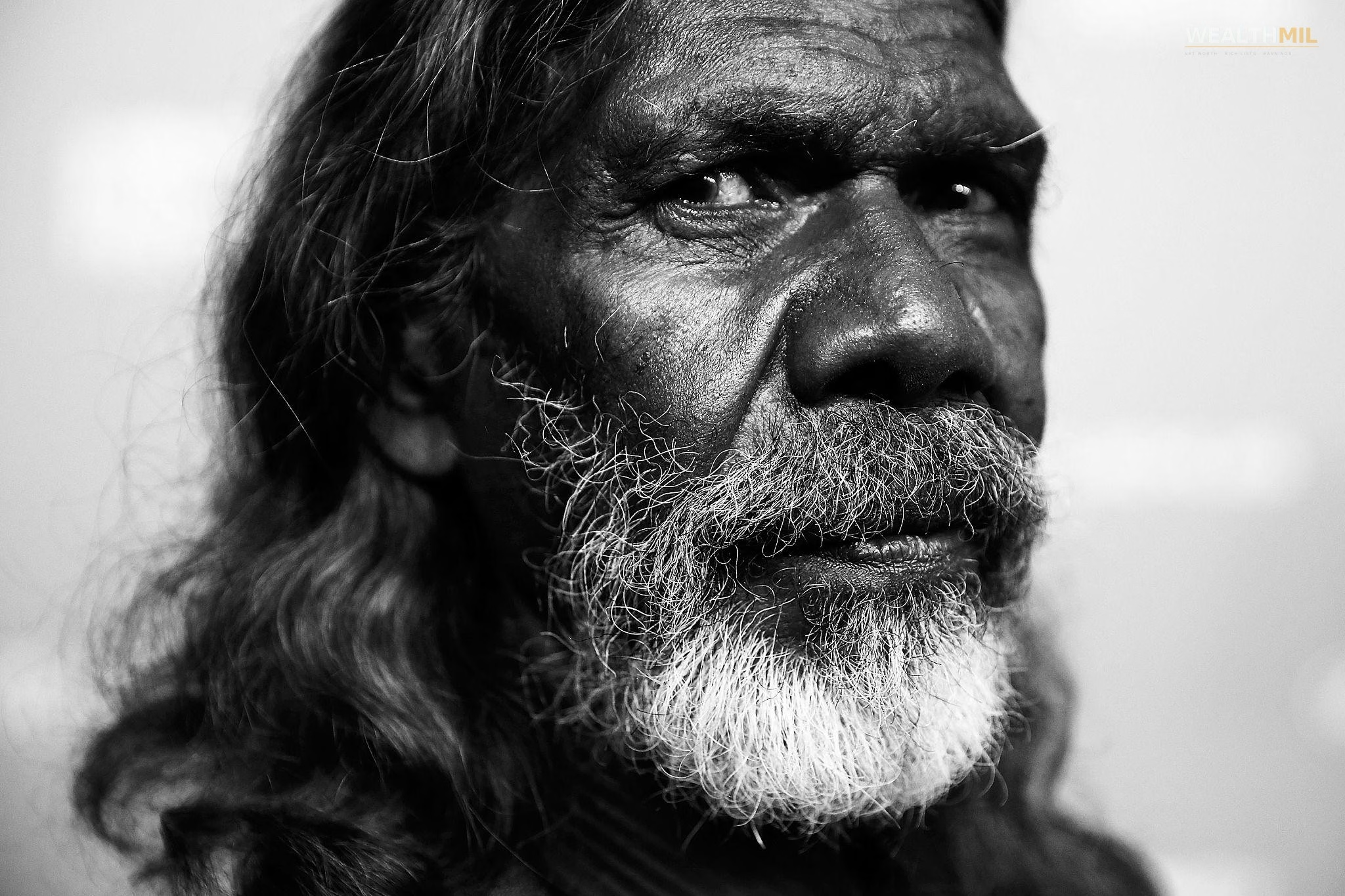
His work paved the way for future generations of Indigenous actors and filmmakers. Without pioneers like Gulpilil, the industry would look very different today. His influence extends beyond film into cultural awareness and representation.
At the same time, his financial story serves as a cautionary example. It highlights the need for better compensation structures and support for artists who contribute significantly to cultural storytelling.
David Gulpilil gave Australian cinema something invaluable. He brought authenticity, depth, and cultural truth to the screen for more than fifty years. His performances changed how audiences around the world understand Indigenous stories.
Yet the financial return he received did not fully reflect that contribution. His estimated net worth tells only part of the story, one that underscores the gap between cultural value and monetary reward in the film industry.
In the end, Gulpilil’s legacy is not defined by wealth. It is defined by impact. And while the industry may not have fully repaid him financially, his influence continues to shape cinema in ways that money alone cannot measure.
What makes David Gulpilil’s story even more significant is how it reflects a broader pattern within global cinema. Many Indigenous and culturally rooted performers have historically been underpaid despite shaping entire narratives and industries.
Gulpilil’s career shows that influence does not always translate into financial security, especially when systemic gaps exist in representation and compensation. In recent years, the industry has begun acknowledging these disparities, but his journey remains a powerful reminder of how much work still needs to be done. His legacy now stands as both an inspiration and a call for fairer recognition of cultural storytellers.