Elvis Presley achieved unprecedented fame and fortune during his lifetime, becoming the most recognizable entertainer in the world and earning what should have been a generational fortune. At the height of his career in the 1950s and 1960s, Elvis commanded record-breaking performance fees, sold millions of records, and starred in lucrative film contracts that made him one of the highest-paid performers in entertainment history.
Yet despite earning an estimated 100 million dollars during his lifetime, equivalent to over 500 million in today’s currency, Elvis died in 1977 with a net worth of only 5 million dollars. This staggering financial collapse occurred not through sudden catastrophe but through years of mismanagement, exploitative contracts, extravagant spending, and fundamentally flawed estate planning.
The story of Elvis Presley’s disappearing fortune serves as one of entertainment history’s most cautionary tales about wealth preservation, the dangers of unchecked management control, and the critical importance of proper financial and legal planning. Understanding how Elvis lost his fortune while still performing and earning provides essential lessons about celebrity finances, contractual exploitation, and the devastating consequences of poor estate planning decisions.
The Rise to Unprecedented Wealth and Stardom
Elvis Presley‘s journey from poverty in Tupelo, Mississippi, to becoming the world’s biggest star represents one of entertainment’s most dramatic rags-to-riches stories. Born in 1935 during the Great Depression, Elvis grew up in humble circumstances that made his later wealth all the more remarkable. His musical breakthrough came in 1954 when he recorded at Sun Records in Memphis, beginning a career that would revolutionize popular music.
The early years of Elvis’s career generated substantial income that seemed limitless at the time. His 1956 contract with RCA Records, negotiated by Colonel Tom Parker, brought an unprecedented 40,000 dollar advance, a massive sum for a young, relatively unknown performer. This deal marked the beginning of Elvis’s transformation into a commercial juggernaut whose every record, appearance, and product generated revenue.

Elvis’s film career added enormously to his earnings throughout the 1960s. He starred in 31 feature films between 1956 and 1969, commanding increasingly higher salaries as his box office appeal grew. By the mid-1960s, Elvis earned approximately 1 million dollars per film plus a percentage of profits. These movies, while often critically dismissed, generated reliable income and kept Elvis in the public consciousness even during periods when his music faced competition from British Invasion acts and changing musical tastes.
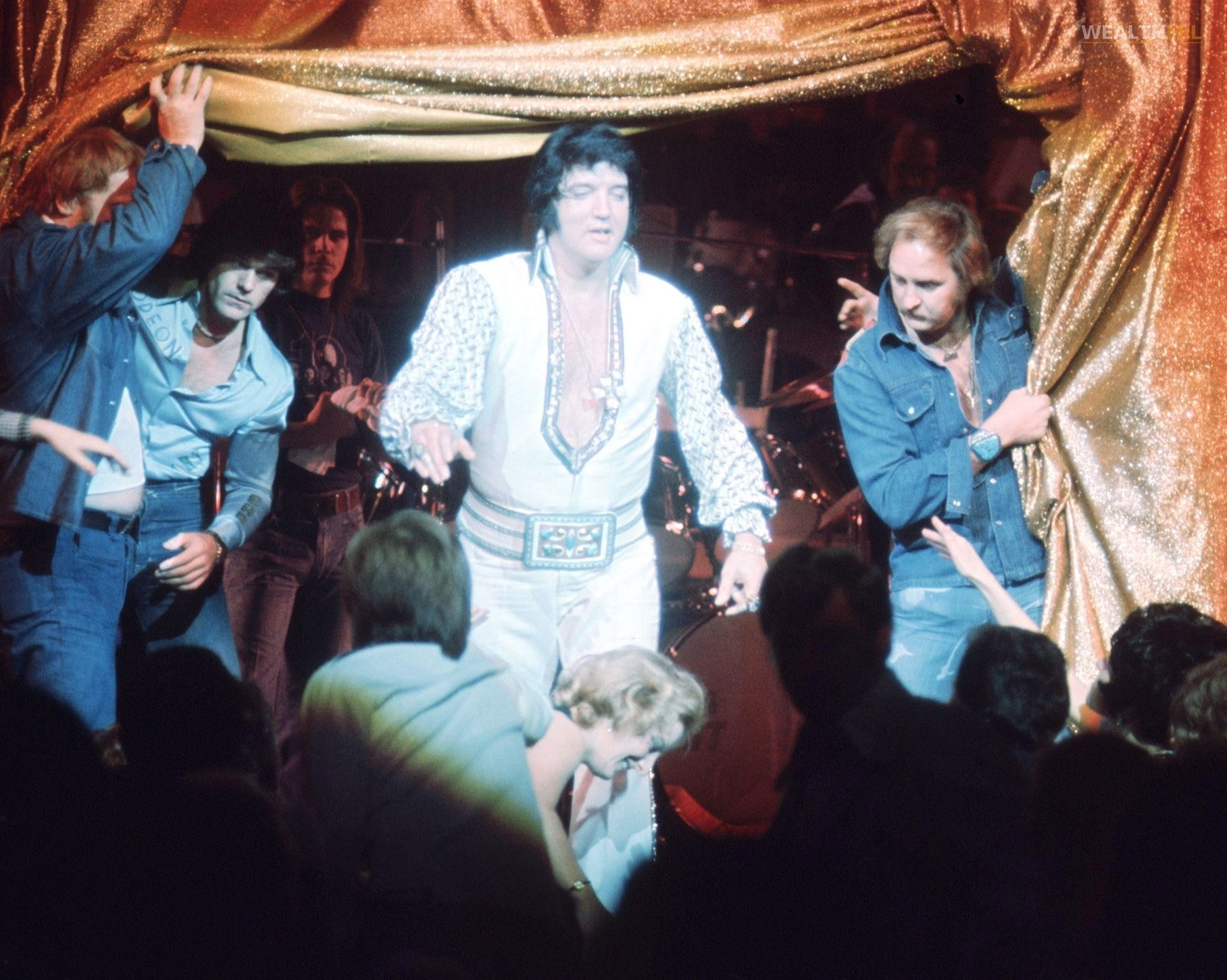
Concert performances provided another major revenue stream. Elvis’s 1950s tours created hysteria wherever he appeared, with sold-out shows commanding premium ticket prices. His legendary 1968 Comeback Special reinvigorated his career and led to his Las Vegas residency era, where he performed over 600 shows between 1969 and 1977. These Vegas performances, combined with concert tours, generated millions in gross revenue annually during his final years.
Record sales throughout Elvis’s career produced continuous royalty income. He sold over 600 million records worldwide during his lifetime, with hits spanning two decades dominating charts and generating substantial publishing and recording royalties. This catalog should have produced wealth that sustained Elvis and his heirs for generations.
At his peak earning years in the late 1960s and early 1970s, Elvis generated between 5 million and 10 million dollars annually, extraordinary income that placed him among the highest-paid entertainers in the world. This earning power, sustained over decades, should have resulted in accumulated wealth far exceeding the mere 5 million dollars remaining at his death.
Colonel Tom Parker’s Exploitative Management
The primary cause of Elvis Presley’s financial decline was the exploitative management relationship with Colonel Tom Parker, whose control over Elvis’s career enriched Parker while systematically draining Elvis’s wealth. Parker’s management practices, contractual arrangements, and personal financial interests created a structure that funneled Elvis’s earnings away from the star who generated them.
Parker’s management contract with Elvis evolved over time to become increasingly favorable to the Colonel. By the 1970s, Parker received 50 percent of Elvis’s earnings, an unconscionable percentage far exceeding industry standards where managers typically received 10 to 25 percent. This arrangement meant that for every dollar Elvis earned, half went immediately to Parker before Elvis paid taxes, expenses, or retained anything for himself.

The Colonel’s financial motivations extended beyond his management percentage. Parker had significant gambling debts to Las Vegas casinos, obligations he satisfied by booking Elvis into extended residencies that benefited the casinos and helped Parker settle his personal debts. These arrangements prioritized Parker’s financial needs over Elvis’s artistic interests or optimal earning potential.
Parker’s contract negotiations frequently disadvantaged Elvis in ways that only became apparent years later. The most devastating example involved Elvis’s music publishing rights. In 1973, facing pressure from Parker and RCA Records, Elvis agreed to sell his back catalog royalty rights for approximately 5.4 million dollars. This transaction, orchestrated by Parker, eliminated Elvis’s future royalty income from his most valuable asset in exchange for immediate cash that quickly disappeared through spending and taxes.
The publishing rights sale represents one of music history’s worst financial decisions. The catalog Elvis sold for approximately 5.4 million dollars would generate hundreds of millions in royalties over subsequent decades. Parker received half of the 5.4 million dollars from the sale, walking away with 2.7 million while Elvis lost future income that would have sustained his estate in perpetuity.
Parker’s control extended to preventing Elvis from performing internationally. Despite enormous demand for Elvis concerts in Europe, Asia, and other markets that would have generated massive revenue, Parker refused international touring. The Colonel’s reason was personal rather than professional, as Parker was an illegal immigrant from the Netherlands without a legitimate passport, fearing he couldn’t re-enter the United States if he left. This limitation cost Elvis tens of millions in potential earnings during his career.
The Colonel’s influence over Elvis’s career decisions also pushed the star toward financially motivated choices rather than artistically beneficial ones. The assembly-line film production of the 1960s, while profitable, damaged Elvis’s credibility and artistic legacy. Parker prioritized quantity over quality, focusing on immediate paydays rather than building Elvis’s long-term value and reputation.
Extravagant Spending and Lifestyle Costs
Elvis Presley’s legendary generosity and extravagant spending accelerated the disappearance of his fortune even as he continued earning millions annually. His approach to money reflected both his generous nature and a lack of financial discipline or awareness about the unsustainability of his spending patterns.

Graceland, Elvis’s famous Memphis mansion purchased in 1957 for approximately 100,000 dollars, became a monument to his extravagant lifestyle. The property required enormous ongoing costs including staff salaries, maintenance, utilities, and constant renovations and improvements. Elvis employed a large household staff and maintained the property as a private resort for himself, family, and the entourage known as the Memphis Mafia.
The Memphis Mafia represented a significant ongoing expense. This group of friends, family members, and employees traveled with Elvis, lived off his largesse, and received salaries, gifts, and support from the star. Estimates suggest Elvis supported dozens of people on his payroll at various times, with annual costs for this entourage reaching into the hundreds of thousands or millions of dollars.
Elvis’s generosity extended to extravagant gift-giving that became legendary. He purchased cars, including Cadillacs, for friends, family, employees, and even strangers who struck his fancy. These impulsive gifts, while generous, represented unsustainable spending. Elvis once famously bought a 100,000 dollar Stutz Blackhawk for a friend, one of numerous similar gifts over the years.
His collection of vehicles included airplanes, cars, and motorcycles that served as toys more than practical transportation. Elvis owned multiple private planes, including the Lisa Marie, a customized Convair 880 that cost 250,000 dollars to purchase and over 800,000 dollars to renovate with luxurious amenities. The ongoing costs of maintaining and operating private aircraft added hundreds of thousands annually to Elvis’s expenses.
Jewelry purchases represented another area of extravagant spending. Elvis bought expensive jewelry for himself and as gifts, including his famous TCB lightning bolt necklace and numerous rings, watches, and other pieces. These purchases, while valuable, tied up capital in personal items rather than income-generating investments.
Elvis’s prescription drug dependency, which ultimately contributed to his death, also generated significant ongoing costs. The medications, doctor visits, and the manipulation of medical professionals willing to provide prescriptions all required financial resources beyond the health impacts.
The costs of maintaining Elvis’s lifestyle created a situation where even his substantial earnings proved insufficient. His annual expenses often approached or exceeded his income, preventing wealth accumulation despite the millions flowing through his accounts. The combination of Parker taking 50 percent off the top, taxes consuming much of the remainder, and extravagant spending meant Elvis lived essentially paycheck to paycheck despite being one of the world’s highest-paid entertainers.
Tax Problems and Financial Mismanagement
Elvis Presley’s tax situation created additional financial pressure that contributed to his wealth disappearing. The combination of high tax rates, poor tax planning, and ongoing IRS issues drained resources and forced financially disadvantageous decisions.

During Elvis’s peak earning years, federal income tax rates for high earners reached 70 percent or higher. This meant that after Parker took his 50 percent, Elvis faced enormous tax obligations on his remaining income. The combination left Elvis with a fraction of his gross earnings after management fees and taxes, even before accounting for his spending.
Elvis faced ongoing IRS audits and tax disputes throughout his career. These investigations and the resulting tax bills created financial pressure that contributed to poor decisions like the 1973 catalog sale. The immediate cash from selling his publishing rights helped address tax obligations, but sacrificed far more valuable long-term income.
The lack of sophisticated tax planning exacerbated Elvis’s problems. Proper structuring through corporations, trusts, and other entities could have reduced tax burdens and protected assets. However, Parker’s control and the absence of independent financial advisors meant such planning never occurred. Elvis’s finances operated on a relatively unsophisticated basis, considering the sums involved.
Estate planning, or the lack thereof, represented another critical failure. Elvis’s will, drafted in 1977 shortly before his death, made basic provisions but failed to address the complexity of his estate, tax implications, or long-term wealth preservation. This oversight would cost his heirs millions in unnecessary estate taxes and legal fees.
The Stunning Net Worth at Death
When Elvis Presley died on August 16, 1977, at age 42, his estate was valued at approximately 5 million dollars. This figure, surprising given his lifetime earnings estimated at over 100 million dollars, illustrated the complete financial collapse that had occurred during his final years.
The 5 million dollar estate included Graceland, valued at approximately 500,000 dollars in 1977, along with personal property, vehicles, jewelry, and remaining financial assets. The relatively small estate reflected years of wealth depletion through the mechanisms described above combined with the lack of significant investments or income-producing assets beyond Elvis himself.
Estate taxes immediately claimed a significant portion of the remaining wealth. The federal estate tax rate of 70 percent on large estates meant Elvis’s heirs faced a tax bill of approximately 3.5 million dollars, leaving roughly 1.5 million in assets after taxes. This tiny remainder from a lifetime of unprecedented earnings demonstrated the devastating effect of poor planning and financial mismanagement.
Graceland itself faced potential sale to cover estate taxes and ongoing expenses. The property’s maintenance costs continued after Elvis’s death while generating no income, creating pressure to liquidate the most iconic asset of Elvis’s legacy. Only creative management by Priscilla Presley, who took control of the estate, prevented the sale and began the process of rebuilding the Presley financial legacy.
The comparison between Elvis’s lifetime earnings and death net worth ranks among the most dramatic wealth collapses in entertainment history. While some performers have lost wealth through bankruptcy or fraud, Elvis’s case is unique because the depletion occurred gradually throughout his career while he remained at the peak of fame and continued earning millions annually.

Estate Recovery and Lisa Marie’s Inheritance
Following Elvis’s death, Priscilla Presley took control of Elvis Presley Enterprises and embarked on an ambitious recovery plan that transformed the depleted estate into a financial powerhouse. Her management decisions and business acumen rescued the Presley legacy from financial ruin and created substantial wealth for Lisa Marie Presley, Elvis’s daughter and primary heir.
Priscilla’s most significant decision involved opening Graceland to public tours in 1982. This choice, controversial among some who felt it commercialized Elvis’s memory, generated immediate revenue that stabilized the estate’s finances. Graceland quickly became one of America’s most visited historic homes, generating millions in annual ticket sales, merchandise, and related revenues.
The expansion of Elvis Presley Enterprises included aggressive licensing of Elvis’s name, image, and likeness for merchandise, endorsements, and commercial uses. This licensing business generated tens of millions annually, creating sustainable income streams that the living Elvis never achieved despite his fame.
Priscilla negotiated to buy back some of the catalog rights sold in 1973, though not all could be recovered. She also established better relationships with RCA and subsequent rights holders to ensure the estate received appropriate royalties from ongoing Elvis music sales, which remained substantial decades after his death.
Through these efforts, Priscilla grew the estate from approximately 1 million dollars in 1979 after settling initial debts and taxes to over 100 million dollars by the 1990s. This remarkable turnaround demonstrated what proper management could achieve with the Elvis brand, highlighting how much value had been squandered during Elvis’s lifetime.
Lisa Marie Presley inherited the estate on her 25th birthday in 1993, receiving assets then valued at approximately 100 million dollars. However, Lisa Marie’s own financial mismanagement, costly divorce, and questionable business decisions eventually dissipated much of this rebuilt wealth. By her death in 2023, Lisa Marie’s estate faced debt and financial complications despite the value of her Elvis inheritance.
The estate’s current management continues generating substantial revenue. Graceland remains a major tourist attraction, Elvis licensing continues worldwide, and periodic sales of Elvis assets, including music rights, generate significant transactions. In 2005, Lisa Marie sold 85 percent of Elvis Presley Enterprises to CKX Inc. for approximately 100 million dollars, retaining Graceland and a 15 percent stake in the company.
Estate Planning Lessons From Elvis’s Mistakes
Elvis Presley’s financial collapse provides crucial estate planning lessons applicable to high earners across all industries. The mistakes that cost Elvis and his heirs tens or hundreds of millions offer cautionary examples of what to avoid.
First, never cede complete financial control to a single advisor or manager. Elvis’s total dependence on Colonel Parker, without independent financial advisors or oversight, enabled exploitation that continued unchecked for decades. Successful wealth management requires multiple advisors including managers, accountants, attorneys, and financial planners who provide checks and balances on each other.
Second, understand the terms of all contracts and agreements personally. Elvis apparently never fully grasped Parker’s 50 percent take or the implications of the 1973 catalog sale. High-earning individuals must personally review and understand major financial decisions rather than blindly trusting advisors, regardless of past relationships or perceived loyalty.
Third, never sell income-producing assets for immediate cash unless absolutely necessary. The catalog sale exemplifies trading long-term wealth for short-term liquidity. Royalty streams, real estate, and other income-producing assets should be preserved and protected, as they provide sustainable wealth beyond earning years.
Fourth, implement proper tax planning through qualified professionals. The tax burdens Elvis faced could have been substantially reduced through proper entity structuring, timing strategies, and legitimate deductions and planning techniques. The millions paid unnecessarily in taxes reflected the absence of sophisticated tax advisors.
Fifth, create comprehensive estate plans that address tax implications, succession, and wealth preservation across generations. Elvis’s will failed to minimize estate taxes or provide structures for protecting wealth for his heirs. Proper planning using trusts and other vehicles could have saved millions in taxes and protected assets from creditors and poor decisions by heirs.
Sixth, maintain spending discipline regardless of income levels. Elvis’s extravagant lifestyle and generous gift-giving, while admirable in some respects, proved financially unsustainable. High earners must balance the enjoyment of wealth with recognition that earning years are limited and future security requires current discipline.
Seventh, diversify income sources and create passive revenue streams. Elvis’s income depended entirely on his continued performing and recording. Investments in real estate, businesses, stocks, and other assets could have created income independent of his personal efforts, providing security if health or other factors prevented working.
The Colonel Parker Legal Reckoning
After Elvis’s death, the full extent of Colonel Tom Parker’s exploitation became subject to legal scrutiny that revealed surprising details about the management relationship. The legal proceedings provided public documentation of practices that had remained largely hidden during Elvis’s lifetime.
In 1981, Priscilla Presley and the Elvis estate sued the Colonel and RCA Records, alleging fraud, mismanagement, and exploitation. The lawsuit sought to recover damages from Parker’s mismanagement and to nullify disadvantageous agreements he had made purportedly on Elvis’s behalf.
Court proceedings revealed the full scope of Parker’s conflicts of interest and self-dealing. Evidence showed Parker received payments from RCA Records for negotiating deals theoretically on Elvis’s behalf, meaning Parker represented both sides of negotiations and profited from both parties. These kickbacks and side deals violated his fiduciary duty to Elvis.
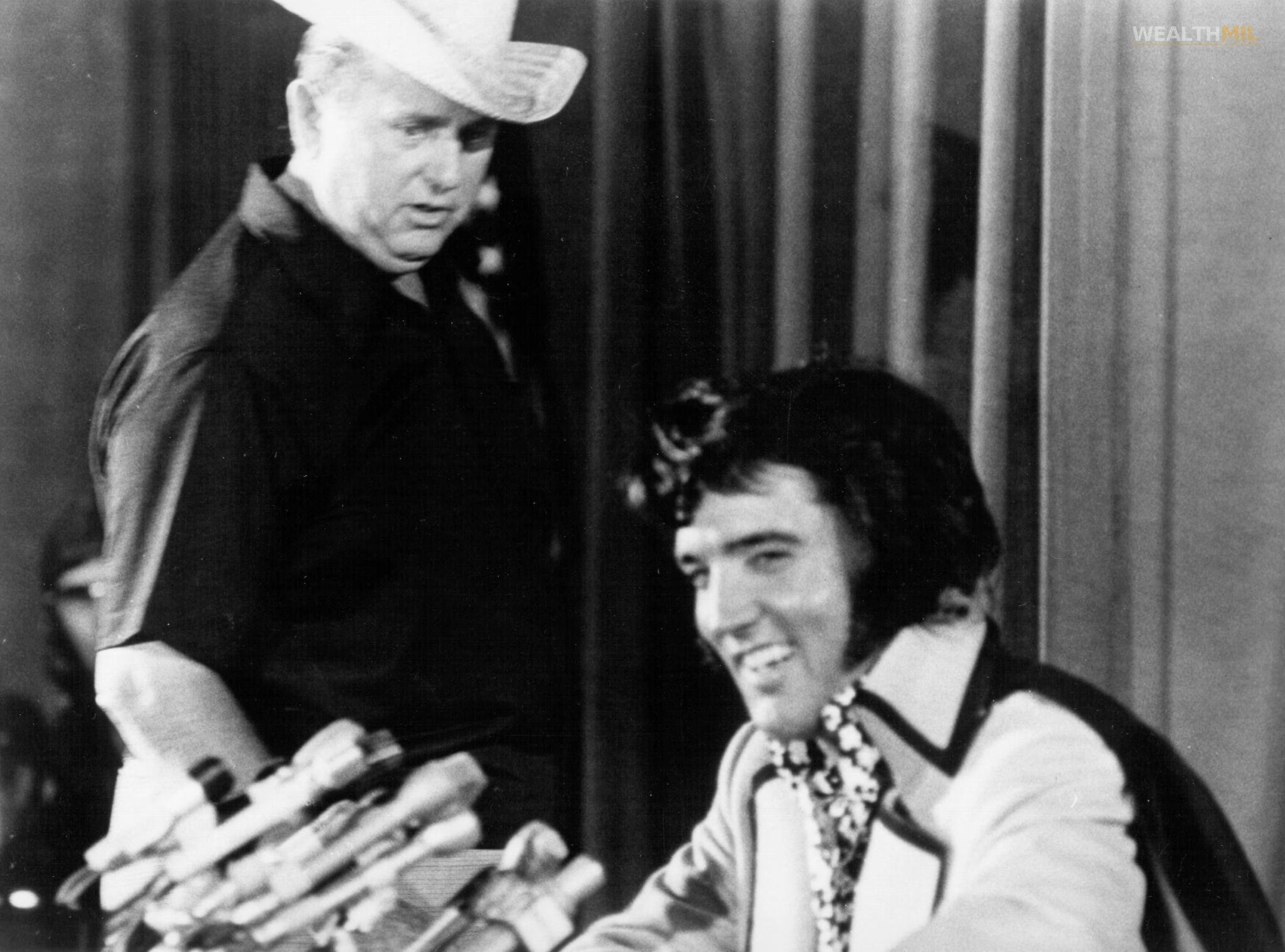
The court found that Parker’s 50 percent commission far exceeded industry standards and constituted a breach of fiduciary duty. Testimony established that typical management commissions ranged from 10 to 25 percent, making Parker’s take unconscionable and evidence of exploitation.
The case ultimately settled in 1983, with Parker agreeing to sever all ties with the Elvis estate and forfeit any future earnings from Elvis-related work. While the settlement terms remained confidential, Parker reportedly received a final payment in the range of 2 million dollars to walk away, far less than he would have earned if his exploitative agreements had remained enforceable.
RCA also settled separately, addressing concerns about deals made with Parker that disadvantaged Elvis. These settlements brought some financial recovery to the estate, though far less than would have been available had proper management existed during Elvis’s lifetime.
The Parker revelations vindicated concerns Elvis’s father Vernon, had raised before his own death in 1979. Vernon had grown suspicious of Parker’s financial arrangements and had begun investigating before his death prevented further action. The legal proceedings confirmed Vernon’s suspicions and documented the exploitation that had occurred.
Elvis Presley’s financial story remains one of entertainment history’s most cautionary tales, demonstrating how even the world’s biggest star can lose a fortune through mismanagement, exploitation, and poor planning. Despite earning over 100 million dollars during his career, equivalent to more than 500 million in current dollars, Elvis died with a net worth of only 5 million, with most of that immediately consumed by estate taxes.
Colonel Tom Parker’s exploitative 50 percent management fee, the disastrous 1973 catalog sale, extravagant spending, tax problems, and the complete absence of proper financial planning combined to drain Elvis’s wealth as quickly as he earned it. The estate’s remarkable recovery under Priscilla Presley’s management, growing from approximately 1 million to over 100 million within two decades, demonstrated the value that was squandered during Elvis’s lifetime and provided some financial redemption for his daughter Lisa Marie.
The lessons from Elvis’s financial collapse remain relevant today for high earners across all industries, emphasizing the critical importance of independent financial advisors, maintaining control over major decisions, preserving income-producing assets, implementing proper tax and estate planning, and exercising spending discipline regardless of income levels. Elvis Presley’s legacy as the King of Rock and Roll remains secure, but his financial story serves as an enduring warning about the ease with which even the largest fortunes can disappear without proper protection and management.