

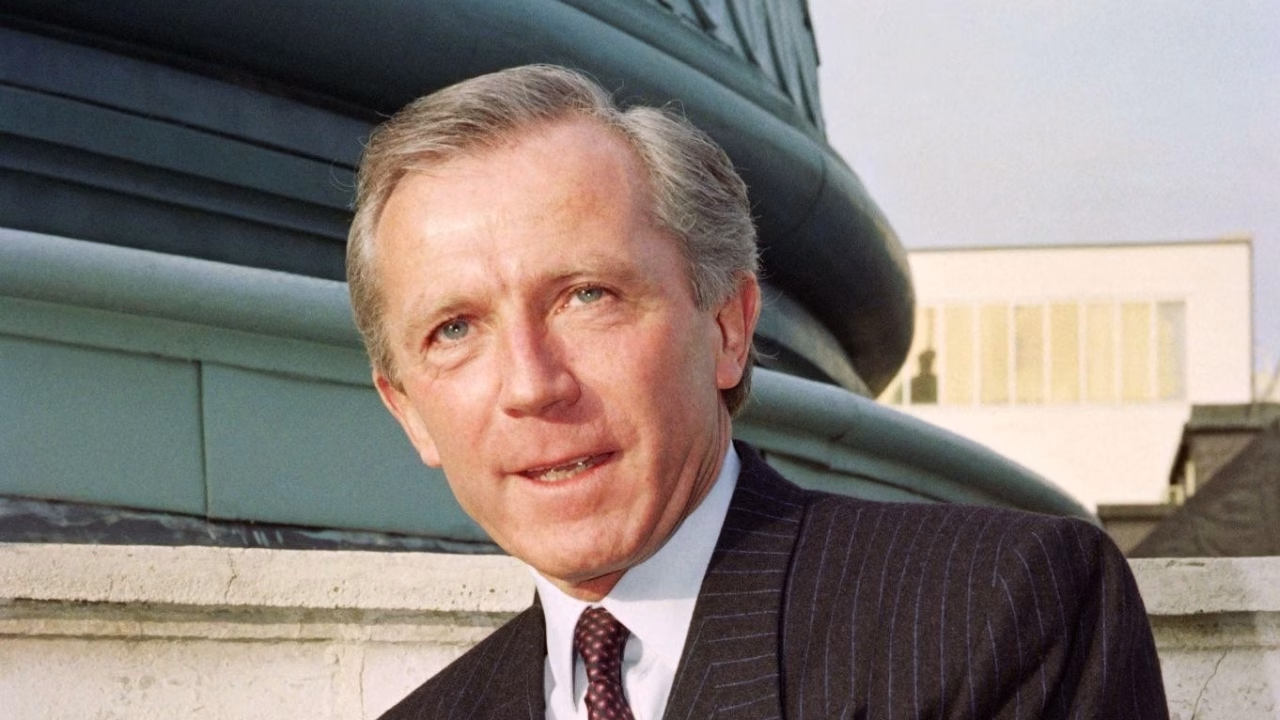
François Pinault’s journey from a bullied school dropout in rural France to one of the world’s richest individuals is one of the most compelling business stories in modern Europe. With an estimated net worth of $27 billion, Pinault stands as the architect of a global empire that spans luxury fashion, fine art, wine, entertainment, and sports. His story is not just about wealth creation, but about reinvention, calculated risk-taking, and the ability to identify value long before others do.
Today, the Pinault family controls Kering, the luxury conglomerate behind brands like Gucci, Saint Laurent, and Balenciaga. Through their holding company Artémis, they also oversee assets such as Christie’s auction house and major stakes in global entertainment. However, this vast empire began far from the runways of Paris or the boardrooms of luxury conglomerates.
Early Life Marked by Hardship and Determination
François Pinault was born in 1936 in Brittany, a region of France known for its rural landscapes rather than wealth or privilege. His upbringing was modest, shaped by his father’s timber business and the realities of working-class life. This environment would later influence his business philosophy, which centered on discipline and efficiency.
As a teenager, Pinault faced intense bullying at school due to his background and accent. The experience was so severe that he left school at the age of 16. While this could have been a limiting moment, it instead marked the beginning of his entrepreneurial path.
In later reflections, Pinault has been described as someone who turned adversity into motivation. As business analysts often note, “His early struggles shaped a mindset that prioritized resilience and independence,” a theme widely discussed in profiles.
After leaving school, he entered the workforce early and later served in the military during the Algerian War. These experiences exposed him to discipline and hardship, further shaping his approach to business.

Building a Business From Timber Trading
Pinault’s first major step into entrepreneurship came in 1963 when he founded his own timber trading company. At the time, the business was far from glamorous, but it provided him with a foundation to develop his skills in negotiation, logistics, and finance.
What set Pinault apart was his ability to identify undervalued opportunities. He developed a strategy of acquiring struggling companies, restructuring them, and turning them into profitable operations. This approach allowed him to expand steadily, building both capital and experience.
By the 1980s, Pinault had taken his company public, giving him access to greater financial resources. This move marked a turning point, enabling him to pursue larger acquisitions and diversify his business interests.
Transition From Retail to Luxury
During the late 20th century, Pinault began shifting his focus from traditional industries to retail. His company acquired stakes in department stores and mail-order businesses, eventually becoming known as Pinault-Printemps-Redoute (PPR). At this stage, the business resembled a broad retail conglomerate.
However, Pinault recognized that the future lay elsewhere. Retail, while stable, often operated on thin margins and intense competition. Luxury goods, on the other hand, offered high margins and global appeal driven by brand identity and exclusivity.
This realization led to one of the most significant strategic pivots in modern business history.
The Gucci Acquisition That Changed Everything
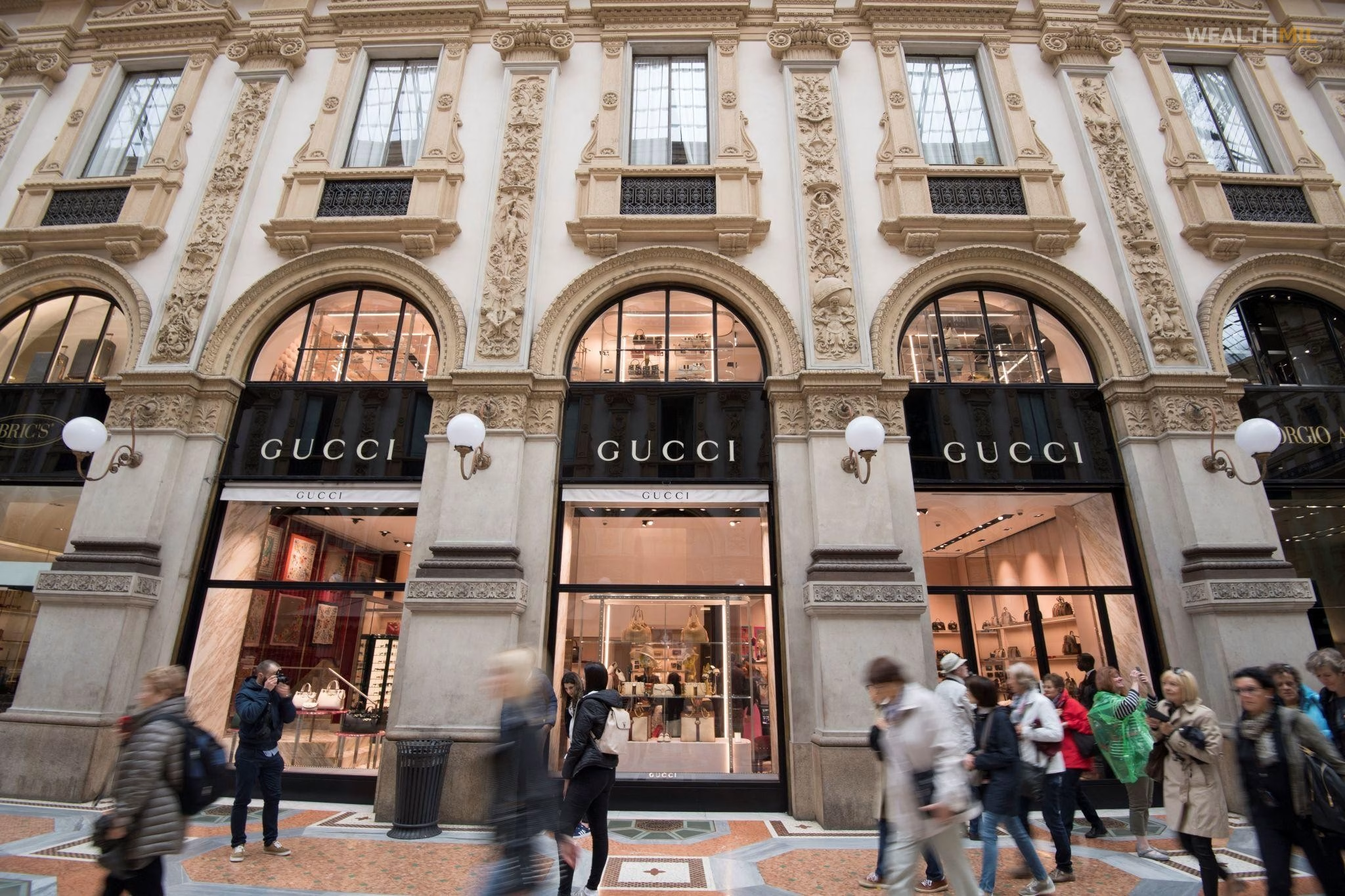
The defining moment in Pinault’s career came in 1999 when PPR acquired a major stake in Gucci. At the time, Gucci was one of the most coveted brands in the luxury market, and the acquisition battle was closely watched across the industry.
Pinault’s successful move into Gucci marked the beginning of a transformation. Over the following years, PPR expanded its luxury portfolio by acquiring brands such as Yves Saint Laurent, Balenciaga, and Bottega Veneta. These acquisitions shifted the company’s identity entirely.
The strategy was clear: focus on high-end brands with strong heritage and global recognition. This approach allowed the company to generate significant profit margins while building a powerful brand portfolio.
In 2013, PPR was rebranded as Kering, reflecting its new direction as a luxury-focused group. The transformation from timber trading to luxury fashion was complete.
Expanding Beyond Fashion With Artémis
While Kering became the centerpiece of the Pinault empire, François Pinault also expanded into other sectors through the family holding company Artémis. Founded in 1992, Artémis allowed the family to invest in a wide range of industries.
The portfolio includes Christie’s auction house, one of the most prestigious institutions in the art world, as well as Château Latour, a renowned Bordeaux vineyard. The company also holds interests in luxury travel, sports, and media.
One of the most notable investments in recent years has been a majority stake in Creative Artists Agency (CAA), a leading Hollywood talent agency. This move extended the Pinault family’s influence into the entertainment industry, connecting their luxury brands with global celebrity culture.
The Role of Art and Cultural Influence
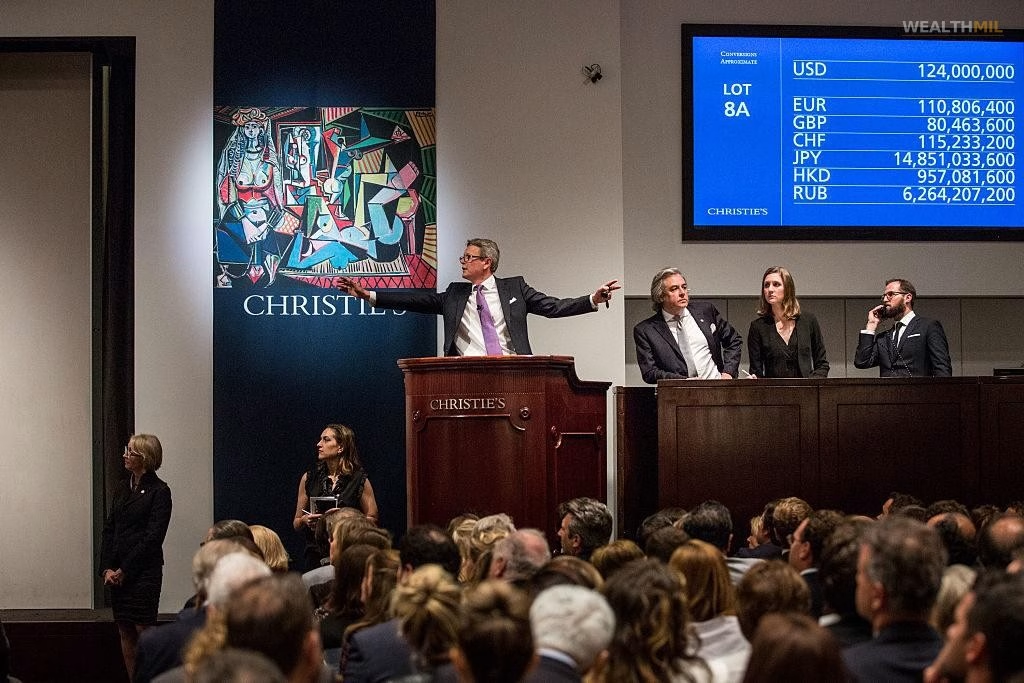
François Pinault is also widely recognized for his contributions to the art world. Over decades, he has built one of the most significant private collections of contemporary art, featuring works by artists such as Picasso, Rothko, and Damien Hirst.
Unlike many collectors, Pinault has made his collection accessible to the public through dedicated exhibition spaces. Locations in Venice and Paris showcase his holdings, reinforcing his influence as both a businessman and a cultural patron.
This focus on art aligns closely with his luxury business, where brand identity and cultural relevance play a crucial role. By investing in art, Pinault has strengthened his position within the global cultural terrain.
Challenges Facing the Kering Empire
Despite its success, the Pinault empire has faced challenges in recent years. Kering, particularly its flagship brand Gucci, has experienced slower growth and shifting consumer demand. The luxury market has become more competitive, with changing trends impacting sales.
Financial reports have reflected these challenges, with revenue declines and restructuring efforts affecting overall performance. As a result, François Pinault’s net worth has fluctuated, currently estimated at around $27 billion.
In response, Kering has implemented leadership changes, including appointing a new CEO to guide the company through its next phase. François-Henri Pinault, François Pinault’s son, remains chairman, ensuring that the family continues to play a central role in the company’s direction.