The global surge in artificial intelligence has quietly reshaped the technology sector, pushing memory-chip companies into the spotlight. While giants like Micron Technology have seen explosive growth, another key player has risen alongside them without the same public attention. Kingston Technology, a privately held company, has become one of the biggest beneficiaries of this boom. Its journey, however, is defined less by hype and more by one of the most remarkable buyback stories in tech history.
According to Celebrity Net Worth, Kingston’s founders executed a deal in the late 1990s that continues to stand out as one of the smartest financial moves ever made. What started as a recovery effort after financial loss eventually turned into a multibillion-dollar empire. Today, both founders are among the richest individuals in the world, with fortunes tied directly to their decision to retain control of the company.
From Financial Collapse to Industry Opportunity
David Sun and John Tu began their journey long before Kingston existed, building a memory-products company in the early days of personal computing. After selling their first business, they suffered a major setback during the Black Monday, which wiped out much of their wealth. Instead of stepping away, they used that moment to identify a gap in the market.
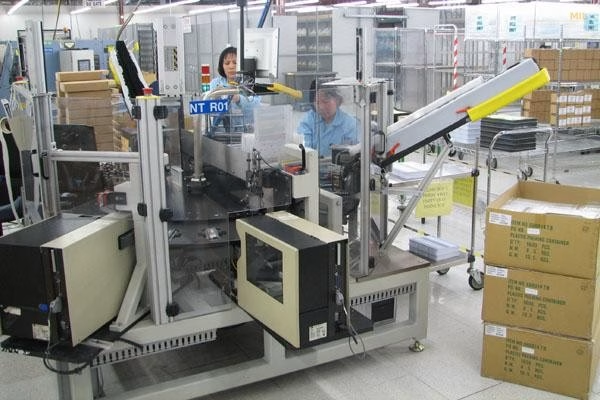
At the time, the industry faced a shortage of specific memory components, and the duo created a workaround using available materials. This practical approach became the foundation of Kingston Technology, which focused on assembling and distributing memory products rather than manufacturing chips. That distinction allowed Kingston to grow quickly without the heavy infrastructure costs faced by chipmakers.
The $1.5 Billion Deal That Wasn’t the End
By the mid-1990s, Kingston had become a dominant force in memory modules, leading to a major acquisition deal. In 1996, the founders sold 80 percent of the company to SoftBank for $1.5 billion. The move seemed like a natural exit point, especially for two entrepreneurs who had already experienced financial volatility.
What made the deal unusual was how Sun and Tu handled the proceeds. They distributed more than $100 million to employees as bonuses, a decision that became widely celebrated in business circles. As reported by Celebrity Net Worth, this act cemented their reputation as founders who prioritized people over profit, even at the height of financial success.
The $450 Million Buyback That Changed Everything
Just three years later, the story took an unexpected turn. SoftBank shifted its focus toward internet investments during the dot-com era and decided to sell its stake in Kingston. In 1999, Sun and Tu bought back the same 80 percent stake for only $450 million.
This dramatic price difference created one of the most talked-about deals in tech history. The founders had effectively sold high and bought low, regaining full control of their company at a fraction of its earlier valuation. That decision positioned Kingston perfectly for long-term growth without external pressure from investors.
Riding the AI-Driven Memory Boom
In recent years, demand for memory products has surged due to the rise of AI and data centers. While companies like Micron focus on producing DRAM chips, Kingston operates further down the supply chain by turning those components into usable products. This includes SSDs, RAM modules, and storage solutions used across industries.
Forbes has estimated Kingston’s annual revenue at over $14 billion, ranking it among the largest private companies in the United States. The company’s low-profile approach has allowed it to thrive without the volatility often associated with public markets. Meanwhile, the founders’ net worth has climbed dramatically, reaching tens of billions as the memory sector continues to expand.