Late-night television has long been one of the most prestigious and financially rewarding spaces in entertainment, producing hosts who commanded massive salaries while shaping culture and politics. For decades, the job of sitting behind a desk and delivering jokes translated into extraordinary wealth, driven by advertising revenue and network dominance. Today, however, the economics of the industry are shifting rapidly, forcing a reassessment of what these roles are truly worth.
From the early dominance of Johnny Carson to modern figures like Jimmy Fallon and John Oliver, the story of late-night salaries is also the story of how television itself evolved. Hosts were once central to billion-dollar ecosystems, but today’s terrain is defined by fragmentation, digital competition, and tighter budgets.
Johnny Carson and the Birth of Late-Night Wealth
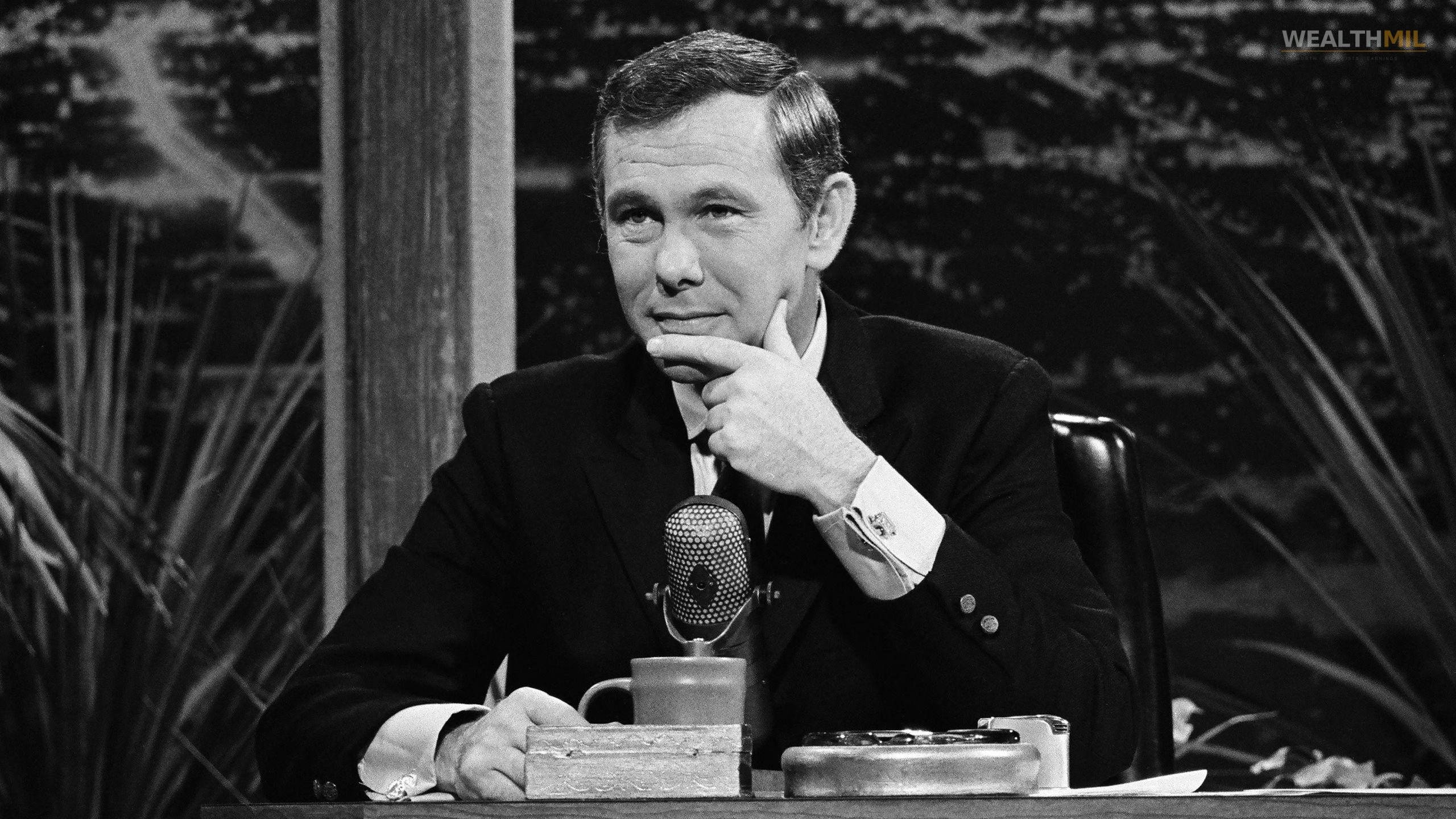
Any discussion of late-night salaries begins with Johnny Carson, whose tenure on The Tonight Show established the financial ceiling for the entire industry. When Carson took over in 1962, he earned $100,000 annually, a respectable figure at the time. However, as the show became a ratings juggernaut, his salary grew dramatically, reaching $25 million per year by the early 1990s.
Carson’s salary growth was not just about popularity but leverage. By the mid-1970s, The Tonight Show was generating tens of millions in annual revenue, making Carson indispensable to NBC. This allowed him to negotiate from a position of strength, ultimately securing ownership rights through Carson Productions. That deal gave him control over both his show and the time slot that followed, turning him into a business powerhouse.
What made Carson unique was his combination of salary and backend profits. While later hosts would earn comparable annual pay, few managed to replicate his level of control. His model proved that a late-night host could be more than a performer and could become a media mogul with long-term financial influence.
David Letterman’s Ownership Strategy vs. Jay Leno’s Salary Machine
The next major phase of late-night salaries emerged in the rivalry between David Letterman and Jay Leno. When Carson retired, NBC’s decision to choose Leno over Letterman sparked a bidding war that reshaped the financial terrain of late-night television.
Letterman’s move to CBS came with a lucrative deal worth $42 million over three years, or roughly $14 million annually. Over time, his salary climbed to over $30 million per year, placing him among the highest-paid hosts in the industry. More importantly, Letterman retained ownership of his show through Worldwide Pants, allowing him to earn additional revenue from syndication and production.
This ownership model proved incredibly valuable, especially as Worldwide Pants expanded into producing other successful shows. Letterman’s financial strategy mirrored Carson’s approach, focusing on long-term wealth rather than just salary.
Leno, by contrast, built his fortune almost entirely through salary. His earnings at The Tonight Show eventually reached around $30 million annually, and over two decades, he reportedly earned more than $300 million. What set Leno apart was his consistency, as he maintained high ratings and stable income for years.
Perhaps most famously, Leno claimed he never spent his Tonight Show salary, instead living off his stand-up comedy income. This approach allowed him to accumulate wealth in a way that differed significantly from his peers, even without ownership stakes.

Conan O’Brien and the Value of Reinvention
The career of Conan O’Brien represents one of the most unusual financial journeys in late-night history. After years hosting Late Night, O’Brien was given The Tonight Show in 2009, only to lose it in a highly publicized network shake-up.
His exit deal included a $45 million payout, with approximately $33 million going directly to him. While this could have marked the end of his late-night career, it instead became the foundation for a new business model.
O’Brien transitioned to cable television and eventually built Team Coco, a digital media company centered on his content. The company’s success, particularly in podcasting, led to a $150 million sale to SiriusXM in 2022. This deal demonstrated that late-night talent could generate massive revenue outside traditional television.
What makes O’Brien’s story significant is how it redefined value. Instead of relying solely on network salaries, he leveraged digital distribution and intellectual property ownership to build a modern media empire.

Jon Stewart and the Cable Breakthrough
While network hosts dominated the early decades of late-night television, Jon Stewart proved that cable could be just as lucrative. As the host of The Daily Show, Stewart reportedly earned between $25 million and $30 million annually at his peak.
This was a remarkable achievement for a cable program, which traditionally operated with smaller budgets than broadcast networks. Stewart’s influence, particularly among younger audiences, made him one of the most important voices in media, elevating his value beyond traditional ratings metrics.
His success also paved the way for other hosts to pursue alternative formats, demonstrating that cultural impact could translate into financial success even outside the traditional late-night structure.
Stephen Colbert and the End of an Era
Stephen Colbert represents both the peak and the decline of modern network late-night salaries. After transitioning from The Colbert Report to CBS’s Late Show, his earnings grew steadily, eventually reaching around $20 million per year.
Colbert’s rise to the top of the ratings during politically charged years reinforced his importance to CBS. However, despite his success, the cancellation of his show in 2026 highlights the challenges facing the industry.
The decision reflects broader economic pressures, including declining viewership and shifting advertising models. Even highly paid and culturally relevant hosts are no longer guaranteed long-term stability, signaling a major shift from the Carson and Letterman eras.
Jimmy Fallon and the Digital-First Approach

Jimmy Fallon represents the modern evolution of late-night television. Since taking over The Tonight Show in 2014, Fallon has earned an estimated $16 million to $18 million annually, with additional income from production and network projects.
Fallon’s value lies in his ability to generate viral content. Segments like lip-sync battles and celebrity games are designed for online sharing, extending the show’s reach beyond traditional television audiences.
This digital-first approach has become essential in the current media terrain. While Fallon’s salary may not match the inflation-adjusted peaks of earlier hosts, his influence across platforms makes him a key figure in the industry’s transition.
Jimmy Kimmel and the Value of Longevity
Jimmy Kimmel has taken a different path, focusing on consistency and longevity. Hosting Jimmy Kimmel Live! since 2003, he has become one of the most stable figures in late-night television.
Kimmel’s salary, estimated at $15 million to $16 million per year, reflects his reliability rather than explosive growth. Over time, he has evolved from a comedic personality into a central figure for ABC, hosting major events like the Oscars while maintaining a steady late-night presence.
His career demonstrates that long-term stability can be just as valuable as peak earnings, especially in an industry undergoing significant change.
John Oliver and the Streaming-Era Salary Model

John Oliver represents the future of late-night economics. Hosting Last Week Tonight on HBO, Oliver earns around $30 million annually while producing a limited number of episodes.
This translates to approximately $1 million per episode, making him one of the highest-paid hosts on a per-episode basis. Unlike traditional late-night shows, Oliver’s program focuses on in-depth segments and viral content, aligning with modern viewing habits.
His success highlights how the industry is shifting away from nightly programming toward curated, high-impact content that can thrive on streaming platforms.
Why Late-Night Salaries Are Shrinking
The decline of traditional late-night salaries is tied to broader changes in media consumption. Linear television audiences have steadily decreased, reducing the advertising revenue that once supported massive contracts.
At the same time, platforms like YouTube and streaming services have fragmented audiences, making it harder for any single host to dominate the cultural conversation. Networks are also facing increased production costs, forcing them to reevaluate their spending.
These factors have led to smaller contracts, shorter deals, and a greater emphasis on brand value rather than just ratings. Hosts are now expected to deliver content across multiple platforms, from television to social media.
The Future of Late-Night Wealth
Looking ahead, the next generation of late-night hosts may not follow the same financial trajectory as their predecessors. Instead of relying on network salaries, they are more likely to build wealth through digital ventures, production companies, and direct audience engagement.
The legacy of Johnny Carson, David Letterman, and their peers remains influential, but the industry they dominated is evolving. Late-night television is no longer just about nightly broadcasts but about building a multi-platform presence that can generate revenue in new ways.
Late-night salaries have also been heavily influenced by contract structures that go beyond base pay. Many hosts negotiate backend incentives tied to ratings performance, advertising benchmarks, and digital engagement metrics, which can significantly increase their total compensation.
For example, a host with a $15 million base salary could earn several million more annually through bonuses and production credits, especially if their show performs well on streaming platforms or generates viral content. This layered compensation model reflects how networks now prioritize measurable performance over guaranteed long-term payouts.
Another emerging factor is the role of brand partnerships and external ventures in boosting a host’s income. Modern late-night figures often expand beyond television into podcasts, live tours, and production deals, creating multiple revenue streams independent of network contracts.
This diversification reduces reliance on traditional salaries and aligns with changing audience habits. As a result, while headline salaries may appear lower than past peaks, the total earning potential for today’s hosts can still rival or even exceed earlier generations when all income sources are considered.