

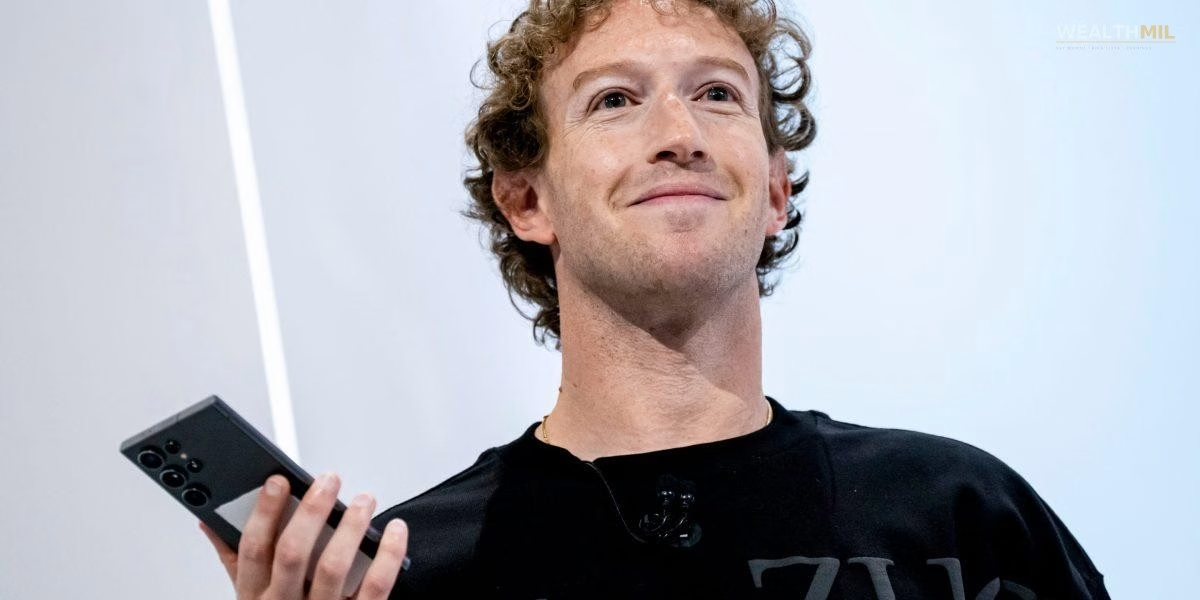
When Mark Zuckerberg launched Facebook from a Harvard dorm room in 2004, few could have predicted that the platform would grow into one of the most influential digital companies in history. More than two decades later, Zuckerberg sits among the richest people in the world, with a fortune tied directly to the global expansion of Meta and its family of apps. His wealth reflects much more than stock ownership. It represents the scale of modern social media, digital advertising, AI infrastructure, and global online communication.
Meta now controls platforms used by billions of people daily, including Facebook, Instagram, WhatsApp, Messenger, and Threads. The company has also invested aggressively in artificial intelligence, augmented reality, and virtual reality under its long-term metaverse strategy. Zuckerberg’s net worth continues to fluctuate alongside Meta’s market value, but his position near the top of the billionaire rankings highlights how deeply the company shapes global digital culture and business. According to Forbes’ real-time billionaire rankings, Zuckerberg’s fortune in 2026 remains above $200 billion, placing him among the wealthiest people on Earth.
Mark Zuckerberg’s current net worth is closely tied to Meta stock performance
A large percentage of Zuckerberg’s wealth comes from his ownership stake in Meta. Reports indicate he controls roughly 13 percent of the company’s shares while maintaining majority voting control through Meta’s dual-class stock structure. That arrangement gives him enormous influence over company decisions despite public ownership.
Forbes estimated Zuckerberg’s real-time net worth at more than $200 billion during May 2026. His ranking among global billionaires changes frequently because Meta’s share price moves heavily with investor sentiment around AI spending, advertising growth, and long-term metaverse investments.
Meta’s stock recovery over the past few years played a major role in rebuilding Zuckerberg’s fortune. The company experienced major criticism and market pressure during the metaverse-heavy spending phase in 2022 and 2023. However, strong advertising growth, rising profitability, and renewed investor confidence in AI helped Meta regain momentum. That rebound dramatically increased Zuckerberg’s wealth because most of his fortune remains tied to company equity rather than salary.
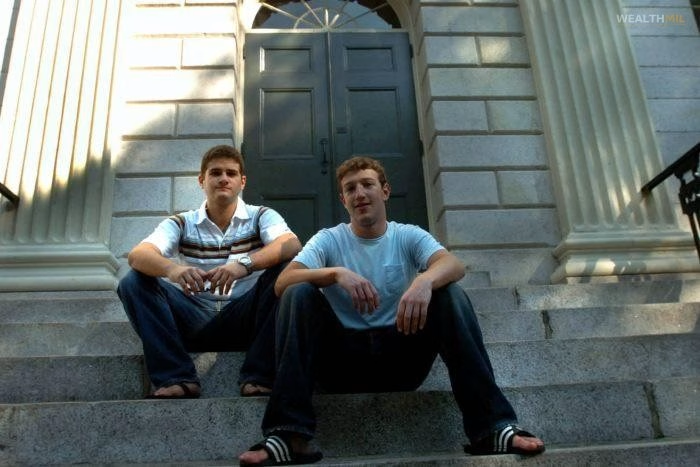
Unlike celebrities or entrepreneurs who diversify into multiple industries, Zuckerberg’s wealth remains heavily concentrated in Meta. This creates massive upside during stock rallies but also exposes him to sharp declines whenever investors question the company’s future direction. That volatility has become a defining feature of billionaire wealth in the modern technology era.
Facebook’s rise transformed Zuckerberg into one of tech’s youngest billionaires
The original Facebook launched as a social networking platform for Harvard students before expanding to other universities and eventually the general public. Growth happened rapidly because the platform simplified online identity and digital communication in a way that felt more personal than earlier internet forums or chatrooms.
By the late 2000s, Facebook had become one of the fastest-growing technology companies in the world. Advertising revenue exploded as businesses realized the platform could target users with unprecedented precision. Zuckerberg became a billionaire in his twenties, making him one of the youngest self-made billionaires in history.
Facebook’s 2012 IPO marked a turning point for Zuckerberg’s personal fortune. Although the company faced skepticism after its public debut, mobile advertising eventually became one of the strongest digital business models in the industry. Meta’s ability to monetize user engagement across billions of accounts helped transform the company into an advertising powerhouse.
Instagram and WhatsApp acquisitions later strengthened Meta’s dominance. Instagram became critical to younger audiences and influencer culture, while WhatsApp expanded Meta’s international communication footprint. Those acquisitions are now viewed as some of the most important deals in modern tech history because they prevented rivals from controlling massive social ecosystems.
Meta’s global reach explains the scale of Zuckerberg’s fortune
Meta’s influence extends far beyond Facebook itself. The company owns several of the most widely used social and messaging platforms on the planet. Billions of users interact daily with Instagram, Messenger, WhatsApp, Facebook, and Threads, creating an enormous digital network effect.
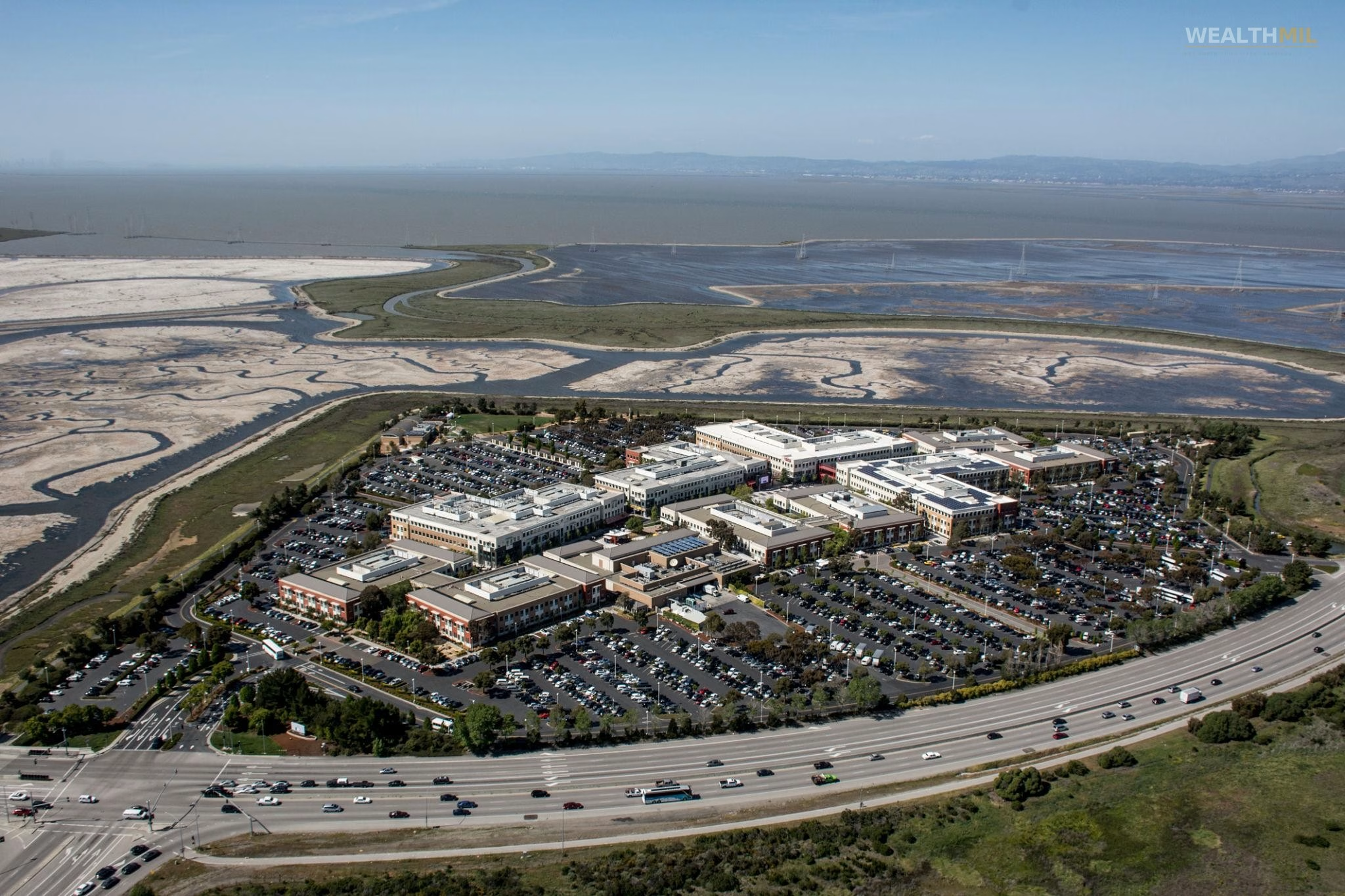
That scale matters because digital advertising rewards attention and engagement. The more time users spend on Meta platforms, the more valuable its advertising ecosystem becomes. Businesses ranging from local stores to multinational corporations rely heavily on Meta’s ad targeting tools to reach customers.
Meta’s advertising engine remains the company’s primary money-maker. Financial reports from 2025 showed strong year-over-year revenue growth, with ad sales continuing to drive the majority of company earnings. Meta reported nearly $201 billion in annual revenue for 2025, highlighting the extraordinary size of its business operations.
The company’s dominance in digital advertising also explains why investors closely watch user growth, engagement trends, and AI-powered recommendation systems. Even small improvements in ad performance can generate billions in additional revenue. Because Zuckerberg owns such a large share of Meta, these gains directly impact his personal fortune.
Meta’s global presence also creates resilience. While certain apps may lose popularity in specific regions or demographics, the broader ecosystem remains massive enough to continue generating enormous advertising demand worldwide.
Instagram became one of Meta’s smartest business decisions
One of the most important moments in Zuckerberg’s business career came when Facebook acquired Instagram in 2012. At the time, some analysts questioned the billion-dollar purchase price for a relatively small app. In hindsight, the deal became one of the defining acquisitions of the social media era.
Instagram evolved from a simple photo-sharing platform into a central force in influencer marketing, creator culture, fashion promotion, celebrity branding, and short-form video content. The platform helped Meta maintain relevance among younger audiences even as Facebook itself aged demographically.
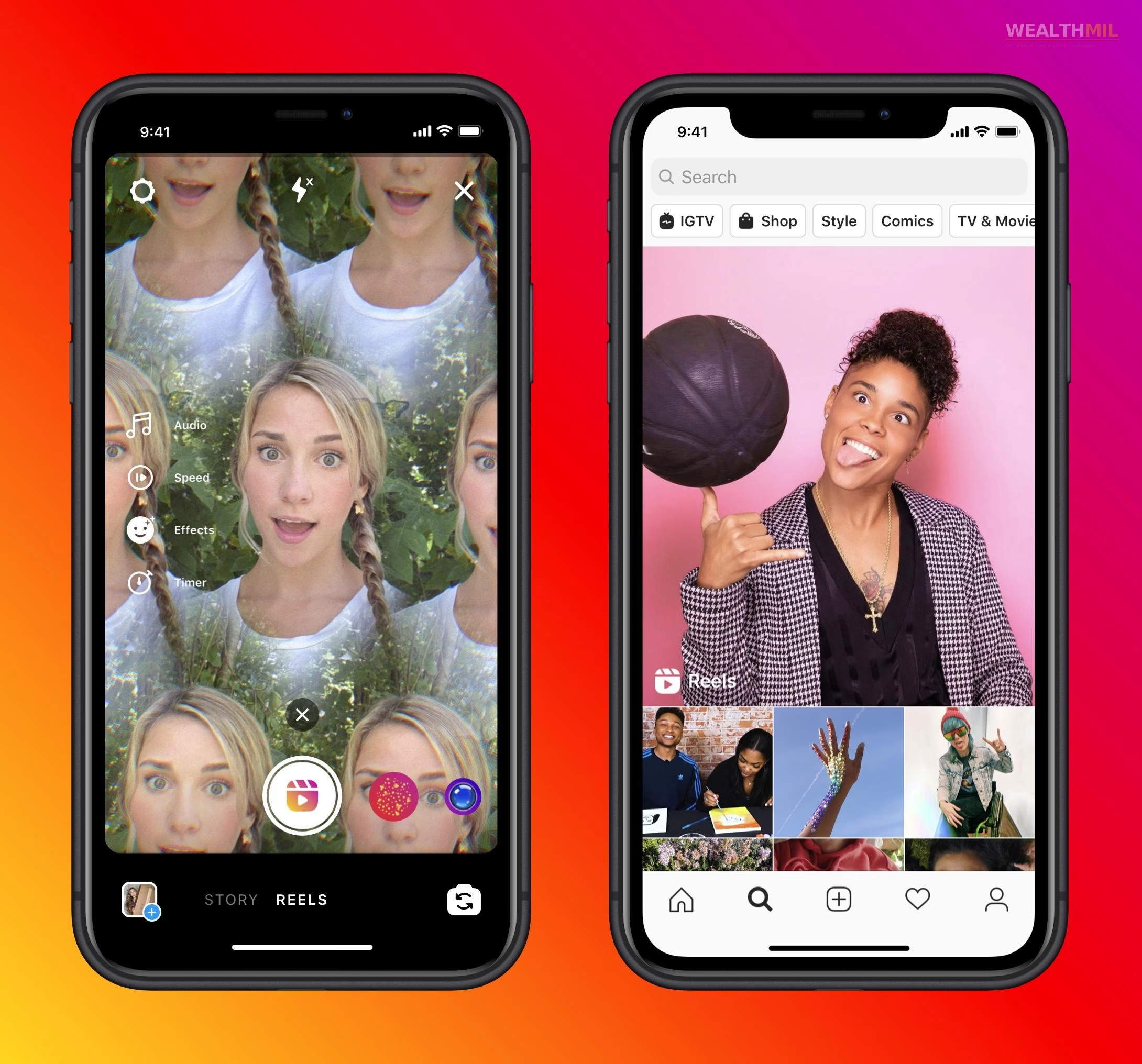
Reels also positioned Instagram to compete against TikTok in the short-form video market. Meta aggressively integrated AI recommendation systems into Instagram feeds to improve engagement and advertising efficiency. These updates became increasingly important as competition in the social media industry intensified.
Instagram’s success significantly boosted Meta’s advertising revenue. Brands now allocate massive marketing budgets toward Instagram campaigns because of the platform’s reach and targeting capabilities. That revenue contributes directly to the company valuation supporting Zuckerberg’s fortune.
The acquisition also demonstrated Zuckerberg’s willingness to buy emerging competitors before they became existential threats. Similar logic influenced Meta’s purchase of WhatsApp, which strengthened the company’s messaging dominance globally.
WhatsApp expanded Meta’s international power
While Facebook and Instagram dominate many Western markets, WhatsApp became essential to Meta’s international expansion. The messaging app gained massive popularity across India, Latin America, Europe, Africa, and other regions because of its simplicity and reliability.
WhatsApp transformed digital communication by replacing traditional SMS messaging for millions of users. Businesses also began using the platform for customer service, marketing, and direct communication. That evolution opened additional monetization opportunities for Meta.
India became one of WhatsApp’s largest markets, giving Meta enormous influence in one of the world’s fastest-growing digital economies. The platform’s reach helped strengthen Meta’s broader ecosystem because users often remained connected across multiple Meta-owned services.

Although WhatsApp originally generated less revenue than Facebook or Instagram, its strategic importance remains enormous. The platform reinforces Meta’s global network effect and gives the company long-term opportunities in payments, commerce, and AI-powered communication.
Zuckerberg’s wealth benefits not only from direct revenue growth but also from the market belief that Meta controls some of the world’s most important digital infrastructure. WhatsApp plays a major role in that perception.
Meta’s AI investments are reshaping Zuckerberg’s business empire
Artificial intelligence has become one of Meta’s biggest priorities. Zuckerberg increasingly frames AI as central to the company’s future growth strategy, especially as competition intensifies among major technology firms.
Meta has invested heavily in AI infrastructure, recommendation systems, generative AI tools, and AI-powered assistants. The company launched consumer-facing AI products while integrating AI features across Facebook, Instagram, Messenger, and WhatsApp.
Investors initially worried about the scale of Meta’s spending on AI and Reality Labs. Reports suggested that Meta planned tens of billions in infrastructure spending to compete against rivals such as OpenAI, Google, Microsoft, and Amazon. Those investments sometimes created volatility in Meta’s stock price because shareholders questioned short-term profitability.
However, Meta’s core advertising business remained strong enough to support aggressive expansion. AI systems improved content recommendations and ad targeting, helping increase user engagement and revenue efficiency. This reassured investors that Meta could fund future technologies while maintaining profitability.
Zuckerberg has repeatedly argued that AI will become foundational to communication, entertainment, and business operations. If Meta succeeds in integrating AI deeply into its ecosystem, the company could further expand its dominance in the digital economy. That possibility remains a major reason investors continue valuing Meta so highly.

The metaverse gamble changed public perception of Zuckerberg
Meta’s rebranding from Facebook to Meta in 2021 represented a dramatic shift in corporate identity. Zuckerberg wanted the company associated not just with social media but also with immersive digital experiences, virtual reality, and augmented reality technologies.
The metaverse strategy generated intense debate across the tech industry. Supporters believed Meta was preparing for the next major computing platform, while critics argued the company was spending excessively on speculative technology.
Reality Labs became the center of this strategy. The division focused on VR headsets, smart glasses, and immersive digital environments. Despite generating billions in losses, Zuckerberg continued investing heavily in the division because he viewed it as critical to Meta’s long-term future.
The market reaction was mixed. At certain points, Meta’s stock declined sharply because investors worried that metaverse spending would damage profitability. Zuckerberg’s personal wealth dropped significantly during those downturns because his fortune depends so heavily on Meta shares.
Still, Zuckerberg maintained control of the company’s strategic direction through Meta’s voting structure. That authority allowed him to continue investing aggressively despite shareholder skepticism. Over time, Meta’s advertising recovery and AI momentum helped stabilize investor confidence.
The metaverse initiative also changed Zuckerberg’s public image. He evolved from a social media executive into a tech leader focused on future computing systems, AI infrastructure, and virtual interaction technologies.
Zuckerberg’s leadership style remains one of Silicon Valley’s most debated topics
Few technology executives generate as much debate as Zuckerberg. Supporters credit him with building one of the most successful digital businesses in history, while critics point to privacy controversies, misinformation concerns, and the social impact of Meta platforms.
Meta has faced scrutiny from regulators, lawmakers, and advocacy groups across multiple countries. Concerns about user data, election misinformation, online safety, and platform influence have repeatedly placed Zuckerberg under political pressure.
Despite criticism, Meta’s financial performance demonstrates the company’s resilience. Billions of users continue relying on its platforms daily, and advertisers still spend heavily across Meta’s ecosystem. That business strength reinforces Zuckerberg’s enormous personal wealth.
Zuckerberg’s leadership style also reflects long-term thinking. He often prioritizes strategic positioning over short-term market approval, particularly in areas like VR and AI. That approach creates volatility but also allows Meta to pursue ambitious technological goals.
His control structure gives him unusual authority compared to many public company CEOs. Even when investors disagree with his decisions, Zuckerberg retains enough voting power to maintain strategic direction. That level of control has become central to Meta’s identity as a company.
Real estate and philanthropy are also part of Zuckerberg’s wealth story
Although Meta stock represents the majority of his fortune, Zuckerberg also owns significant real estate holdings. Reports have linked him to properties in California, Hawaii, and other high-value locations.
Zuckerberg and his wife, Priscilla Chan, are also heavily involved in philanthropy through the Chan Zuckerberg Initiative. The organization focuses on areas such as education, science, medical research, and community development.
The initiative reflects a broader trend among tech billionaires who channel portions of their wealth into large-scale social projects. Zuckerberg previously pledged to dedicate much of his wealth toward philanthropic causes over his lifetime.
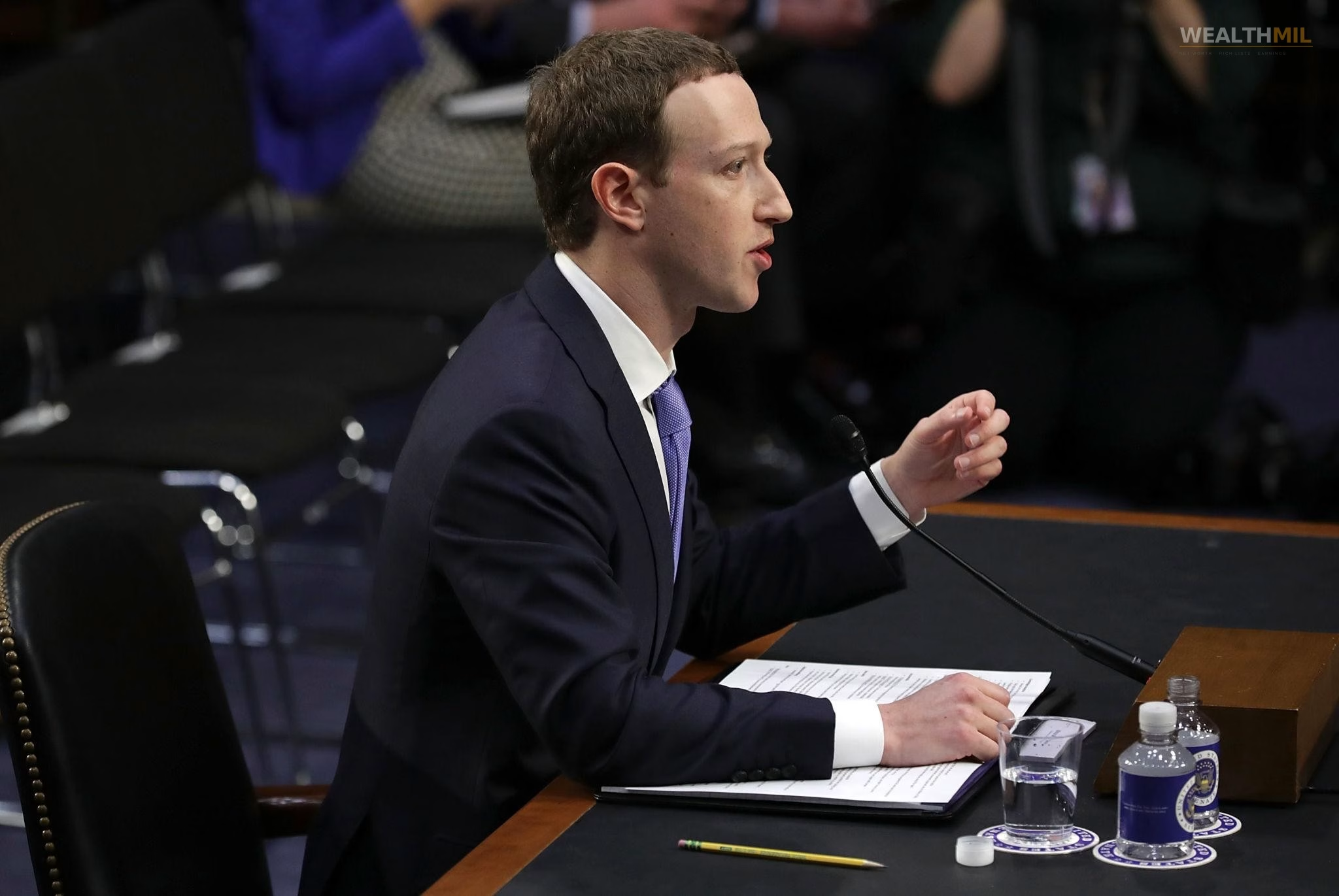
Critics sometimes question whether billionaire philanthropy gives wealthy individuals excessive influence over public priorities. Supporters argue these initiatives fund important research and educational programs that governments may overlook.
Regardless of public opinion, the philanthropic dimension adds another layer to Zuckerberg’s public identity. He is not only a tech executive but also a major figure in global conversations about science funding, education reform, and social impact investing.
Meta’s future will likely determine whether Zuckerberg climbs even higher on billionaire rankings
The future of Zuckerberg’s net worth depends almost entirely on Meta’s long-term success. If the company continues dominating digital advertising while successfully integrating AI and wearable technologies, his fortune could grow substantially in the coming years.
AI represents perhaps the biggest opportunity. Meta wants to compete aggressively in AI assistants, personalized recommendations, business automation, and generative content tools. Success in those areas could strengthen Meta’s ecosystem and increase revenue across multiple platforms.
Wearable technology is another important area. Smart glasses and augmented reality devices may eventually become a significant computing category. Zuckerberg believes Meta can help define that future, much as smartphones reshaped internet usage during the 2010s.
Competition remains intense, however. TikTok, YouTube, OpenAI, Google, Apple, and other major companies continue fighting for user attention, AI dominance, and advertising revenue. Regulatory pressure also remains a constant challenge for Meta globally.
Still, Meta’s scale gives it enormous advantages. Billions of users, strong cash flow, and deep advertising infrastructure make the company one of the most powerful digital businesses in the world. As long as Meta remains central to global online communication, Zuckerberg’s fortune is likely to remain among the largest in the technology industry.

Mark Zuckerberg’s wealth represents more than personal success
Zuckerberg’s fortune symbolizes the immense economic power created by modern internet platforms. His rise mirrors the transformation of social media from a communication tool into a global advertising, entertainment, and technology ecosystem.
Meta’s platforms shape how people communicate, consume news, market products, follow celebrities, build businesses, and interact online. That influence generated extraordinary financial rewards for the company’s founder and largest shareholder.
His net worth also highlights how concentrated wealth can become in the digital era. A single platform serving billions of users can create economic value on a scale that was almost unimaginable during earlier periods of business history.
At the same time, Zuckerberg’s career reflects the risks and controversies surrounding tech power. Debates about privacy, misinformation, AI ethics, and platform influence continue shaping public perception of Meta and its leadership.
Even with those controversies, Zuckerberg remains one of the defining business figures of the 21st century. His wealth continues tracking the growth of Meta’s global ecosystem, making his fortune a direct reflection of how deeply social media and digital technology influence modern life.
Meta’s continued push into commerce and creator monetization could further expand its revenue streams in the coming years. Platforms like Instagram and Facebook are increasingly integrating shopping features, allowing users to discover and purchase products without leaving the app.

This shift positions Meta not just as a social media company but as a digital marketplace competing with e-commerce giants. If these efforts scale successfully, they could unlock new layers of profitability beyond advertising, further strengthening the company’s valuation. As a result, Zuckerberg’s net worth would benefit directly from Meta’s ability to evolve with changing online consumer behavior.
Another important factor influencing Zuckerberg’s long-term wealth is regulatory scrutiny across global markets. Governments in the United States, Europe, and India continue to evaluate laws around data privacy, competition, and platform accountability.
These regulations could impact how Meta operates, monetizes data, and expands into new sectors like AI and digital payments. Despite these challenges, Meta’s massive user base and financial strength give it a strong position to adapt to policy changes. Zuckerberg’s ability to navigate these regulatory landscapes will play a crucial role in determining whether his fortune continues to grow at the same scale.