
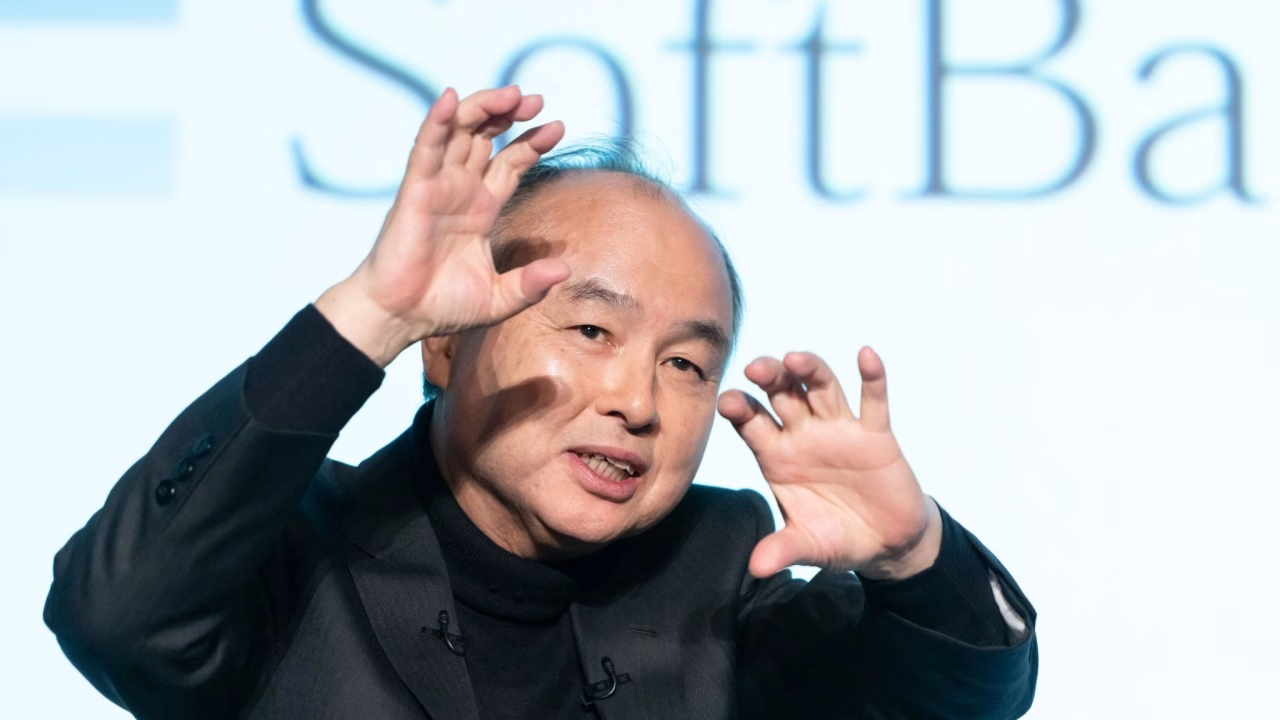
Masayoshi Son, the founder of SoftBank, once experienced one of the most dramatic wealth collapses in modern financial history. At the peak of the dotcom boom in 2000, Son’s net worth surged to around $78 billion, briefly making him one of the richest individuals in the world. However, within months of the market crash, the majority of that fortune disappeared, turning his story into a defining example of both risk and resilience in the tech industry.
Today, as Son once again bets aggressively on artificial intelligence, his early 2000s collapse remains central to understanding his investment philosophy.
How Masayoshi Son Built a $78 Billion Fortune
Before the crash, Son had already established himself as a bold and unconventional entrepreneur. After moving to the United States as a teenager and graduating from the University of California, Berkeley, he returned to Japan and founded SoftBank in 1981. The company initially focused on software distribution and publishing but quickly expanded into telecommunications and internet ventures.
By the late 1990s, SoftBank had transformed into a major tech investment powerhouse. Son invested heavily in emerging internet companies, including early stakes in firms like Yahoo and Alibaba. According to Celebrity Net Worth, one of his most famous decisions came when he invested $20 million in Alibaba after a brief meeting with founder Jack Ma, a move he later said was driven by the “sparkle” he saw in Ma.
As the dotcom bubble expanded, these investments skyrocketed in value. By early 2000, SoftBank’s market valuation reached approximately $180 billion, pushing Son’s personal wealth to its peak.
Dotcom Crash Wiped Out 98% of His Wealth
The turning point came quickly. The NASDAQ, which hosted many of the world’s leading internet companies, began collapsing in March 2000. Within months, tech valuations dropped sharply, and companies tied to the internet sector suffered massive losses.
SoftBank, heavily exposed to these investments, was hit especially hard. Son later revealed that the majority of his wealth decline happened in a short span. His net worth fell by tens of billions of dollars in just the first six months of the crash, eventually dropping from $78 billion to nearly $1 billion.
The company’s market value mirrored this collapse, plunging by roughly 98% from its peak. Investments that once seemed unstoppable, including stakes in companies like E*Trade, lost most of their value. The scale and speed of the loss made it one of the largest personal wealth declines ever recorded.
Why Son Continued Taking Massive Risks
Despite the scale of the crash, Son did not shift to a conservative strategy. Instead, he doubled down on high-risk, high-reward investments, a pattern that continues to define his career. His philosophy has remained consistent over the years, emphasizing bold decision-making even after major setbacks.
“The greatest risk is not taking any risk at all,” Son has said, a statement frequently cited in coverage of his investment approach. This mindset led to the creation of SoftBank’s $100 billion Vision Fund, which aimed to dominate the next wave of technology innovation.
Not all of these bets succeeded. Investments like WeWork became high-profile failures, drawing criticism of Son’s aggressive style. However, his willingness to take risks also positioned him to benefit from major technological shifts.
AI Investments Fuel His Comeback
In recent years, Son has shifted his focus toward artificial intelligence, viewing it as the next transformative industry. His investments in AI infrastructure and companies have helped rebuild his wealth significantly, bringing his net worth back to an estimated $60 billion range as of 2026.
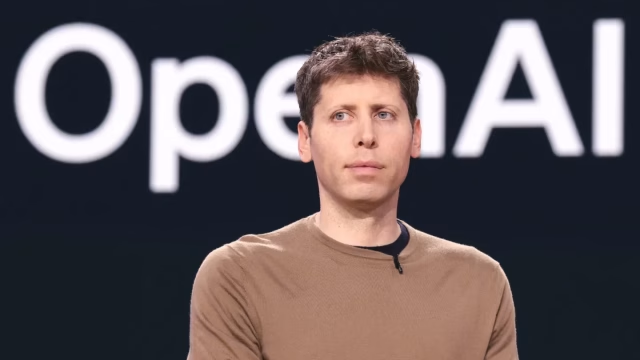
SoftBank has committed tens of billions of dollars to AI-related ventures, including major funding tied to OpenAI. Reports suggest that Son is positioning the company to play a central role in the future of AI development, even selling other assets to support this strategy.
His belief in the sector remains strong, with Son reportedly stating that the AI revolution could be “far bigger than the dotcom era,” reinforcing his reputation as an investor willing to bet on long-term technological change.