

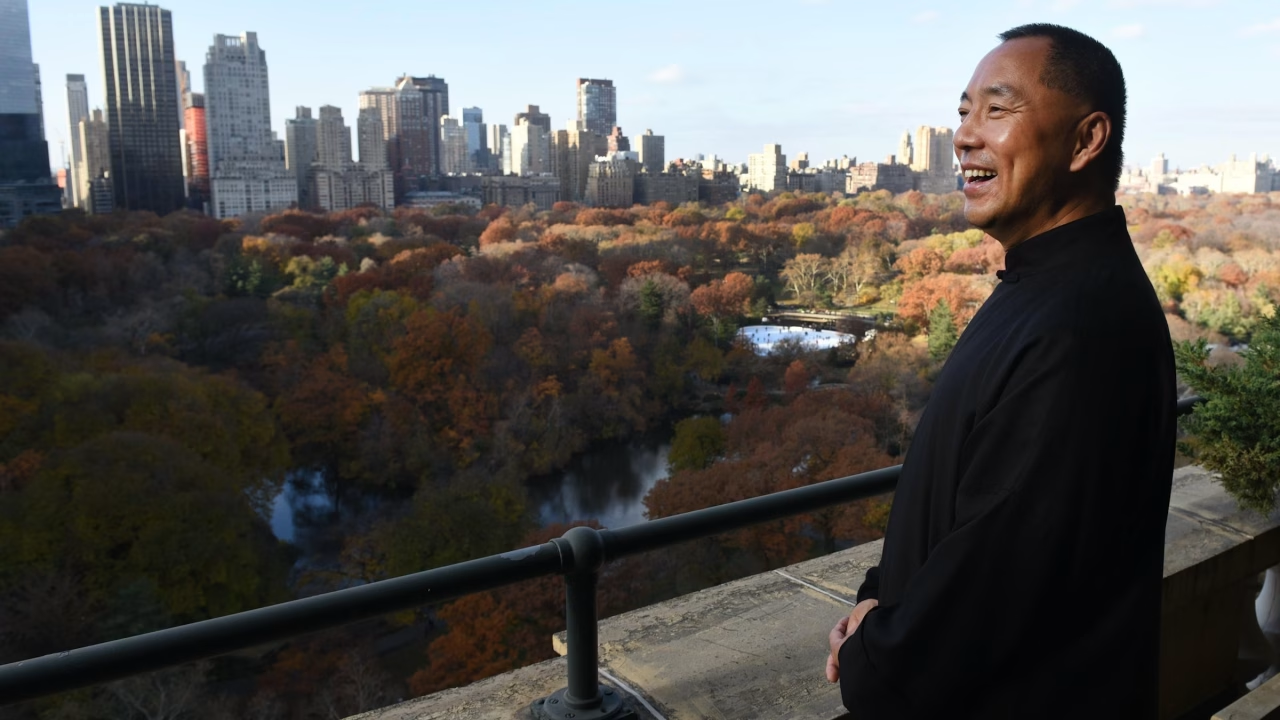
The dramatic downfall of Miles Guo, also known as Guo Wengui, has concluded in one of the most significant fraud sentencings in recent years. Once presenting himself as a wealthy Chinese dissident and anti-Communist crusader living in exile in the United States, Guo has now been sentenced to 30 years in federal prison for orchestrating a fraud scheme that prosecutors say raised more than $1 billion from followers worldwide.
Guo’s lifestyle once reflected extreme wealth and influence, including a $68 million Manhattan penthouse overlooking Central Park, luxury estates in New Jersey and Connecticut, superyachts, and rare supercars. But behind this image, federal prosecutors argued, was a sprawling deception built on unregistered investments, fabricated crypto assets, and politically charged fundraising campaigns. According to the U.S. Attorney’s Office for the Southern District of New York, his operations relied heavily on misleading promises of financial returns tied to activism against the Chinese Communist Party.
How the $1 Billion Scheme Expanded Across Multiple Platforms
Prosecutors detailed how the scheme began around 2018 with the creation of organizations such as the Rule of Law Foundation and Rule of Law Society. Guo allegedly presented these groups as pro-democracy initiatives, claiming he personally contributed $100 million to establish credibility and attract global support.
From there, the operation expanded into multiple financial streams. One involved GTV Media Group, where an unregistered stock offering reportedly raised massive funds before drawing regulatory scrutiny. When authorities began investigating, new structures emerged. These included lending programs that promised GTV-linked returns and membership schemes such as G|CLUBS, which prosecutors said generated hundreds of millions of dollars through misleading investment claims.
A particularly controversial expansion came with the introduction of the Himalaya Exchange and digital assets such as “H Coin” and “H Dollar.” Authorities later stated that these cryptocurrencies had no legitimate blockchain backing and were instead internally tracked figures with no real asset support. Despite this, Guo allegedly promoted them as revolutionary financial tools backed by non-existent gold reserves.
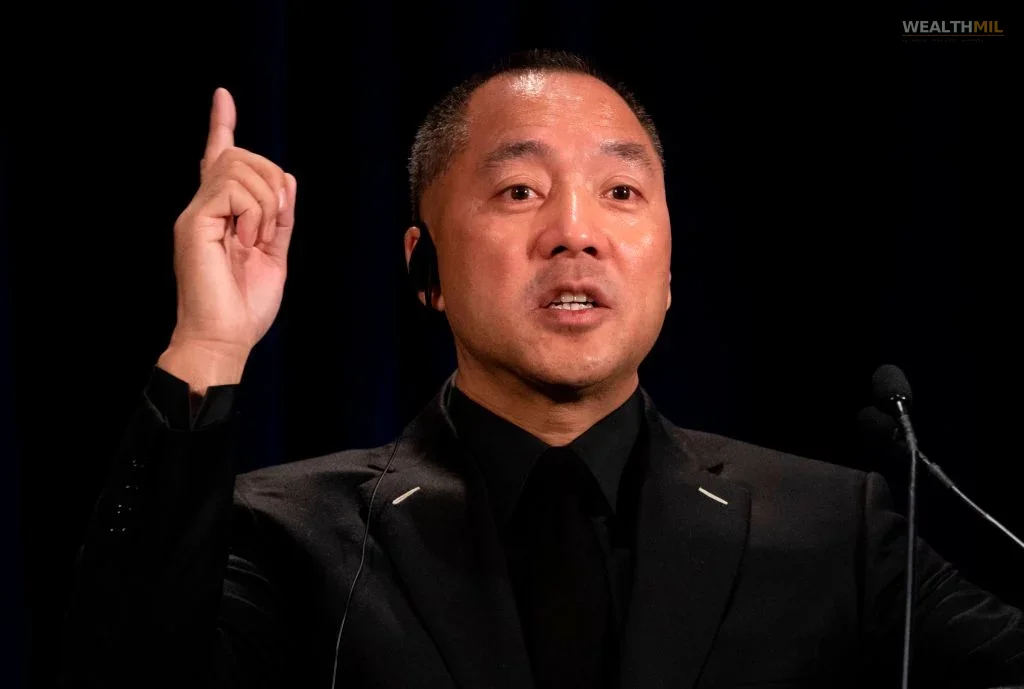
Guo’s influence extended beyond finance and into U.S. political circles. He developed associations with prominent figures, including former Trump adviser Steve Bannon, with whom he collaborated on media and political initiatives. Together, they promoted the “New Federal State of China,” a movement presented as an opposition force to the Chinese government.
For supporters, Guo was not merely an investor or businessman but a symbolic leader of resistance. This emotional and political framing, prosecutors argued, was central to why many individuals trusted him with their savings. Judge Analisa Torres directly addressed this dynamic during sentencing, stating that Guo had
“preyed on people seeking to bring democracy to China,”
reinforcing the court’s view that ideology was used as leverage for financial exploitation.
Luxury Spending and Asset Seizures Follow the Collapse
Alongside the prison sentence, the court ordered Guo to forfeit approximately $889 million in criminal proceeds. This includes luxury real estate, vehicles, and other assets purchased with investor funds. Among the seized properties were a $26.5 million New Jersey mansion, high-end vehicles such as a Lamborghini, Rolls-Royce Phantom, and Bugatti, as well as yachts and luxury furnishings.
Federal authorities had already seized more than $630 million prior to sentencing, and these assets are expected to contribute toward victim restitution. Prosecutors also detailed spending patterns involving family members, including multimillion-dollar vehicles and extravagant personal expenses, all allegedly tied to investor money.
Guo’s journey from Chinese real estate tycoon to U.S.-based dissident figure was marked by reinvention and controversy. After fleeing China in 2015, he built a public identity centered on anti-corruption claims and political activism. His online presence attracted a global following, particularly among individuals sympathetic to his criticism of Beijing.
However, the federal jury ultimately rejected the defense argument that Guo was being politically targeted. Instead, they convicted him in 2024 on multiple charges, including racketeering conspiracy, securities fraud, and money laundering. The sentencing now closes a case that prosecutors describe as one of the most elaborate financial frauds tied to political identity in recent U.S. history.