The life of Nelson Bunker Hunt remains one of the most extraordinary financial stories ever told—a journey that saw him rise to become the richest person in the world, only to lose everything in a matter of months. While many investors experience highs and lows, Hunt’s story stands apart for its sheer scale, ambition, and the dramatic collapse that followed.
At his peak in 1980, Hunt controlled billions in assets, vast oil fields, and even a significant portion of the global silver market. Less than a decade later, he filed for bankruptcy, marking one of the most surprising reversals of fortune in modern financial history.
Early Life and Oil Wealth Foundations
Born in 1926 in Arkansas, Hunt was the son of oil tycoon H.L. Hunt, one of the pioneers of the Texas oil boom. Growing up in a family already steeped in wealth and ambition, Nelson was naturally drawn to the energy sector.
Inspired by global oil success stories like Jean Paul Getty, Hunt sought opportunities beyond the United States. Early ventures in Saudi Arabia and Pakistan failed, costing him significant capital. However, persistence paid off when he turned his attention to Libya in the early 1960s.
There, Hunt discovered the massive Sarir oil field—one of the largest in North Africa. The discovery transformed him into a global energy powerhouse, generating billions in revenue and establishing him as a dominant figure in international oil markets.
Hunt’s success in Libya did not last forever. In 1973, Muammar Gaddafi seized power and nationalized foreign-owned oil assets, including Hunt’s operations.
The move abruptly ended Hunt’s most lucrative venture. While he retained significant wealth, the loss highlighted the risks of international investments tied to political instability.
Rather than retreat, Hunt doubled down on diversification, expanding into real estate, agriculture, and eventually commodities—setting the stage for the decision that would define his legacy.
The Silver Gamble That Changed Everything
In the 1970s, Hunt and his brothers, including Lamar and William Herbert Hunt, began investing heavily in silver. Initially intended as a hedge against inflation, the strategy quickly escalated into an unprecedented attempt to dominate the global silver market.
By 1979, the Hunt brothers controlled roughly one-third of the world’s silver supply through a combination of physical holdings and futures contracts. Much of this position was built using borrowed money, significantly increasing risk.
At first, the strategy appeared brilliant. Silver prices skyrocketed from around $6 per ounce to nearly $49, creating massive paper profits and elevating Hunt’s fortune to extraordinary levels.
The surge drew widespread attention—and criticism. Luxury retailer Tiffany & Co. publicly condemned the Hunts’ actions in a New York Times advertisement, stating:
“We think it is unconscionable for anyone to hoard several billion… dollars’ worth of silver and thus drive the price up so high.”
Becoming the Richest Man in the World
At the height of the silver boom, Hunt’s wealth reached an estimated $4 billion—equivalent to roughly $16 billion today. This briefly made him the richest person on the planet, surpassing contemporaries in the oil and finance sectors.
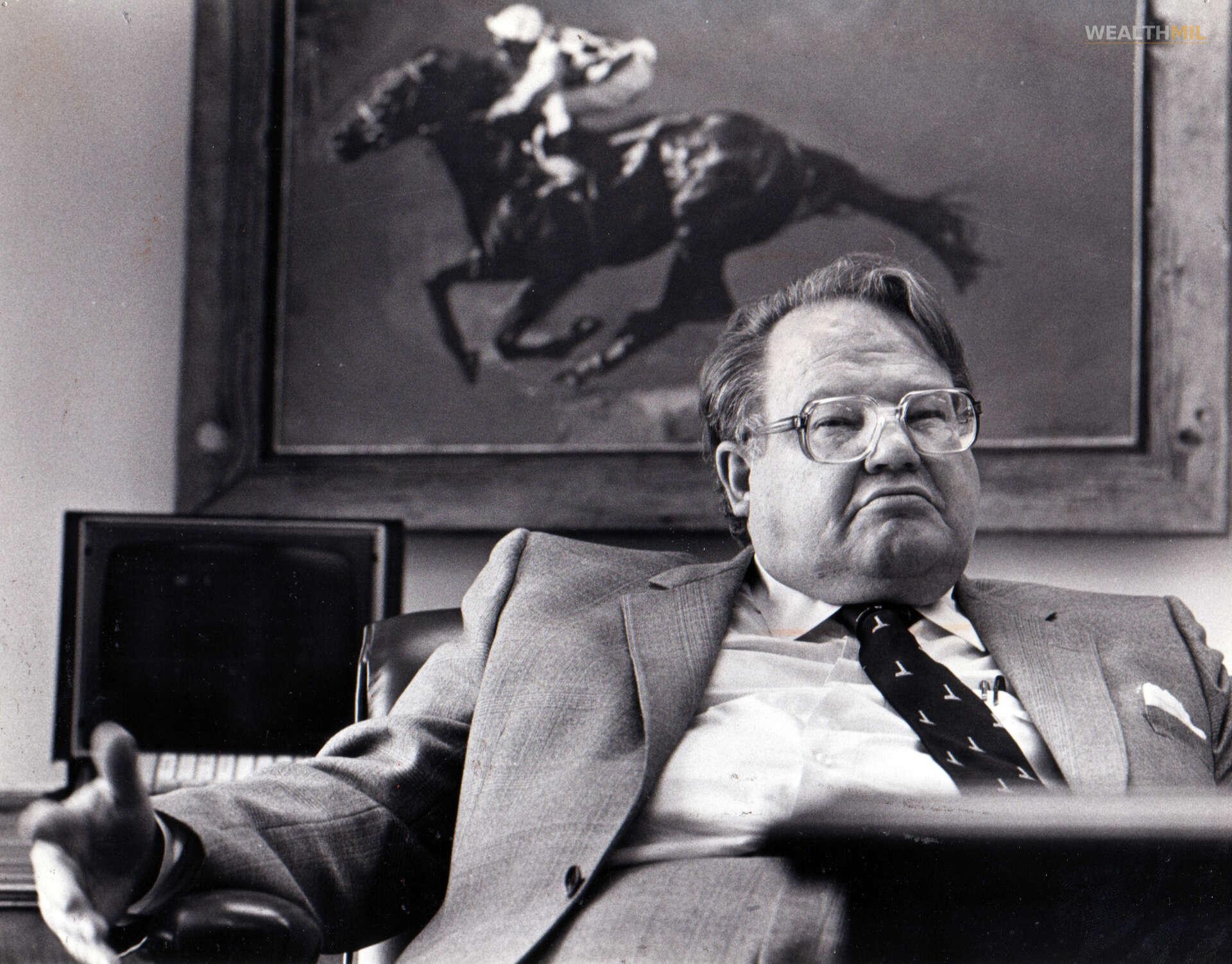
His assets were vast and diverse, including millions of acres of land, luxury properties, and over 1,000 thoroughbred horses. Despite this wealth, Hunt was known for his relatively modest lifestyle, often favoring practical clothing and everyday habits over extravagance.
However, the same aggressive strategy that fueled his rise would soon trigger his downfall.
“Silver Thursday” and the Collapse
On March 27, 1980—later dubbed “Silver Thursday”—the silver market collapsed. Prices plummeted rapidly as exchanges tightened trading rules and lenders demanded repayment on leveraged positions.
For Hunt and his brothers, the consequences were catastrophic. Their multibillion-dollar holdings turned into massive debt almost overnight. Margin calls they could not meet forced liquidations, triggering a chain reaction across financial markets.
Within a single day, their $7 billion position transformed into a $1.7 billion liability. Lawsuits followed, and regulators stepped in to investigate market manipulation.
The fallout reshaped commodity trading rules and remains one of the most significant financial crises tied to speculative investing.
Legal Battles and Financial Ruin
In the years following the crash, Hunt faced mounting legal and financial challenges. Courts ordered substantial repayments, and regulatory agencies imposed fines and restrictions.
Eventually, Hunt was banned from trading commodities entirely. To cover debts, he was forced to sell off major assets, including land holdings and his prized horse collection.
In 1988, he officially filed for bankruptcy. His remaining estate, valued at around $150 million, was liquidated to satisfy creditors.
During a congressional hearing, Hunt reflected on his situation with a remark that has since become widely quoted:
“I don’t have the figures in my head. People who know how much they’re worth aren’t usually worth that much.”
Life After the Collapse
Unlike his brother William Herbert Hunt, who later rebuilt his fortune through oil investments, Nelson never fully recovered financially. He spent his later years living modestly in Texas.
By the time of his death in 2014, Hunt was far removed from the billionaire status he once held. He passed away in an assisted living facility, a stark contrast to the immense wealth and influence he once commanded.
Hunt’s story continues to resonate as a cautionary tale about the dangers of excessive leverage and market concentration. His attempt to control the silver market demonstrated how quickly fortunes built on speculation can unravel.
At the same time, his earlier success in oil exploration highlights the rewards of calculated risk-taking and global ambition.
Few individuals have experienced both extremes so dramatically—rising to the very top of global wealth rankings and then falling into bankruptcy within a decade.