For more than 40 years, Pat Sajak was one of the most recognizable faces on American television. Millions of viewers ended their evenings watching him host Wheel of Fortune with calm humor, effortless timing, and a style that never tried too hard to dominate contestants or steal attention from the game itself. That consistency helped transform the series into one of the most successful syndicated programs in TV history.
Sajak officially stepped away from the flagship version of Wheel of Fortune in 2024 after more than four decades behind the wheel. His retirement closed a historic chapter in television, but it also reignited public curiosity about how much wealth he accumulated during his legendary run. Reports from outlets including Parade and Celebrity Net Worth estimate Pat Sajak’s net worth at roughly $75 million, built largely through hosting salaries, licensing deals, and long-term television contracts.
His financial success is not just about celebrity status. It represents the rare economic power of staying relevant in one television role for decades without major controversy, burnout, or decline in audience trust. In an entertainment industry obsessed with constant reinvention, Sajak became wealthy by doing almost the opposite.
Pat Sajak’s estimated net worth in 2026
Most current estimates place Pat Sajak’s net worth at around $75 million. Multiple entertainment and finance-focused outlets have reported figures in that range following his retirement from Wheel of Fortune. While exact private financial details are never fully public, the number is considered credible because his salary history and television contracts have been widely discussed for years.
A major reason his wealth became such a topic of discussion is how efficiently he earned it. Reports from Celebrity Net Worth stated that Sajak earned roughly $14 million annually hosting the syndicated game show during his later years. Older Forbes-based salary reports also placed his pay around $15 million per season.
What made the salary especially fascinating to viewers was the show’s production schedule. Wheel of Fortune famously taped several episodes in a single day, allowing Sajak to work only a limited number of production days each month. Even so, the show consistently delivered massive ratings and remained one of syndication’s most valuable properties.
Beyond direct salary, Sajak reportedly earned additional money through licensing agreements connected to Wheel of Fortune branding, including slot machine licensing tied to the franchise. These side revenue streams significantly boosted the long-term value of his television fame.
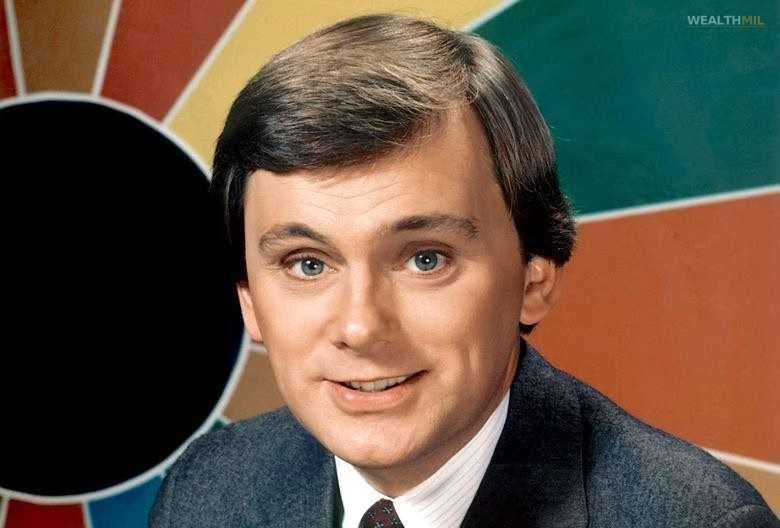
How Wheel of Fortune made Pat Sajak a television institution
Before becoming a household name, Sajak worked in radio and local broadcasting. His early career included military broadcasting work during the Vietnam War and weather reporting jobs before his breakthrough in television. His rise was gradual rather than explosive, which partly explains why his hosting style always felt grounded and conversational.
Everything changed when he became the host of Wheel of Fortune in 1981. The show already existed, but Sajak’s chemistry with longtime co-host Vanna White helped redefine its identity for mainstream American audiences. Their relaxed interaction became a major reason viewers kept returning night after night.
Unlike many game show personalities who relied on loud catchphrases or oversized theatrics, Sajak’s strength was restraint. He allowed contestants and puzzles to remain the center of attention while still bringing dry humor and spontaneity to the program. That balance made the show feel welcoming across generations.
Over time, Wheel of Fortune evolved into more than a successful TV program. It became part of daily routine viewing for families across the United States. In his farewell message, Sajak himself acknowledged that the show became “more than a game,” describing it as a shared cultural experience for multiple generations of viewers.
Longevity became Pat Sajak’s greatest financial advantage
Hollywood often rewards short-term hype, but television syndication rewards stability. Pat Sajak’s career is one of the clearest examples of that reality. He hosted more than 8,000 episodes of Wheel of Fortune, creating an unmatched level of brand association between himself and the series.
That consistency gave networks and advertisers something extremely valuable: predictability. Viewers trusted the format, trusted the hosts, and continued tuning in year after year. In an era where many television personalities cycle through projects rapidly, Sajak represented reliability.
His long tenure also gave him tremendous leverage during contract negotiations. As the face of one of television’s most profitable syndicated properties, replacing him carried significant risk. By the time newer contracts were negotiated in later years, Sony and the producers were paying not just for hosting ability but also for audience familiarity and institutional trust.
This is one reason why longevity in television can sometimes outperform trend-driven fame financially. A blockbuster actor may earn massive checks temporarily, but a syndicated television personality with decades of steady income can quietly build generational wealth over time.

Pat Sajak’s retirement marked the end of a television era
In June 2023, Sajak announced that the 2023-24 season would be his last as the host of Wheel of Fortune. The announcement immediately became major entertainment news because viewers associated him so strongly with the show’s identity.
His final episode aired in June 2024 and drew enormous viewership numbers. According to Nielsen data reported by Variety and TheWrap, the farewell episode attracted more than 11 million viewers, becoming the show’s highest-rated telecast in several years.
Those ratings reflected something larger than nostalgia. They demonstrated how deeply embedded Sajak had become within American television culture. Viewers who may not have watched regularly for years still tuned in because his departure felt historically significant.
During his farewell remarks, Sajak emphasized the show’s role as a “safe place for family fun.” That phrase captured the appeal of Wheel of Fortune during decades of rapidly changing television trends. While reality TV became louder and more confrontational, the game show stayed remarkably consistent.
Even after stepping away from hosting duties, Sajak agreed to continue serving as a consultant connected to the franchise. That arrangement showed how valuable his institutional knowledge remained even after retirement from the main stage.
The business side of being a game show icon
Pat Sajak’s career also reveals how lucrative syndicated television can become when a program survives for decades. Unlike many primetime shows that depend entirely on ratings spikes, syndicated programs generate long-term value through stability, repeat advertising revenue, and broad demographic appeal.
Wheel of Fortune became one of the strongest examples of that model. The show aired consistently across local markets and remained profitable even as viewing habits changed in the streaming era. Sajak benefited directly from that success because his contracts evolved alongside the franchise’s enduring popularity.

Reports over the years suggested that his income extended beyond basic hosting salary. Licensing agreements connected to branded slot machines reportedly added another revenue stream to his wealth portfolio.
Sajak also maintained a relatively low-profile celebrity lifestyle compared to many television personalities with comparable earnings. He was not constantly launching flashy ventures or attaching his name to endless endorsements. That quieter public image likely reinforced his credibility with mainstream audiences.
Another underrated financial advantage was simple continuity. Because Sajak stayed attached to the same franchise for decades, he avoided the instability many television hosts face after one failed project. That uninterrupted income stream created compounding financial growth over time.
Why Pat Sajak connected with audiences for so long
Part of Sajak’s success came from understanding the role of a game show host better than most television personalities. He was never trying to become bigger than the format itself. Instead, he acted as a guide for contestants and viewers, helping the show feel comfortable and accessible.
That approach created broad appeal across age groups. Older viewers appreciated the show’s consistency, while younger viewers often encountered it through family viewing habits. The result was a rare multi-generational audience relationship that survived massive shifts in entertainment culture.
Sajak also balanced professionalism with sarcasm and dry humor. Over the years, many clips of his reactions and contestant interactions circulated online because audiences enjoyed his understated wit. Yet he rarely crossed the line into mean-spirited hosting.
Industry observers often compare him to legendary television figures like Alex Trebek and Bob Barker because all three represented a style of hosting built on trust rather than spectacle. Their programs succeeded partly because audiences felt comfortable inviting them into their homes daily.

That kind of relationship is difficult to manufacture artificially. It develops over years of consistency, reliability, and emotional familiarity. In Sajak’s case, those qualities ultimately became as financially valuable as ratings themselves.
Ryan Seacrest’s takeover highlighted Sajak’s value
When Ryan Seacrest was announced as Sajak’s successor, comparisons started immediately. Seacrest already had major television experience, but stepping into a role associated with one personality for over 40 years created enormous expectations.
Reports surrounding Seacrest’s contract also reignited public discussion about Sajak’s salary and overall wealth. Media outlets noted that Sajak had reportedly been earning between $14 million and $18 million annually during his final years connected to the franchise.
The comparison reinforced an important point about entertainment economics. By the end of his run, Sajak was not simply another host. He had become a core part of the brand itself. Replacing him meant replacing decades of audience habit and emotional familiarity.
This is why legacy television personalities can command enormous compensation even when their work schedule appears relatively limited. Networks are not only paying for labor hours. They are paying for trust, recognition, audience retention, and historical continuity.
The challenge for any successor is not just matching technical hosting skill. It is replicating a relationship viewers built over generations. That is an extremely difficult asset to replace quickly.
Pat Sajak’s legacy goes beyond money
Although his estimated $75 million net worth is impressive, Sajak’s broader legacy in television may ultimately matter more than the dollar figure itself. He became one of the defining faces of syndicated American television during an era when nightly game shows were still a central part of family entertainment.
His success also challenged the idea that television careers must constantly reinvent themselves to survive. Instead of chasing controversy or trend-based visibility, Sajak built a career on familiarity, routine, and trust. That strategy may seem old-fashioned in the social media era, but financially and culturally, it proved extraordinarily effective.

Even his final episodes reflected the affection audiences felt toward him. Farewell tributes from viewers, colleagues, and media outlets framed his retirement not simply as a casting change but as the conclusion of a major television chapter.
There are very few entertainment figures who remain consistently relevant for four decades while maintaining mainstream goodwill. Sajak managed to do exactly that. Whether viewers watched him daily or only occasionally, he became part of the broader cultural rhythm of American television life.
Pat Sajak’s net worth tells the story of more than a successful television contract. It reflects the extraordinary financial value of consistency, audience trust, and long-term relevance in entertainment. While many celebrities build wealth through rapid reinvention, Sajak built his fortune through stability and endurance.
His decades on Wheel of Fortune turned him into one of television’s most recognizable personalities and helped him accumulate an estimated $75 million fortune through salary, licensing, and sustained syndication success.
More importantly, his career demonstrated that viewers still value comfort and familiarity in entertainment. For over 40 years, audiences knew exactly what they would get from Pat Sajak each evening: professionalism, humor, and a half-hour of uncomplicated fun.
That reliability became both his brand and his business model. In the end, it also became the foundation of one of the most successful game show careers in television history.