


Few business figures have successfully expanded across industries the way Stephen Ross has. Known primarily as a real estate developer, Ross built one of the largest privately held real estate firms in the United States through Related Companies. Over time, he extended his influence beyond property development into sports ownership, education, and major investment ventures. His ownership of the Miami Dolphins and stake in global events and infrastructure projects demonstrate how his empire reaches far beyond traditional real estate.
Ross’s net worth reflects decades of calculated risk, large-scale urban development, and diversification across industries. Unlike many entrepreneurs who focus on a single sector, he leveraged real estate success into broader influence, including professional sports and cultural investments. His career offers a clear example of how strategic expansion and long-term vision can transform one industry foothold into a multi-billion-dollar empire. Today, Stephen Ross stands among the most influential business figures in both real estate and sports ownership.
Who is Stephen Ross?
Stephen M. Ross was born on May 10, 1940, in Detroit, Michigan. He grew up in a middle-class Jewish family and later attended the University of Michigan, where he earned his undergraduate degree. He went on to obtain a law degree and a master’s in taxation from Wayne State University, building a strong academic foundation that would later shape his business career.
Ross initially worked as a tax attorney, specializing in real estate finance. This early experience allowed him to understand complex property transactions and investment structures. He later moved to New York, where he began arranging financing deals for developers, eventually transitioning into building his own projects. This shift marked the beginning of his rise in the real estate industry.
His career took off when he recognized opportunities in syndicating real estate investments. By bringing together multiple investors to fund large-scale developments, Ross created a model that allowed him to participate in major projects without relying solely on his own capital. This strategy became central to his long-term success and helped establish his reputation in the industry.

Over time, Ross evolved from a financial strategist into a full-scale developer and entrepreneur. His ability to combine legal knowledge, financial structuring, and development vision set him apart from many competitors in the real estate sector.
The rise of Related Companies
In 1972, Ross founded Related Companies, which would become the foundation of his empire. The firm started by focusing on affordable housing projects financed through government programs. This early focus allowed Ross to gain experience while building relationships with investors and policymakers.
As the company grew, it expanded into large-scale mixed-use developments, luxury residential projects, and commercial real estate. Related Companies became known for handling complex urban projects that required coordination between public and private sectors. This expertise positioned the firm as one of the most influential developers in the United States.
One of the defining aspects of Related Companies is its diversified portfolio. The firm operates across residential, commercial, retail, and hospitality sectors. This diversification helped stabilize revenue streams and allowed the company to navigate economic downturns more effectively than single-sector developers.
Ross’s leadership played a key role in shaping the company’s long-term vision. He focused on creating large, integrated developments that could redefine entire neighborhoods. This approach eventually led to some of the most ambitious urban projects in modern American real estate.
Hudson Yards and redefining urban development
One of Stephen Ross’s most notable achievements is the development of Hudson Yards in New York City. The project is widely considered one of the largest private real estate developments in U.S. history. It transformed a previously underutilized area on Manhattan’s west side into a modern hub of business, retail, and residential life.
Hudson Yards includes office towers, luxury apartments, shopping centers, and cultural attractions. The project required billions of dollars in investment and involved coordination with city infrastructure initiatives. Ross’s ability to manage such a massive undertaking highlighted his influence in the real estate world.

The development also became a symbol of modern urban planning. It integrated public spaces, transportation access, and high-end amenities into a single environment. This approach reflects Ross’s broader philosophy of creating self-contained urban ecosystems rather than isolated buildings.
Hudson Yards significantly boosted Ross’s profile as a developer capable of executing large-scale, high-risk projects. It also contributed to his net worth by generating long-term revenue through leasing, retail operations, and property appreciation.
Stephen Ross and the Miami Dolphins
Beyond real estate, Ross expanded into sports ownership by acquiring a majority stake in the Miami Dolphins in 2009. This move marked a significant diversification of his business interests and placed him among the elite group of NFL owners.
Owning an NFL team is not only a financial investment but also a status symbol that reflects influence within the sports industry. Ross’s involvement with the Dolphins extends beyond ownership, as he has invested heavily in upgrading the team’s facilities and stadium experience.
He played a major role in renovating Hard Rock Stadium, transforming it into a premier venue capable of hosting major events such as the Super Bowl and international sporting competitions. These improvements increased the franchise’s value and strengthened its commercial appeal.
Ross also founded RSE Ventures, a company that invests in sports, media, and entertainment businesses. Through this platform, he expanded his influence into global events and partnerships, further diversifying his portfolio beyond traditional real estate holdings.
Stephen Ross net worth in 2026

Stephen Ross’s net worth is estimated to be in the range of $10 billion, according to major financial publications such as Forbes. His wealth primarily comes from his ownership stake in Related Companies, as well as investments in sports, media, and infrastructure projects.
Real estate remains the core driver of his fortune. Large-scale developments like Hudson Yards generate ongoing income through leasing, property management, and retail operations. These long-term revenue streams contribute significantly to his financial stability.
His ownership of the Miami Dolphins also adds substantial value to his portfolio. NFL franchises have seen significant appreciation in recent years, driven by media rights deals and global expansion. This trend has increased the financial importance of sports ownership within Ross’s net worth.
In addition to these primary sources, Ross has invested in various ventures through RSE Ventures and other partnerships. These investments span industries such as technology, entertainment, and hospitality, reflecting his strategy of diversifying income streams.
Business strategy and investment philosophy
Stephen Ross’s success can be attributed to a combination of strategic vision and calculated risk-taking. He consistently pursued large-scale projects that required significant capital but offered long-term returns. This willingness to take on ambitious developments set him apart from more conservative investors.
Another key aspect of his strategy is partnership. Ross frequently collaborates with investors, governments, and corporations to fund and execute projects. This approach allows him to leverage external capital while maintaining control over development direction.
He also focuses heavily on location and long-term value creation. Rather than seeking quick profits, Ross invests in projects that can appreciate over time and generate consistent revenue. This philosophy aligns with his emphasis on mixed-use developments that combine residential, commercial, and retail components.
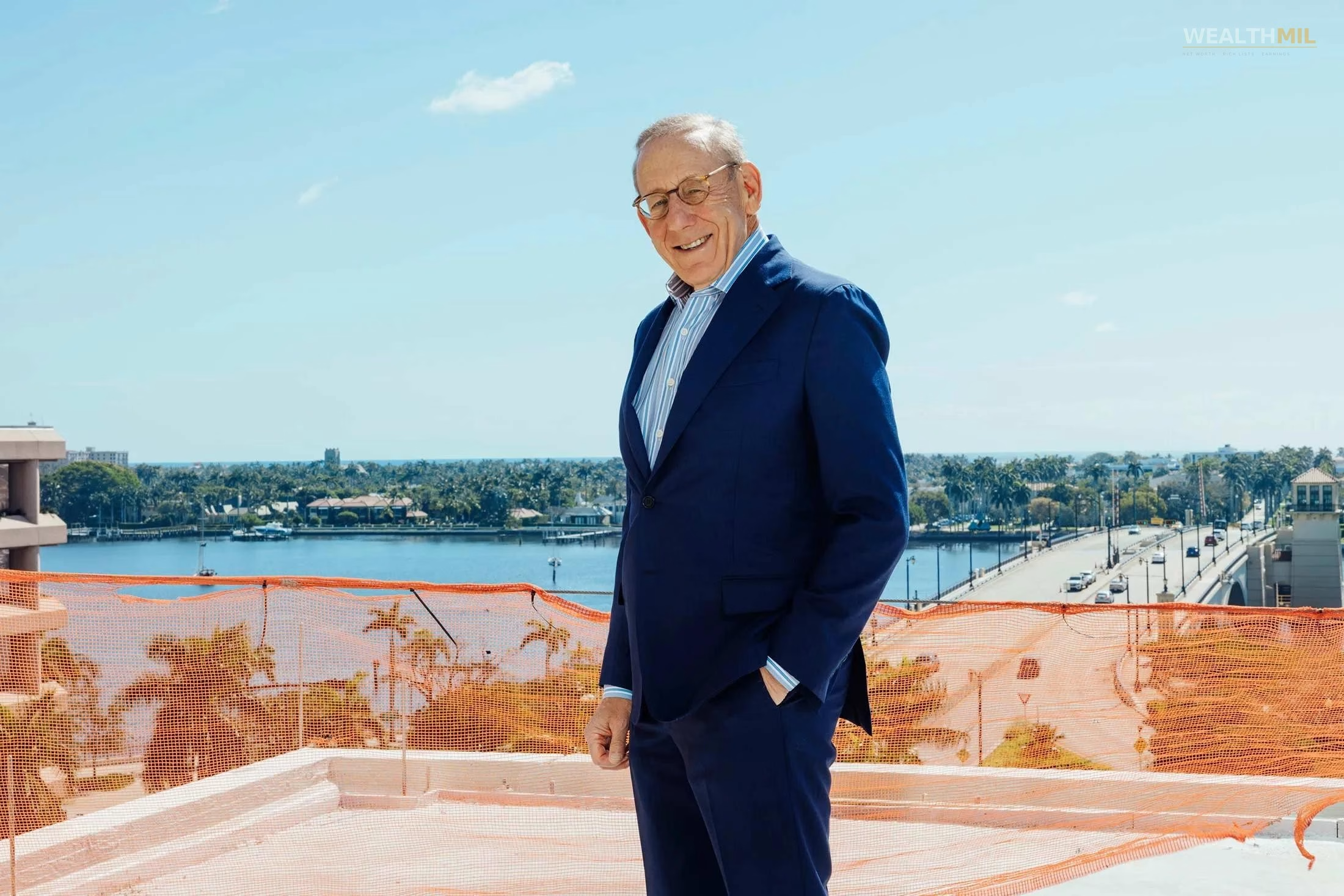
His diversification into sports and entertainment further demonstrates his understanding of evolving market opportunities. By expanding beyond real estate, Ross positioned himself to benefit from growth in multiple industries.
Philanthropy and educational contributions
Stephen Ross is also known for his philanthropic efforts, particularly in education. He has made significant donations to the University of Michigan, where the business school is named the Stephen M. Ross School of Business. His contributions support scholarships, research, and campus development.
Philanthropy plays an important role in shaping Ross’s public image. His donations often focus on education, economic development, and community initiatives. These efforts reflect his belief in creating long-term impact beyond business success.
He has also supported initiatives related to entrepreneurship and innovation. By funding programs that encourage business development, Ross contributes to the growth of future industries and leaders. This approach aligns with his own career path, which was built on identifying and pursuing opportunities.
While philanthropy does not directly contribute to net worth, it enhances Ross’s influence and legacy. His contributions to education and community development remain a significant part of his impact.
Influence across industries
Stephen Ross’s career demonstrates how influence can extend across multiple sectors when built on a strong foundation. His real estate empire provided the financial base that enabled expansion into sports, media, and investment ventures.
His involvement in large-scale urban development projects has shaped the physical terrain of major cities. At the same time, his role in sports ownership connects him to global entertainment and media networks. This combination of industries amplifies his influence.
Ross’s ability to operate in both business and public spheres highlights his versatility as an entrepreneur. He navigates complex regulatory environments, manages large teams, and oversees diverse investments. These skills contribute to his long-term success.
His story also reflects broader trends in modern entrepreneurship. Many of today’s most influential business figures expand beyond their original industries, leveraging success to enter new markets and opportunities.