

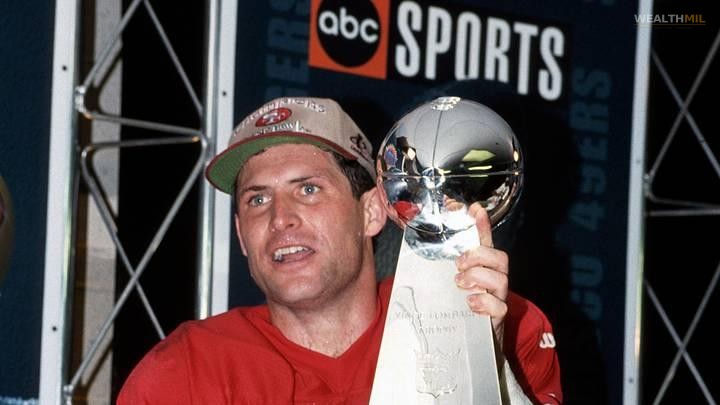
Steve Young’s name is synonymous with the San Francisco 49ers, Super Bowl XXIX and one of the greatest quarterback careers in NFL history. Long before he became a Hall of Famer, however, Young made headlines for signing one of the most unusual contracts in sports history.
In March 1984, the 22-year-old BYU quarterback chose the United States Football League’s Los Angeles Express over the NFL after signing a deal publicly valued at $40 million. At the time, it was described as the richest contract in professional sports. The agreement was structured to pay Young over several decades, with reports indicating that the final payments could continue until 2027.
That led to a persistent story that Young would still be collecting enormous USFL checks more than 40 years later. But the reality was very different. Young eventually explained that the famous annuity was never funded as originally envisioned, and he took cash instead.
Why Steve Young Signed With the USFL
Young entered professional football as one of the most coveted players in the 1984 draft. The Cincinnati Bengals held the No. 1 NFL selection and had been negotiating with Young, but the Los Angeles Express presented an extraordinary alternative.
The Express offered a contract publicly valued at $40 million, although contemporary reporting made clear that only a fraction represented immediate compensation. The Washington Post reported that Young’s agreement contained approximately $5.5 million in current money and $34 million in deferred payments over 40 years.
The deal included a $2.5 million signing bonus, while the deferred component was supposed to produce payments far into the future. This unusual structure allowed the Express to advertise an enormous headline figure while spreading much of its financial obligation across decades.
Young later recalled the experience in his Pro Football Hall of Fame enshrinement speech. He described the Express as an attractive option because the organization included respected football figures such as general manager Don Klosterman and coach John Hadl.
The Los Angeles Express Quickly Ran Into Financial Problems
Young’s time with the Express began during an ambitious period for the USFL, but the team’s financial situation deteriorated rapidly. The Express had assembled an impressive roster and reached the playoffs in 1984, but owner J. William Oldenburg’s financial problems eventually affected the franchise.
By 1985, the situation had become increasingly unstable. The Los Angeles Times described the Express as struggling financially, while Young was still playing under his famous $40 million contract.
The USFL eventually took control of the franchise. In August 1985, USFL commissioner Harry Usher said Young had received $4.8 million in actual cash during his first two professional seasons, emphasizing that the money had already been paid rather than merely promised for the future.
Young ultimately bought out his remaining USFL contract and signed a six-year deal worth more than $5 million with the Tampa Bay Buccaneers in September 1985.
Steve Young Revealed What Really Happened to the Annuity
For years, the enormous deferred payments continued to fuel speculation about Young’s USFL earnings. Some reports suggested the annuity would eventually pay millions through 2027.
Young himself later disputed that version of events.
During a 2013 appearance on ESPN’s Highly Questionable, Young explained that the annuity had never been funded in the way people believed. He said:
“We never funded the annuity.”
Young explained that he had been given a choice between taking money immediately or using it to fund the long-term arrangement. He chose the cash.
He then described the popular story surrounding the contract as “false advertising.”
There is a historical wrinkle. A 1985 Los Angeles Times report stated that approximately $2 million needed to fund the annuity had been paid by the league. Another report from August that year said the USFL and Young settled the annuity for $1.4 million in cash.
Regardless of the precise mechanics, Young did not continue receiving the massive annual payments that the original $40 million headline suggested.
Young Eventually Built a Hall of Fame Career
The end of Young’s USFL contract did not prevent him from becoming one of football’s most successful quarterbacks. After two seasons with Tampa Bay, he joined the San Francisco 49ers in 1987 and initially played behind Joe Montana.
Young eventually became the 49ers’ starter and won two NFL MVP awards, seven Pro Bowl selections and three Super Bowl rings. His defining moment came in Super Bowl XXIX, when he threw a record six touchdown passes and was named Super Bowl MVP. His NFL career included 33,124 passing yards and 232 touchdown passes.
In 2005, Young was inducted into the Pro Football Hall of Fame. His career also extended beyond football. He earned a law degree from BYU and later moved into business, eventually becoming a co-founder and managing partner at private-equity firm HGGC.
Today, the most interesting part of Young’s famous USFL contract is not that he is still collecting money from it. It is that a headline-making $40 million agreement became a financial legend despite the long-term annuity never unfolding as the public originally imagined.