
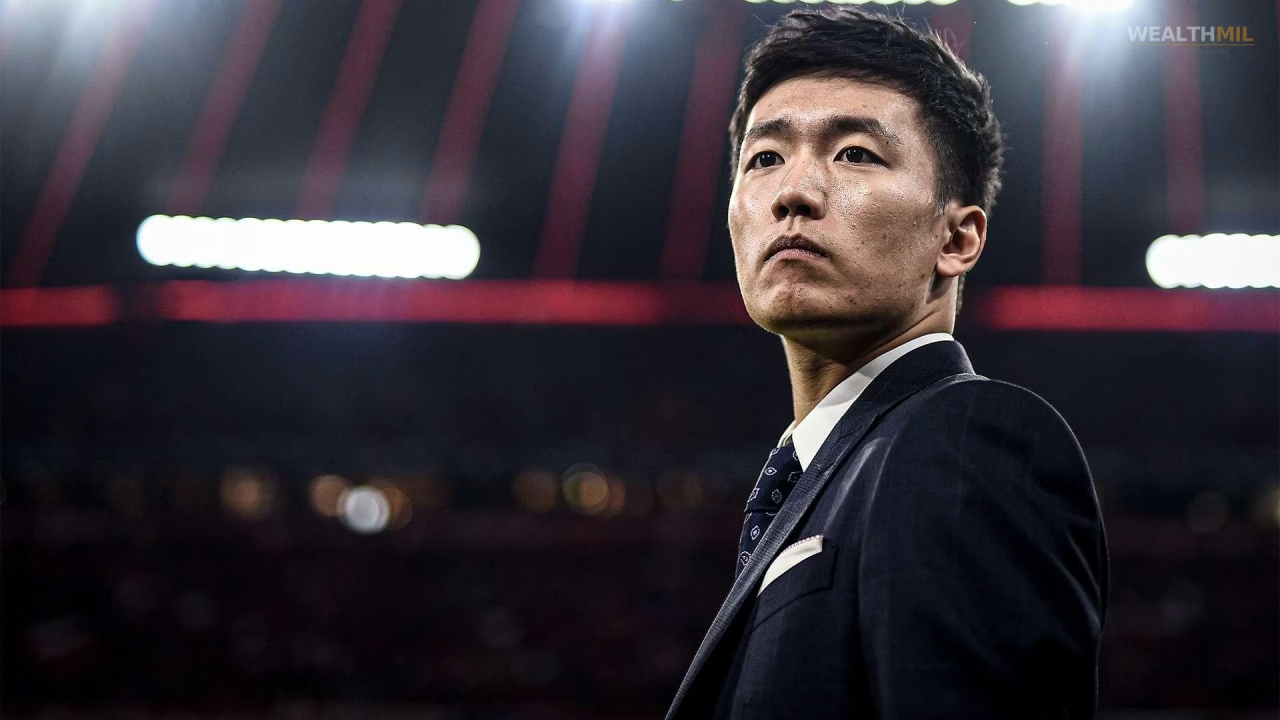
When Steven Zhang became president of Inter Milan in 2018 at just 27 years old, many football fans viewed the appointment with skepticism. European football is filled with owners and executives who inherit power without earning respect inside the sport. At the time, critics questioned whether the son of a Chinese billionaire truly understood the pressure, culture, and expectations surrounding one of Italy’s most historic football clubs.
Over the next several years, however, Zhang helped oversee one of Inter Milan’s most important modern transformations. The club returned to the top of Italian football, rebuilt its international image, expanded commercially, and reestablished itself as a consistent European contender. Under the Suning era, Inter evolved from a financially unstable giant into a globally recognizable sports brand with renewed competitive relevance.
At the center of that transformation was Steven Zhang, whose business background and long-term international strategy played a major role in reshaping the club’s identity. His rise in football also reflected the enormous financial influence of the Suning empire, making his net worth and business position closely tied to one of China’s largest private business groups.
Steven Zhang Entered Football Through the Massive Suning Business Empire
Steven Zhang’s rise in football cannot be separated from the influence of Suning Holdings Group, the Chinese retail and technology conglomerate founded by his father, Zhang Jindong. Suning grew from an electronics retailer into one of China’s largest private companies, with operations spanning retail, technology, finance, logistics, media, and international commerce.
Forbes previously estimated Zhang Jindong’s wealth in the billions during Suning’s peak expansion years. That financial power gave the company the ability to aggressively pursue international investments and branding opportunities. One of the most high-profile moves came in 2016, when Suning acquired a majority stake in Inter Milan for approximately €270 million.
The acquisition immediately attracted global attention because it represented one of the largest Chinese investments in European football at the time. According to Time magazine, the deal reflected China’s growing interest in expanding influence within global football markets. It also positioned Inter Milan as one of the most internationally connected clubs in Italy.
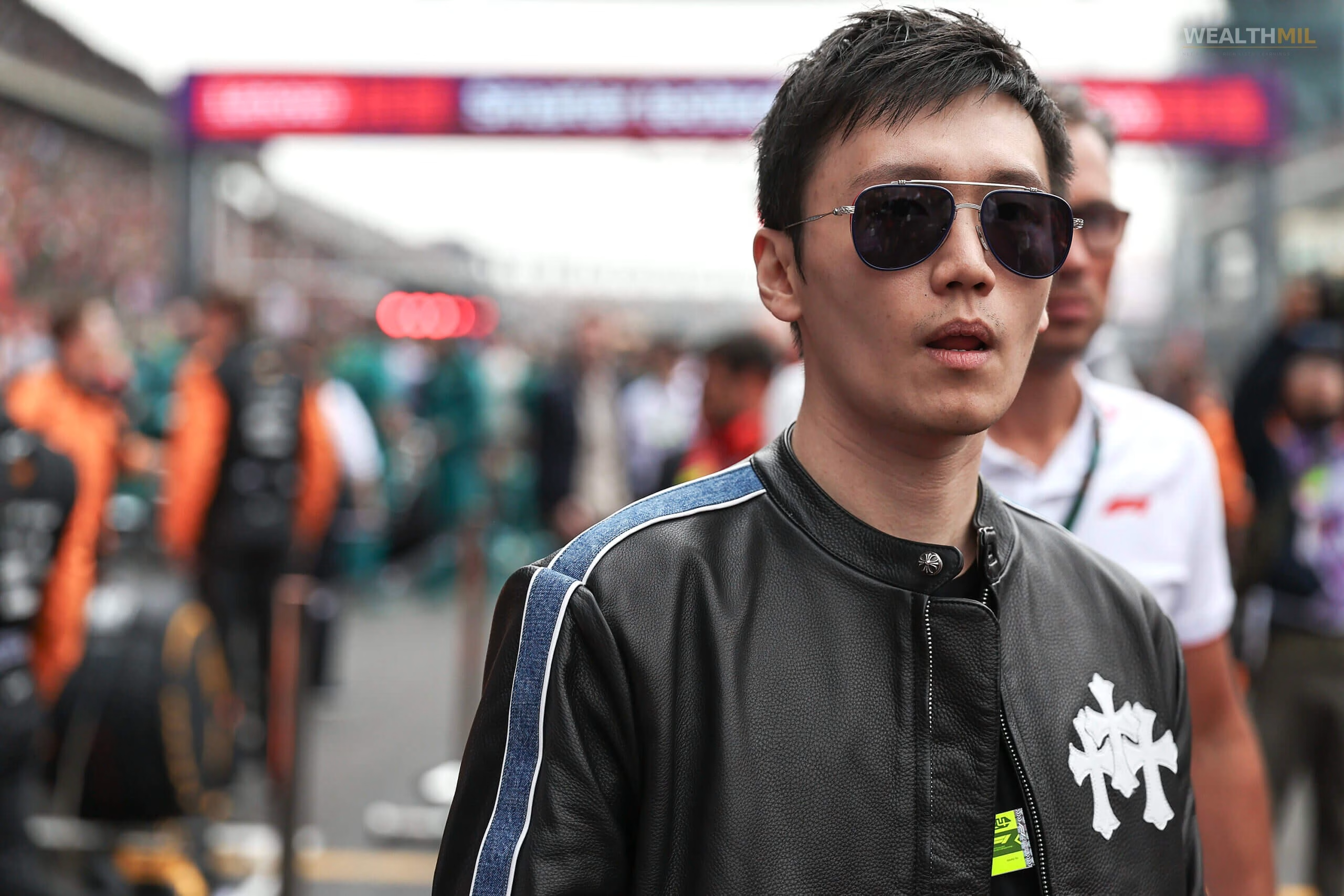
Steven Zhang became heavily involved in club operations after the acquisition. Rather than remaining a symbolic figure, he gradually increased his responsibilities within Inter’s leadership structure. By 2018, he officially became the youngest president in the club’s history.
Steven Zhang Took Over During a Difficult Period for Inter Milan
Although Inter Milan remained one of Italy’s biggest clubs historically, the team had struggled for years before Steven Zhang became president. The club experienced financial instability, inconsistent performances, and declining European relevance following the famous treble-winning era under José Mourinho in 2010.
Inter had fallen behind rivals like Juventus in Serie A dominance and frequently missed the level expected from a club with such a massive global fan base. The team also struggled commercially compared to Europe’s elite clubs. Rebuilding Inter required more than simply signing expensive players. The club needed structural modernization both on and off the field.
Steven Zhang inherited enormous pressure because expectations at Inter are uniquely intense. Fans expected immediate success, while financial regulations and competitive challenges complicated long-term planning. Many younger executives struggle under that environment, particularly in European football where media scrutiny is relentless.
Despite those challenges, Zhang gradually helped stabilize the club’s direction. Under Suning ownership, Inter invested in infrastructure, branding, executive leadership, and squad development. These decisions eventually helped the club return to consistent competitiveness domestically and internationally.
Inter Milan’s Return to Success Changed Steven Zhang’s Reputation
One of the biggest turning points of Steven Zhang’s presidency came through Inter Milan’s return to winning major trophies. The club won the Serie A title during the 2020-21 season, ending Juventus’ dominant nine-year run at the top of Italian football.
That championship carried enormous significance for the club and its supporters. Inter had spent years trying to rebuild credibility after periods of underachievement. Winning Serie A again signaled that the club had fully reentered elite Italian football competition.
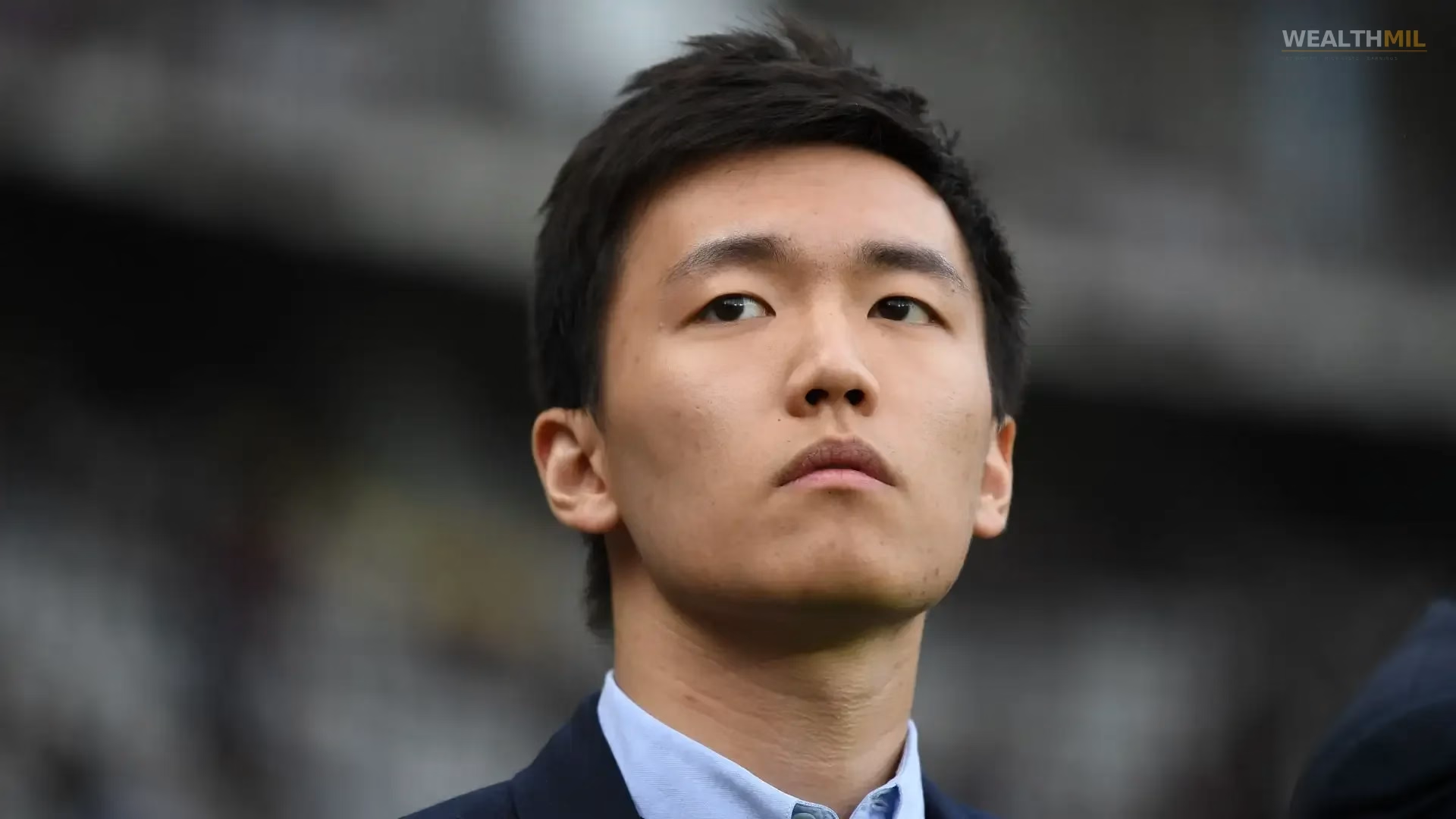
The title also dramatically changed public perception surrounding Steven Zhang. Early criticism about his age and experience began fading as Inter consistently improved under his leadership. Fans increasingly viewed him as an ambitious president willing to invest emotionally and financially in the club’s future.
Inter also performed strongly in European competitions during the Suning era. The club returned to the UEFA Champions League regularly and later reached the Champions League final in 2023. Those achievements strengthened Inter’s international visibility and commercial relevance across global markets.
According to Reuters, Inter also returned to the Champions League under Suning ownership after years away from Europe’s biggest competition. That progress helped reinforce the idea that the club was once again operating like a major European football institution.
Steven Zhang Helped Modernize Inter Milan’s Global Brand
One of Steven Zhang’s most important contributions involved expanding Inter Milan’s international business profile. Modern football clubs operate as entertainment brands as much as sports organizations, and Zhang understood the importance of global commercial positioning.
Suning’s international business network gave Inter greater exposure within Asian markets, particularly China. Forbes previously noted that Suning’s off-field expansion plans could help drive Inter’s commercial growth internationally. The ownership viewed the club not only as a football asset but also as a globally recognizable brand capable of increasing international influence.
Inter improved its digital strategy, marketing reach, sponsorship visibility, and international partnerships during this period. The club became more aggressive in targeting global audiences through social media expansion and commercial branding campaigns.
Steven Zhang also represented a younger generation of football executives who understood the growing importance of international audiences. European football clubs increasingly compete not only for trophies but also for worldwide brand recognition. Expanding beyond local fan bases has become critical financially.
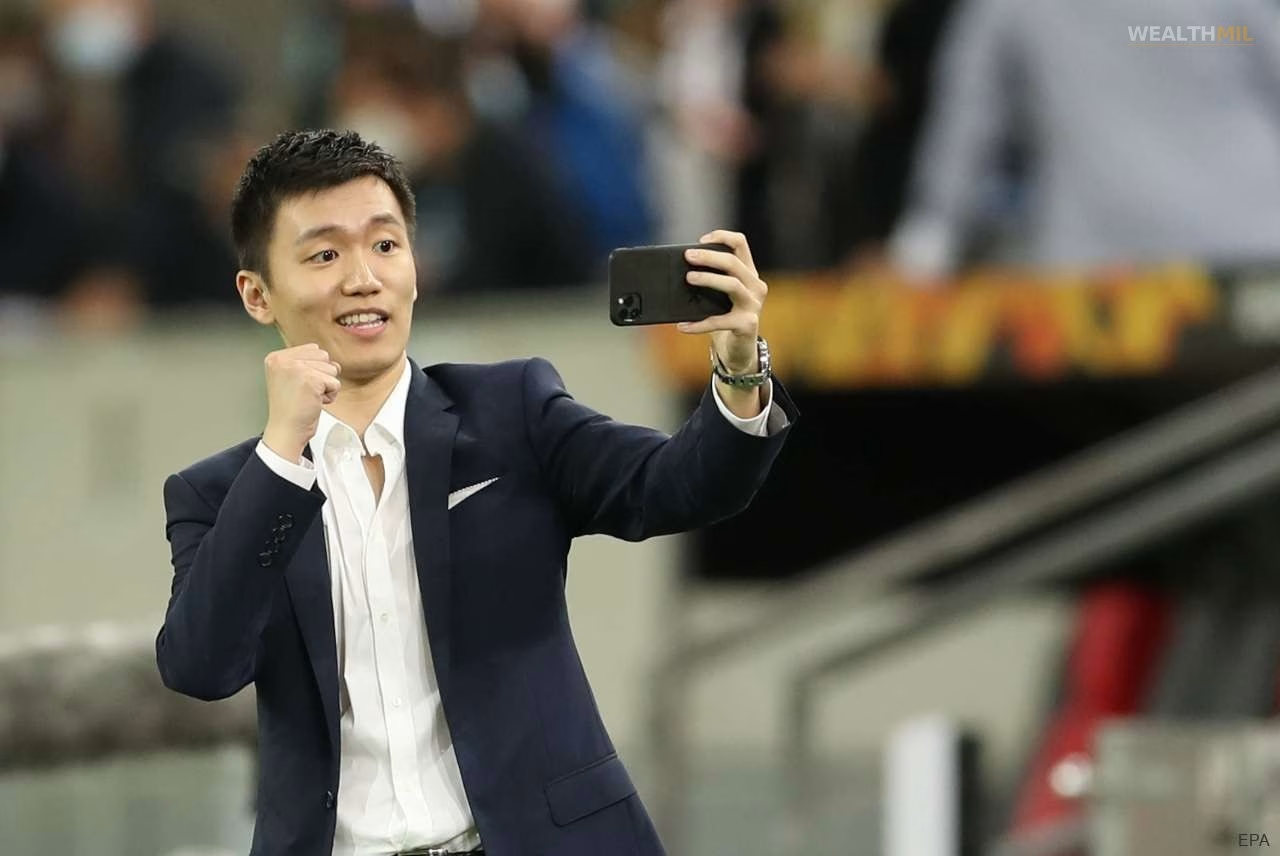
Inter’s improved global image during this era helped strengthen sponsorship opportunities and broader commercial value. Even during financially difficult periods, the club maintained strong international visibility because of this long-term branding strategy.
Financial Challenges Became the Biggest Threat to the Suning Era
Despite the sporting improvements under Steven Zhang, financial difficulties eventually became the defining challenge of the Suning era. The COVID-19 pandemic severely impacted football finances across Europe, and Inter Milan was hit particularly hard due to existing debt and operational pressures.
According to Reuters and the Financial Times, Suning secured a major financing package from Oaktree Capital in 2021 to help stabilize the club during the pandemic period. The loan reportedly reached hundreds of millions of euros and was backed by Suning’s ownership stake in Inter Milan.
Although Inter continued succeeding on the field, financial pressure behind the scenes continued growing. The club reportedly posted major annual losses during the pandemic years as revenue declined sharply. Matchday income disappeared temporarily, while operational costs remained extremely high.
Steven Zhang publicly defended the ownership’s efforts to protect the club during this difficult period. In statements addressed to supporters, he argued that the ownership continued trying to preserve Inter’s long-term stability despite increasing financial complications.
The situation eventually escalated when Suning failed to repay the Oaktree loan by the required deadline in 2024. As a result, Oaktree Capital officially assumed control of Inter Milan, bringing the Suning era to an end.
The End of the Suning Era Did Not Erase Steven Zhang’s Impact
Although Suning ultimately lost ownership control of Inter Milan, Steven Zhang’s impact on the club remains significant. Under his leadership, Inter returned to winning major trophies, rebuilt international relevance, and reestablished itself among Europe’s elite football institutions.
Many supporters continued showing appreciation toward Zhang even after the ownership transition. Reuters reported that sections of Inter’s fan base publicly thanked him for his leadership and contributions during one of the club’s most successful modern periods.
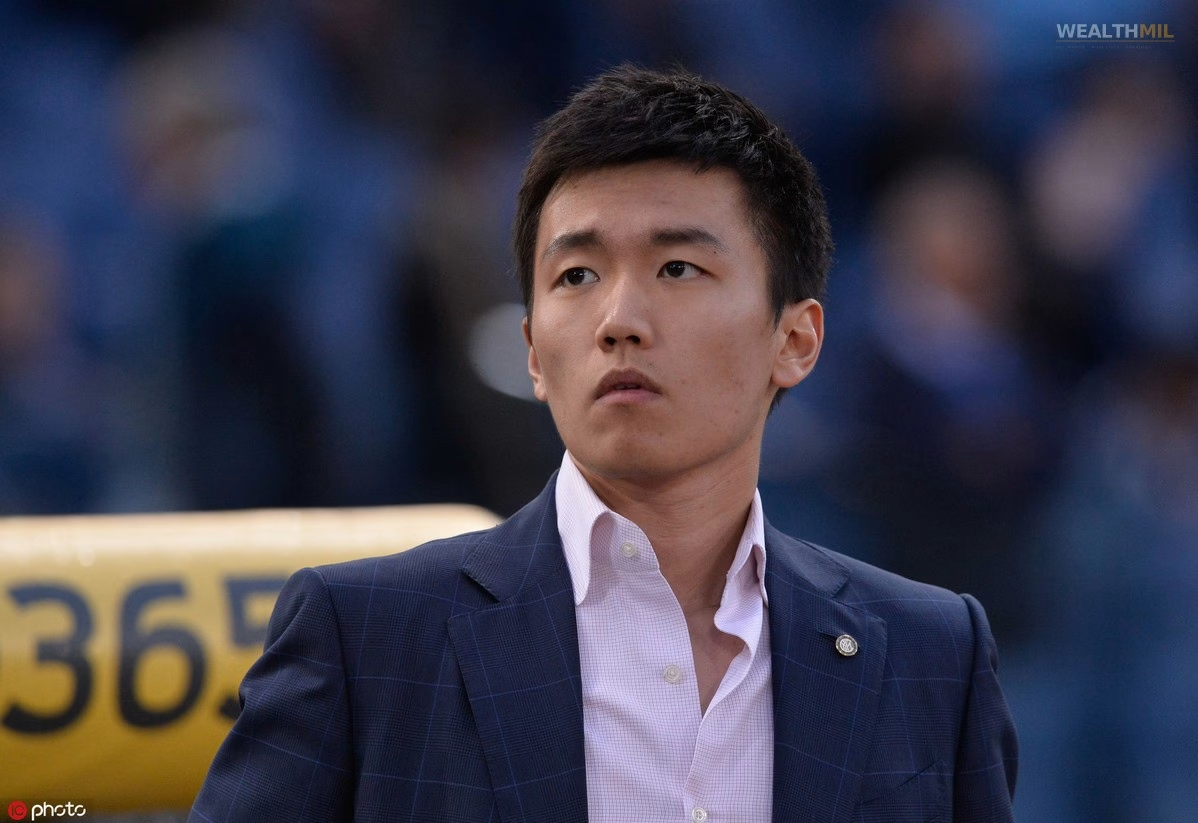
That reaction reflected how dramatically perceptions had changed since his appointment in 2018. Early skepticism eventually gave way to respect because supporters saw clear progress both competitively and commercially during his presidency.
The Suning era also demonstrated how international ownership could modernize traditional European football institutions when paired with ambitious long-term planning. While financial issues complicated the project eventually, the club’s sporting revival during this period remains difficult to ignore.
Steven Zhang’s reputation within football therefore became more nuanced than simply evaluating the ownership’s financial ending. Many observers now view him as an executive who genuinely cared about Inter’s competitiveness and international growth.
Steven Zhang’s Net Worth Remains Closely Connected to the Suning Family Fortune
Estimating Steven Zhang’s personal net worth precisely remains difficult because much of his financial position is connected to the broader Suning business empire controlled by his family. However, his business influence and wealth are widely associated with one of China’s largest private commercial groups.
Suning Holdings generated enormous revenues during its peak years, operating across multiple industries including retail, technology, logistics, and finance. Steven Zhang himself held leadership responsibilities within Suning International, where he helped oversee the company’s international expansion strategy.
His business profile also grew significantly because of football. Becoming president of Inter Milan transformed him into one of the most recognizable young executives in global sports. That visibility increased his influence far beyond traditional corporate circles.
Various business reports and financial publications have linked Steven Zhang’s wealth to the multi-billion-dollar Suning ecosystem. While exact personal figures vary depending on estimates, his position within the family empire ensured access to substantial financial resources and international business influence.
His role at Inter also gave him experience managing one of the most emotionally demanding businesses in the world. Football club leadership combines politics, branding, finance, media management, and fan relations simultaneously. That experience likely strengthened his reputation as a global executive beyond sports itself.