Tom Hanks made one of the biggest financial bets of his acting career while filming Forrest Gump, and it ultimately paid off in spectacular fashion. Rather than accepting his reported $7 million salary, Hanks agreed to restructure his deal and receive a share of the film’s first-dollar gross revenue instead. At the time, the move came as Paramount Pictures grew concerned about the movie’s rising production costs. Few could have predicted that the decision would eventually earn Hanks an estimated $70 million while cementing Forrest Gump as one of Hollywood’s most celebrated films.
The story has resurfaced as an example of how backend compensation can dramatically outperform a traditional salary when a movie becomes a box office success. According to Celebrity Net Worth, Hanks’ gamble remains one of the most lucrative salary trades in film history.
Why Tom Hanks accepted a risky backend deal
Based on Winston Groom’s 1986 novel and adapted by screenwriter Eric Roth, Forrest Gump faced uncertainty throughout development. The story of an ordinary man witnessing major moments in American history was far from a guaranteed blockbuster, and its production budget reportedly climbed to around $55 million before filming was completed.
As costs increased, Paramount reportedly asked key creative figures, including Hanks and director Robert Zemeckis, to restructure their compensation. Instead of insisting on their guaranteed salaries, both agreed to accept first-dollar gross participation, allowing them to earn a percentage of the movie’s revenue before most production and distribution costs were deducted.
That distinction proved critical. Unlike traditional net-profit agreements, which are often reduced by Hollywood accounting practices, first-dollar gross participation allows talent to receive payments from the film’s revenue much earlier.
Hanks also reportedly invested his own money during production. When Paramount declined to finance Forrest’s now-iconic cross-country running montage, Zemeckis proposed paying for the sequence themselves. The pair reportedly shared the additional production costs in exchange for a larger share of the film’s eventual earnings.
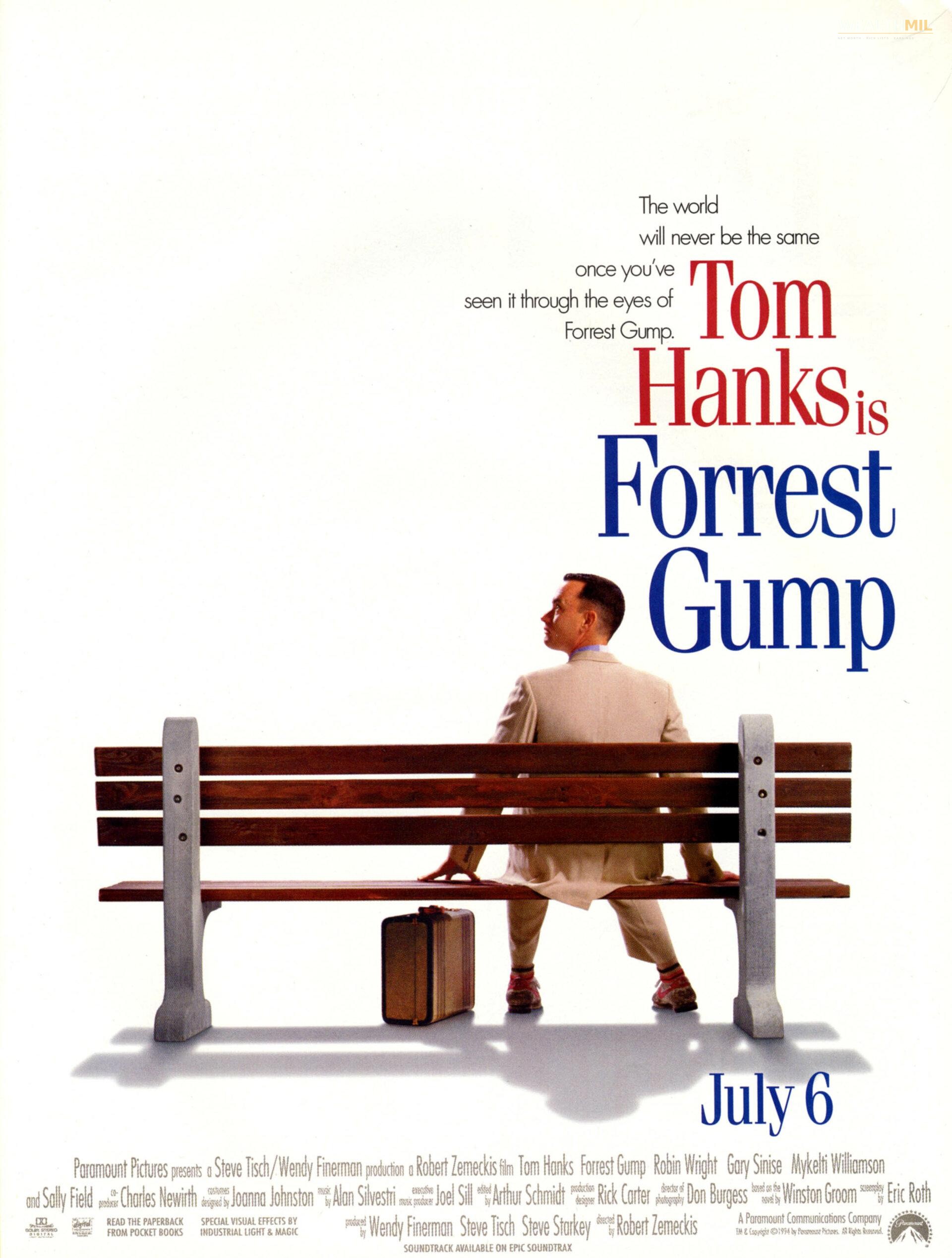
Forrest Gump became one of the biggest films of the 1990s
Released in July 1994, Forrest Gump exceeded nearly every expectation. The emotional drama resonated with audiences worldwide, earning approximately $678 million at the global box office, making it the highest-grossing film of 1994. Adjusted for inflation, that theatrical performance would equal roughly $1.5 billion today.
The film also dominated awards season, receiving 13 Academy Award nominations and winning six Oscars, including Best Picture, Best Director for Robert Zemeckis, Best Adapted Screenplay, and Best Actor for Tom Hanks. The Oscar victory marked Hanks’ second consecutive Best Actor win following Philadelphia, making him only the second actor in Academy Awards history to achieve back-to-back victories in the category.
Thanks to the first-dollar gross agreement, Hanks reportedly earned around $70 million, roughly ten times his original salary. Adjusted for inflation, that payout would exceed $150 million today.
The contrast became even more striking for Winston Groom, whose compensation reportedly included a percentage of the movie’s net profits. Despite the film’s enormous commercial success, Hollywood accounting meant those profits were initially reported as nonexistent after expenses were deducted.
More than three decades later, Forrest Gump remains one of Paramount Pictures’ most valuable films, while Tom Hanks’ compensation agreement continues to be cited as a textbook example of why first-dollar gross participation is considered one of the most valuable deals an actor can negotiate.