

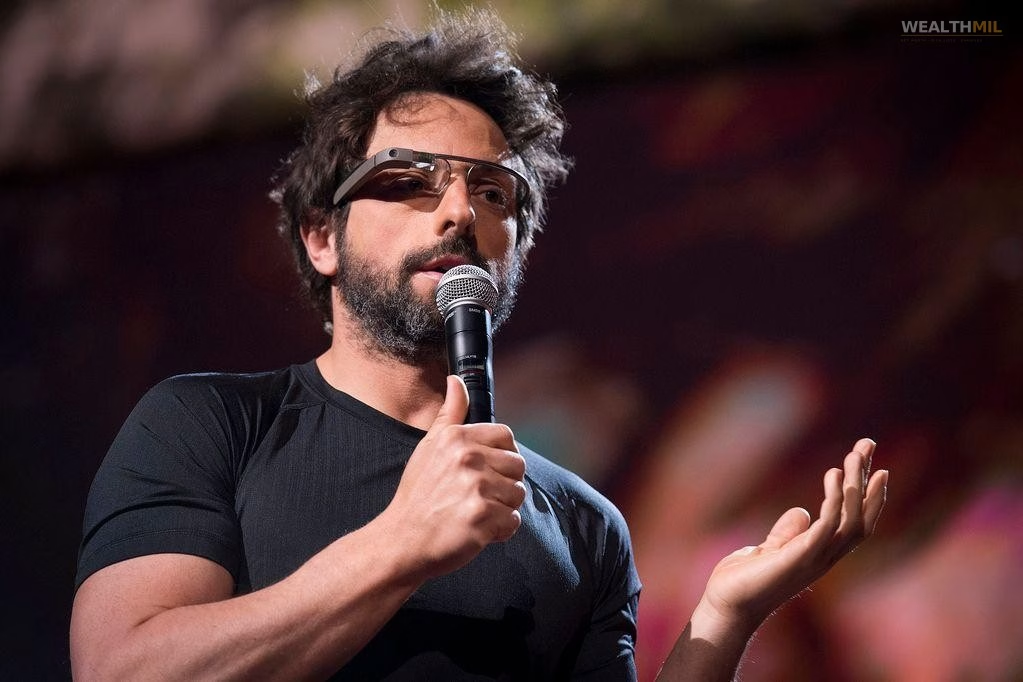
When people think about the internet revolution, the name Sergey Brin almost always comes up alongside Google. As one of the co-founders of Google, Brin helped create the search engine that fundamentally changed how billions of people access information online. Along with fellow Stanford student Larry Page, he developed the PageRank system that became the backbone of Google’s search technology and later turned the company into one of the most influential corporations in the world.
Brin’s story is not just about wealth or Silicon Valley success. It is also about immigration, scientific curiosity, and technological innovation. Born in the Soviet Union before moving to the United States as a child, he eventually became one of the most powerful figures in the global tech industry. His work helped shape online advertising, artificial intelligence, mobile technology, and cloud computing through Google and later Alphabet. Even after stepping down from day-to-day leadership, Brin continues to influence the future of AI and advanced computing.
Early life and family background
Sergey Brin was born on August 21, 1973, in Moscow, then part of the Soviet Union. He was raised in a Jewish family during a period when anti-Semitism created professional and educational barriers for many Jewish citizens in the country. His father, Michael Brin, was a mathematician, while his mother worked as a researcher for NASA after the family moved to the United States.
In 1979, when Sergey was six years old, his family immigrated to the United States seeking better opportunities and greater freedom. They eventually settled in Maryland, where Brin grew up in an academically focused environment. His father later became a professor at the University of Maryland, which strongly influenced Brin’s interest in mathematics and computer science.
Brin showed exceptional academic ability from a young age. He attended Montessori school during childhood, something he later shared in common with Larry Page. He graduated from Eleanor Roosevelt High School before enrolling at the University of Maryland, where he studied mathematics and computer science. He completed his bachelor’s degree with high honors in just three years.

Meeting Larry Page at Stanford
After completing his undergraduate studies, Brin joined Stanford University in 1993 to pursue graduate studies in computer science. This period became one of the most important turning points in internet history because it was there that he met Larry Page. Although the two reportedly disagreed on many topics initially, they quickly developed a strong intellectual partnership.
At Stanford, Brin focused on data mining and large-scale information systems, while Page became interested in analyzing links between websites. Together, they started researching ways to improve how search engines ranked web pages. Existing search engines at the time often produced cluttered or inaccurate results because they relied heavily on keyword matching instead of evaluating website authority or relevance.
Their research eventually led to the creation of PageRank, a system that analyzed links between web pages to determine importance and credibility. The idea was revolutionary because it treated links as a form of recommendation. Pages with more authoritative links were ranked higher in search results, producing significantly better search quality than competitors at the time.
The creation of Google
Before becoming Google, Brin and Page’s project was called “Backrub.” The search engine initially operated through Stanford’s servers while crawling and indexing web pages across the growing internet. As the technology improved, they realized the project had commercial potential beyond academic research.
In 1998, the pair officially founded Google. The company famously started from a garage in Menlo Park that belonged to Susan Wojcicki, who later became CEO of YouTube. The name “Google” was inspired by the mathematical term “googol,” representing the massive amount of information the search engine aimed to organize.
Google quickly gained popularity because users found its search results cleaner, faster, and more accurate than competing platforms like Yahoo and AltaVista. Investors also recognized its potential early. One of the company’s major turning points came when venture capital firms invested millions into scaling the business, allowing Google to expand infrastructure and hire engineers.

Brin and Page eventually paused their PhD programs at Stanford to focus entirely on growing the company. Their decision became one of the most famous entrepreneurial moves in modern tech history.
Sergey Brin’s role inside Google
While Larry Page often focused on product vision and long-term company strategy, Sergey Brin became deeply associated with experimentation and advanced technology projects. He played an important role in shaping Google’s engineering culture and research-driven identity.
Brin worked on various ambitious projects inside Google, including innovations related to data analysis, search technology, and artificial intelligence. He also became closely involved with experimental initiatives under Google X, the company’s research division responsible for futuristic projects like self-driving cars and wearable technology.
One of Google’s biggest strengths under Brin’s leadership was its willingness to invest heavily in long-term innovation rather than short-term profit alone. This philosophy helped the company launch products such as Gmail, Google Maps, Android, Chrome, and YouTube integration, many of which became dominant global platforms.
Brin also became known for his unconventional management style. He encouraged open discussion, engineering creativity, and experimental thinking inside the company. Google’s workplace culture during its rapid growth years became one of Silicon Valley’s most studied corporate models.
The rise of Alphabet and leadership changes
In 2015, Google underwent a major corporate restructuring with the creation of Alphabet, a parent company designed to oversee Google and its expanding collection of businesses. Under this new structure, Larry Page became CEO of Alphabet while Sergey Brin became president.
The restructuring allowed Google’s core advertising and internet operations to function separately from experimental ventures such as autonomous vehicles, life sciences, and AI research. This move reflected Brin and Page’s growing interest in ambitious technological projects beyond traditional internet search.
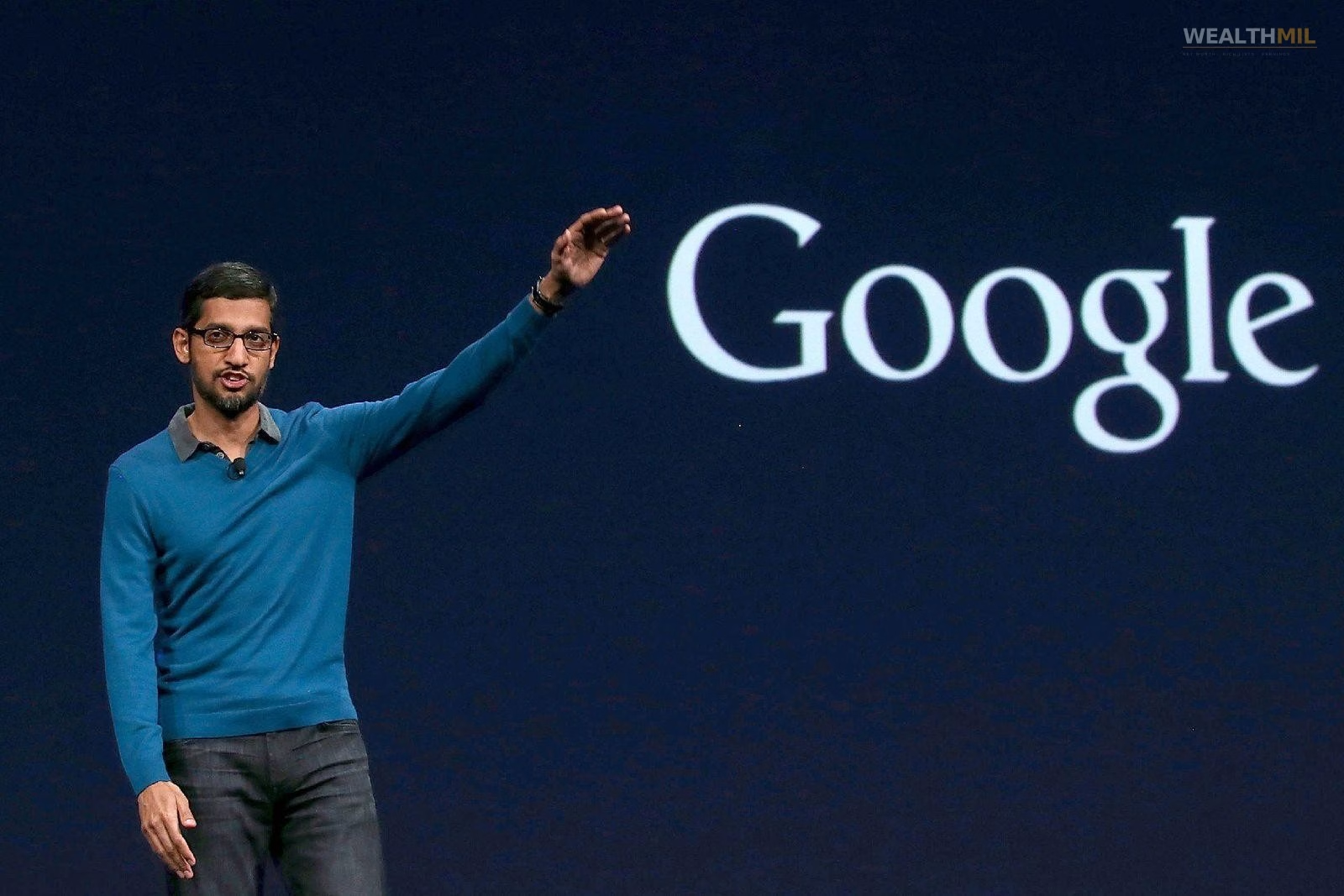
In December 2019, Brin and Page stepped down from their executive positions at Alphabet. However, they retained significant influence through board memberships and controlling shareholder status. Leadership responsibilities shifted to Sundar Pichai, who became CEO of both Google and Alphabet.
Although Brin officially reduced his executive involvement, reports later suggested that he remained active in certain strategic areas, especially artificial intelligence development. Following the rise of generative AI and increasing competition from companies like OpenAI, Brin reportedly returned to help Google accelerate its AI initiatives.
Sergey Brin and artificial intelligence
In recent years, Sergey Brin has become increasingly connected with Google’s artificial intelligence efforts. The explosive popularity of generative AI tools changed the competitive terrain of the technology industry, pushing companies like Google to intensify AI development.
Reports from 2023 onward indicated that Brin had become more directly involved with projects tied to Google DeepMind and Gemini AI systems. His return was widely viewed as a sign that Google considered the AI race one of the most important technological shifts since the rise of the internet itself.
Brin publicly commented that computer scientists should not be “retired” during the current AI revolution because of the enormous opportunities in the field. His remarks reflected his long-standing belief that technological progress can fundamentally reshape society and human productivity.
Google’s AI ambitions also connect closely to Brin’s original vision for organizing and understanding large amounts of information. While PageRank transformed web search in the late 1990s, AI now represents the next phase of how information is processed and delivered online.
Sergey Brin’s net worth and business influence

As a co-founder of Google and Alphabet, Sergey Brin became one of the richest people in the world. His wealth primarily comes from his large ownership stake in Alphabet stock. Over the years, the company’s dominance in digital advertising, search, cloud services, and mobile technology significantly increased his fortune.
Brin consistently appears on billionaire rankings published by financial outlets such as Forbes and Bloomberg. His net worth fluctuates based on Alphabet’s stock performance, but he has regularly remained among the world’s wealthiest tech entrepreneurs.
Beyond Google, Brin has invested in several personal ventures and research initiatives. He has shown interest in aviation projects, health research, renewable technology, and scientific innovation. One notable venture includes LTA Research, a company focused on developing modern airships.
His financial influence also extends into philanthropy and political causes. Recent reports showed Brin supporting campaigns and policy initiatives in California, demonstrating that he remains active in broader social and economic discussions even after stepping back from corporate leadership.
Personal life and public image
Compared to some other technology billionaires, Sergey Brin has often maintained a relatively private public image. While he frequently appeared during Google’s earlier growth years, he became less publicly visible after Alphabet’s restructuring.
Brin was previously married to entrepreneur and biotech analyst Anne Wojcicki, co-founder of 23andMe. The couple later divorced. He also married entrepreneur Nicole Shanahan before reports emerged about their separation.
Throughout his career, Brin has supported various charitable initiatives related to health research, education, and scientific advancement. He has contributed funding toward Parkinson’s disease research, partially influenced by genetic findings connected to his family history.
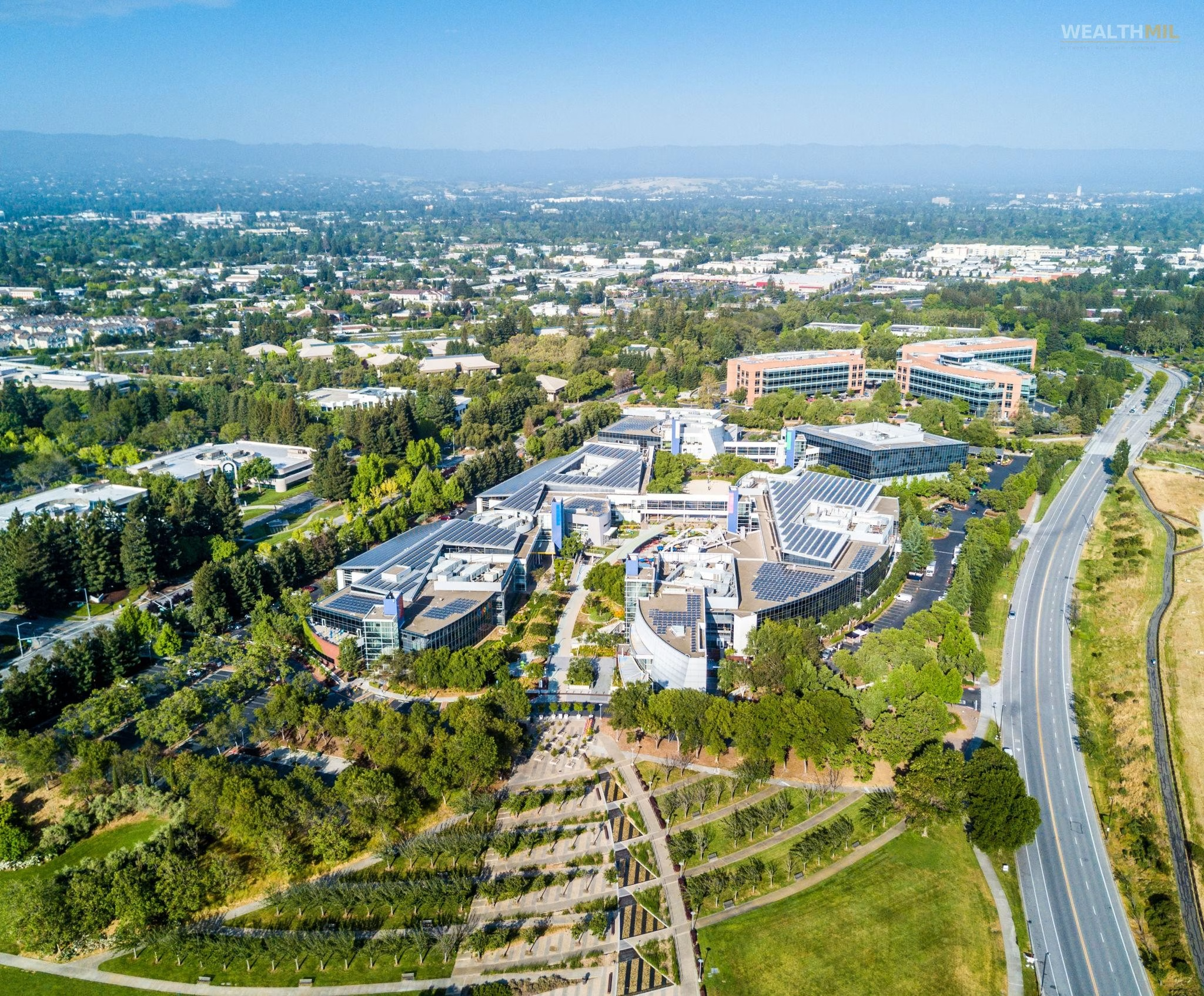
Despite his immense wealth, Brin has often presented himself more as a scientist and engineer than a traditional corporate executive. This identity helped shape Google’s culture during its formative years and remains part of how many people view him today.
How Sergey Brin changed the internet
The impact of Sergey Brin on the modern internet is difficult to overstate. Before Google, finding accurate information online was often slow and frustrating. Search engines existed, but many struggled to organize the rapidly expanding web effectively.
PageRank changed that by introducing a more intelligent ranking system based on authority and relevance. Google’s search engine quickly became the global standard, influencing not only internet users but also businesses, publishers, advertisers, and governments worldwide.
Google’s success under Brin’s leadership also accelerated the growth of digital advertising. The company’s ad systems transformed online business models and helped create the modern creator economy, where websites, apps, and content platforms generate revenue through targeted advertising.
In addition, products connected to Google fundamentally changed daily life. Android became the world’s dominant mobile operating system, Google Maps transformed navigation, Gmail reshaped email usage, and YouTube became the largest online video platform after Google acquired it. Brin’s influence extends across nearly every corner of the digital world.
Why Sergey Brin remains important today
Even after leaving executive leadership, Sergey Brin remains one of the most influential figures in technology because of his ongoing involvement in artificial intelligence and innovation strategy. His return to Google-related AI work shows that he still sees technology as an evolving frontier rather than a completed success story.
Brin’s career also represents a broader Silicon Valley narrative centered on immigration, scientific research, and entrepreneurship. His journey from Soviet immigrant child to tech billionaire continues to be cited as an example of how academic research and startup culture can combine to create transformative businesses.
At the same time, Google’s influence has also generated debate about privacy, monopoly power, artificial intelligence ethics, and data collection. Because Brin helped build the systems behind Google’s rise, his legacy is tied not only to innovation but also to ongoing discussions about how much power major technology companies should hold.
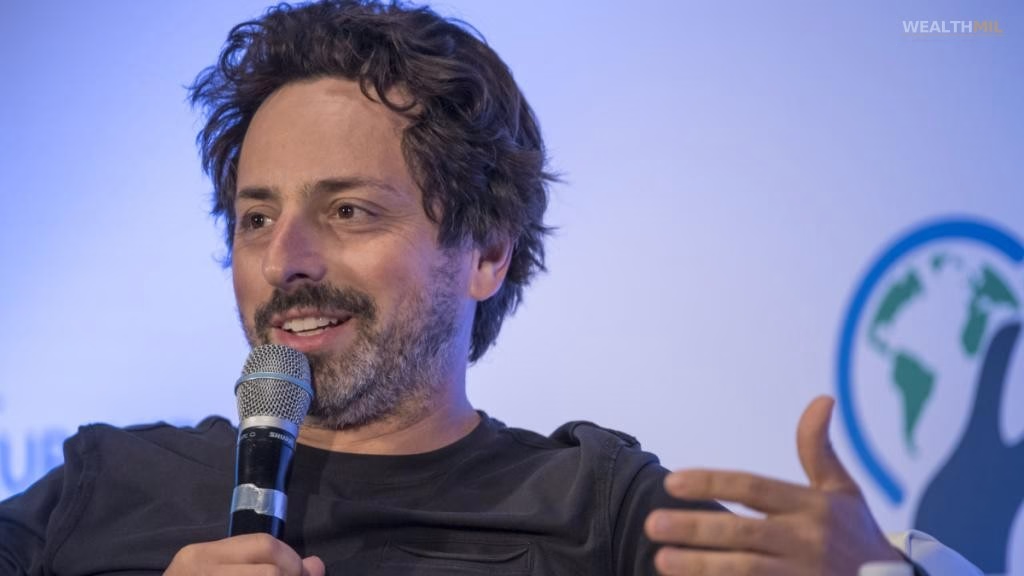
Still, there is little doubt that Sergey Brin changed how humanity interacts with information. From PageRank to AI research, his work continues to shape the internet era and influence the future direction of technology worldwide.
Sergey Brin’s influence also extends into the future of emerging technologies, particularly in areas like quantum computing, biotechnology, and advanced AI systems. While Sergey Brin is no longer leading Google or Alphabet in an official executive capacity, his involvement in cutting-edge research continues behind the scenes. His approach has always leaned toward solving complex, long-term problems rather than focusing solely on immediate commercial returns. This mindset keeps him relevant in a tech industry that constantly evolves and rewards forward-thinking innovation.
Another key aspect of Brin’s legacy is how he helped redefine startup culture and engineering leadership in Silicon Valley. Google’s early success under his guidance established a blueprint for how tech companies operate today, combining data-driven decision-making with creative experimentation. The emphasis on hiring top engineers, encouraging internal innovation, and allowing employees to work on passion projects influenced countless startups that followed. This cultural shift played a major role in shaping the modern tech ecosystem, where agility and innovation are often prioritized over rigid corporate structures.
Looking ahead, Sergey Brin’s role in shaping artificial intelligence could become just as significant as his impact on search engines. As AI continues to transform industries from healthcare to entertainment, Brin’s return to active involvement signals how seriously Google is taking this technological shift. His belief that engineers should remain actively engaged during critical innovation cycles highlights his long-term vision for progress. Whether through AI, research initiatives, or new ventures, Brin remains a key figure in defining how technology will influence the next generation of global change.