Susan Sarandon is one of the most recognizable actors in Hollywood history, known for combining emotional performances with fearless career choices. Over the last five decades, she has starred in critically acclaimed films, cult classics, political dramas, and mainstream hits that helped define multiple eras of American cinema. Her work in movies like The Rocky Horror Picture Show, Bull Durham, Thelma & Louise, and Dead Man Walking turned her into a respected acting powerhouse with global recognition.
Beyond acting, Sarandon has also remained highly visible for her activism and political involvement. She has spoken openly on social issues, humanitarian causes, anti-war movements, and international human rights campaigns throughout her career. That combination of artistic credibility and public activism has made her one of the most discussed celebrities in entertainment history.
Lets breaks down Susan Sarandon’s early life, acting journey, biggest movies, awards, activism, family life, and why she remains culturally relevant decades after becoming a Hollywood star.
Susan Sarandon’s Early Life and Background
Susan Sarandon was born Susan Abigail Tomalin on October 4, 1946, in New York City. She later grew up in New Jersey in a large Catholic family and was the oldest of nine children. During her younger years, she developed an interest in performing arts and school theater, though acting was not initially planned as a long-term career.
She attended the Catholic University of America, where she studied drama and met actor Chris Sarandon. The two married in 1967, and although they later divorced, she kept the Sarandon surname that eventually became famous in Hollywood. Her acting career began almost accidentally when she attended a casting call with her husband and landed a role herself.
Sarandon made her film debut in Joe in 1970, which opened the door to television work and additional film opportunities. In the early years of her career, she appeared in soap operas and smaller productions while slowly building her reputation in the entertainment industry.
How Susan Sarandon Became Famous in Hollywood
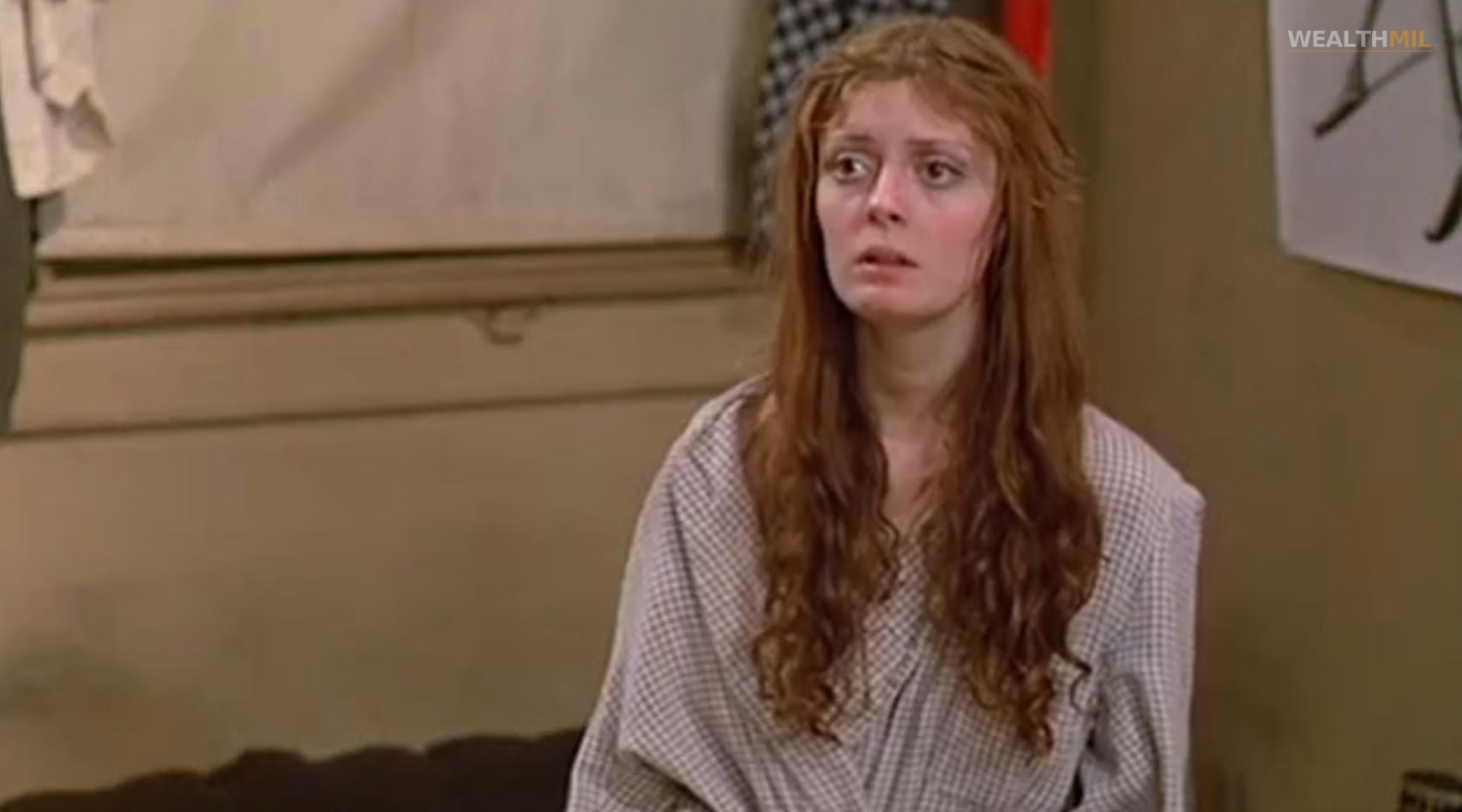
Susan Sarandon’s first major breakthrough came with the 1975 cult musical The Rocky Horror Picture Show. The film initially had a mixed commercial response but eventually became one of the biggest cult classics in movie history. Sarandon’s role as Janet Weiss introduced her to mainstream audiences and helped establish her screen presence.
During the late 1970s and 1980s, Sarandon started gaining recognition for more dramatic performances. Her role in Atlantic City earned her an Academy Award nomination and proved she could handle emotionally complex characters. Critics began viewing her as more than a glamorous Hollywood performer, praising her depth and versatility.
Her popularity grew further through movies like The Witches of Eastwick and Bull Durham. In Bull Durham, she starred opposite Kevin Costner and Tim Robbins, creating one of the most memorable sports dramas of the decade. The film also marked the beginning of her long-term relationship with Robbins.
By the early 1990s, Sarandon had become one of Hollywood’s leading actresses. Her performances balanced commercial success with critical acclaim, allowing her to stand out during a highly competitive era for female actors in cinema.
Thelma & Louise Changed Susan Sarandon’s Career Forever
One of Susan Sarandon’s most important career moments came in 1991 with Thelma & Louise. The road drama, directed by Ridley Scott and co-starring Geena Davis, became a cultural phenomenon and is still considered one of the most influential female-led films ever made.
Sarandon played Louise Sawyer, a waitress whose friendship-driven journey turns into a life-changing escape after a traumatic incident. The film explored themes of freedom, gender expectations, violence, and independence in a way rarely seen in mainstream Hollywood at the time. Critics praised Sarandon’s emotional intensity and chemistry with Davis.
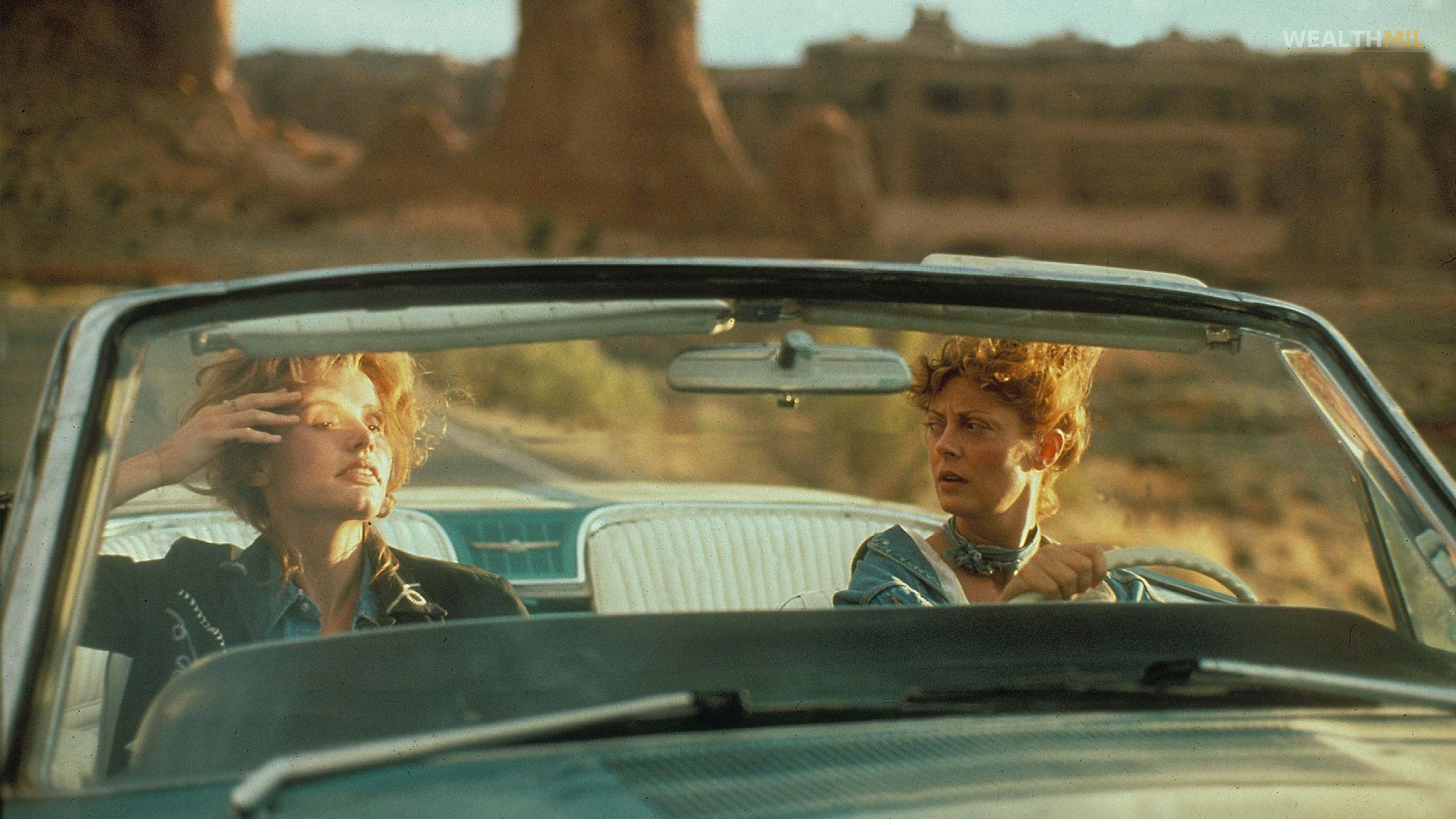
The success of Thelma & Louise elevated Sarandon from respected actor to Hollywood icon. The movie earned multiple Academy Award nominations and became a defining film of the 1990s. Even decades later, it continues to influence discussions about female representation in cinema.
The role also reinforced Sarandon’s reputation for choosing bold, character-driven projects instead of conventional commercial roles. That approach became a defining trait of her career.
Susan Sarandon’s Oscar Win for Dead Man Walking
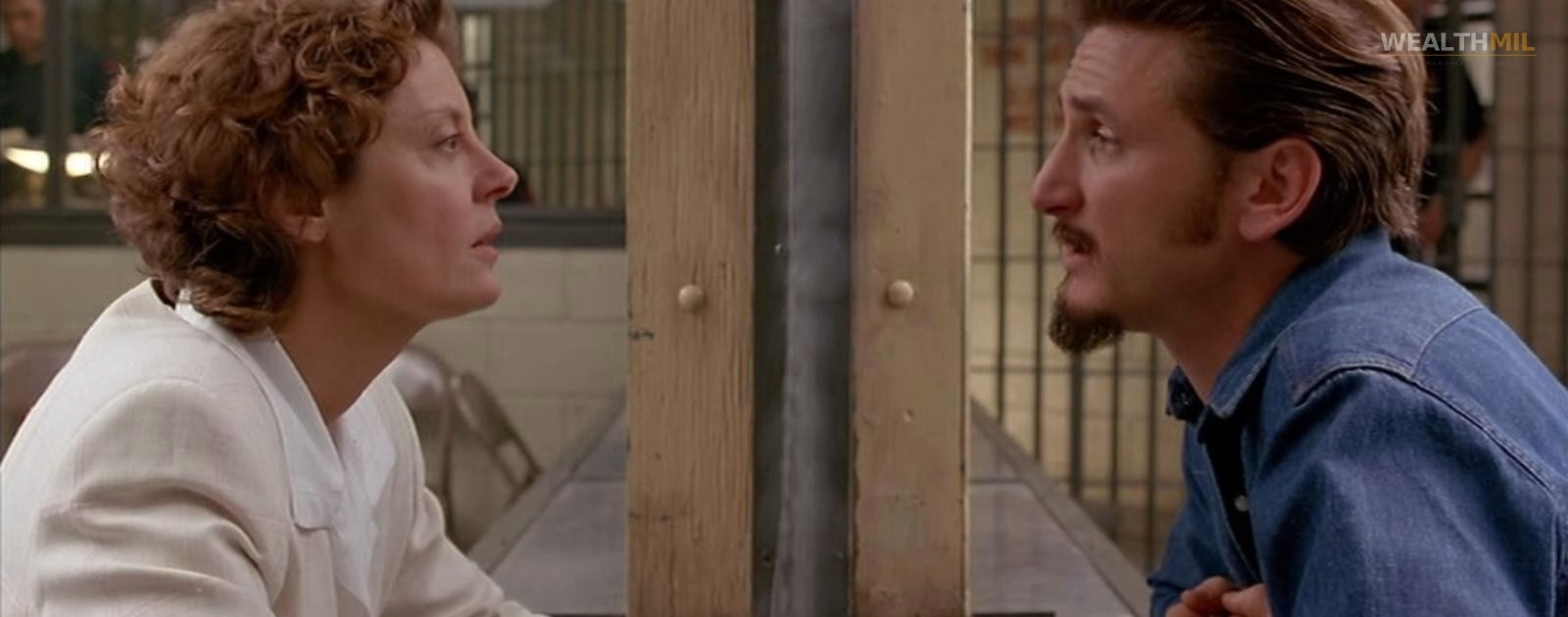
Although Sarandon had already earned several Academy Award nominations, she finally won the Oscar for Best Actress for her performance in Dead Man Walking in 1995. The film was directed by Tim Robbins and focused on the relationship between a nun and a death row inmate.
Sarandon played Sister Helen Prejean, a compassionate nun attempting to guide a convicted murderer through his final days before execution. The role demanded emotional restraint, moral complexity, and psychological depth, all of which critics praised heavily.
Her Oscar victory cemented her place among the greatest actors of her generation. The performance remains one of the most respected portrayals in modern American cinema because of its balance between empathy and realism. The film itself also sparked major public conversations about capital punishment and justice.
By that point, Sarandon had already become a consistent awards contender with nominations for films including Atlantic City, Thelma & Louise, Lorenzo’s Oil, and The Client.
Susan Sarandon’s Most Popular Movies and TV Shows
Over her decades-long career, Susan Sarandon has appeared in an unusually wide range of projects. She has starred in dramas, thrillers, romantic comedies, fantasy films, political stories, and independent cinema. Her filmography reflects both commercial appeal and artistic ambition.
Some of her most famous movies include The Rocky Horror Picture Show, Bull Durham, Thelma & Louise, Dead Man Walking, The Client, Stepmom, The Lovely Bones, and Enchanted. Many of these films introduced her to different generations of audiences, helping her remain relevant across multiple decades.
Sarandon also worked extensively in television. She received Emmy nominations and appeared in projects such as Feud, where she portrayed legendary actress Bette Davis. Her performance earned strong reviews and demonstrated that she could still dominate prestige television in the streaming era.
Unlike many actors from her generation, Sarandon continued taking risks instead of relying entirely on nostalgia-driven appearances. That willingness to evolve helped maintain her status as an active and respected Hollywood figure.
Susan Sarandon’s Activism and Political Views
Susan Sarandon is known almost as much for her activism as for her acting career. Throughout the years, she has publicly supported progressive political causes, humanitarian organizations, anti-war campaigns, and social justice movements.
She served as a UNICEF Goodwill Ambassador and later became involved with organizations focused on hunger relief, refugee support, and global humanitarian work. Her activism extended beyond celebrity endorsements, as she frequently attended protests, rallies, and political events herself.
Sarandon was also a vocal critic of the Iraq War and participated in anti-war demonstrations during the early 2000s. Over time, she became increasingly outspoken about international political issues, including Palestinian rights and refugee advocacy. Her comments and activism have occasionally generated controversy and professional backlash within Hollywood.
In recent years, discussions surrounding her public statements have again drawn media attention. Reports in 2023 and 2026 linked her political activism to professional fallout, including agency separation and claims of industry blacklisting after comments related to the Israel-Hamas conflict.
Despite criticism, Sarandon has continued speaking publicly about issues she believes in. That consistency has remained central to her public identity.
Susan Sarandon’s Personal Life and Family
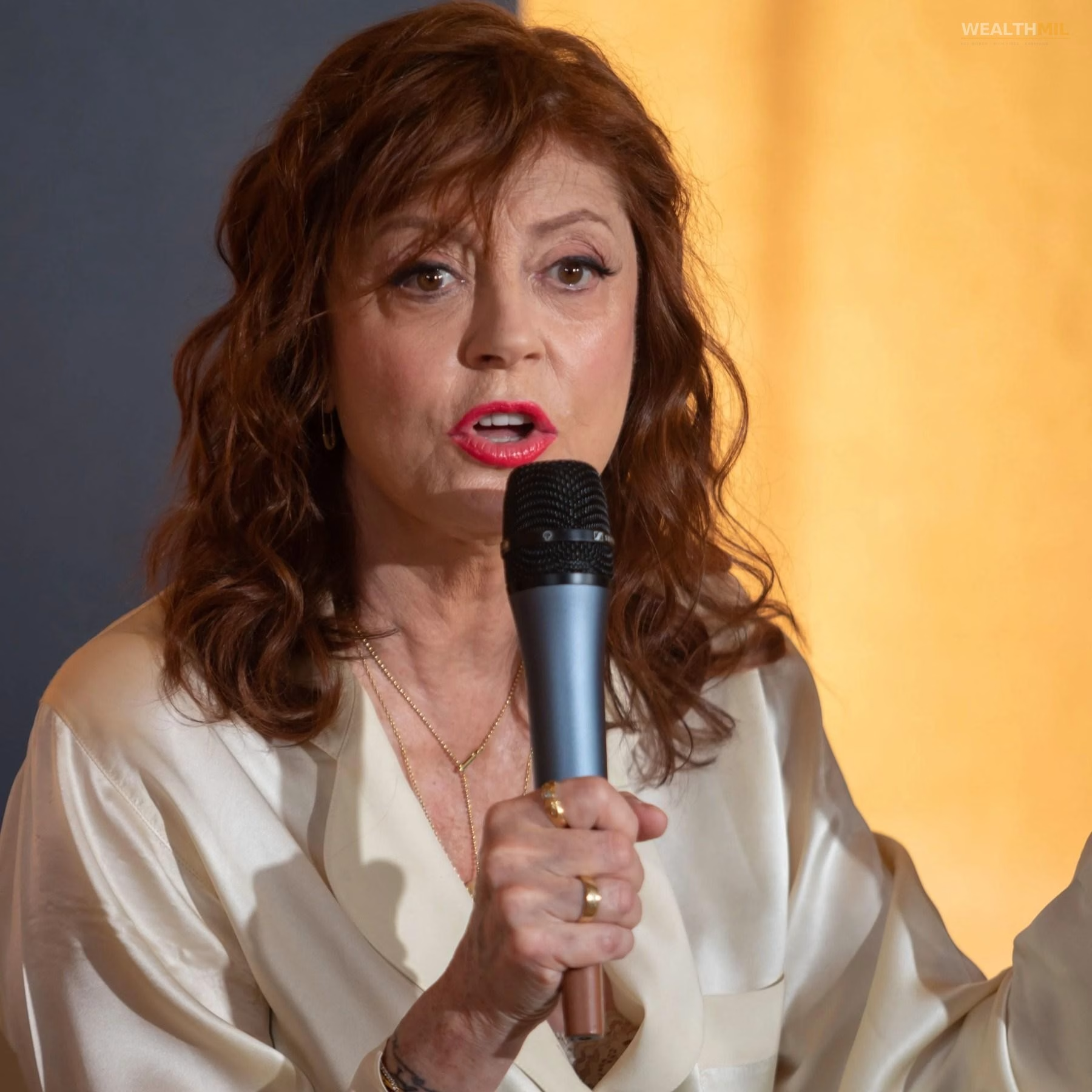
Susan Sarandon’s personal life has often attracted public attention because of her high-profile relationships and family connections. After divorcing Chris Sarandon, she later had a daughter, Eva Amurri, with Italian filmmaker Franco Amurri. Eva eventually became an actor and lifestyle creator herself.
Sarandon’s longest public relationship was with actor Tim Robbins, whom she met while filming Bull Durham. The couple became one of Hollywood’s best-known partnerships and had two sons together. Although they separated in 2009, both remained respected figures in the entertainment industry.
Outside acting, Sarandon also became involved in business ventures connected to table tennis culture. She helped launch SPiN, a social entertainment brand centered around ping pong clubs. According to interviews, she viewed table tennis as an activity that brings together people from different backgrounds and age groups.
Her family, relationships, activism, and career choices have all contributed to her image as an unconventional Hollywood celebrity who consistently lives outside traditional expectations.
Why Susan Sarandon Still Matters in Modern Hollywood
Even after more than 50 years in entertainment, Susan Sarandon remains culturally relevant because of her willingness to evolve while staying authentic. Many actors from her era faded from mainstream attention, but Sarandon maintained visibility through film, television, activism, interviews, and public appearances.
Her influence extends beyond awards and box office success. Films like Thelma & Louise changed conversations around women in cinema, while Dead Man Walking showed how powerful socially conscious storytelling could be in mainstream Hollywood. Younger generations continue discovering her work through streaming platforms and classic film retrospectives.
Sarandon’s outspoken personality has also made her one of the entertainment industry’s most debated public figures. Supporters admire her willingness to speak openly on controversial subjects, while critics often challenge her political statements. Regardless of opinion, she has remained impossible to ignore.
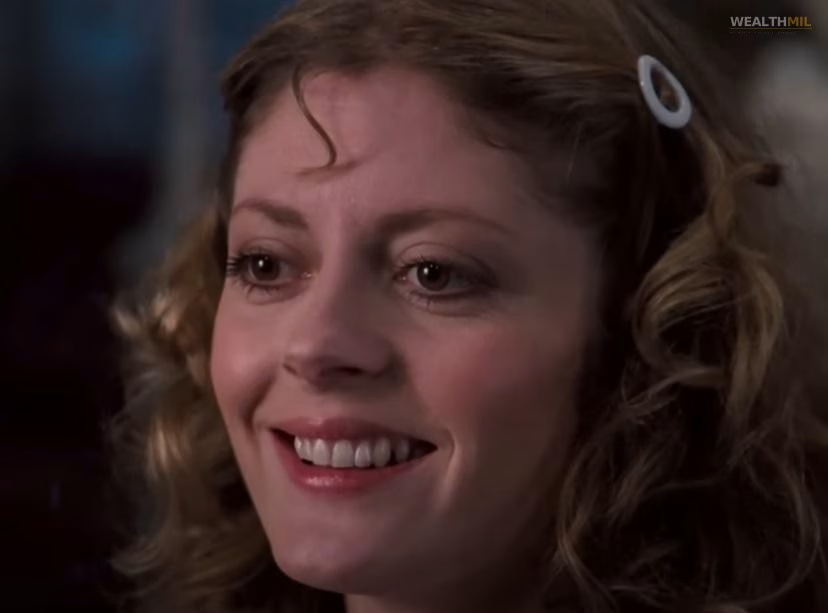
That mix of cinematic legacy, activism, and public visibility explains why Susan Sarandon continues to attract attention decades after first entering Hollywood.
Susan Sarandon is far more than an Oscar-winning actor. She is a performer whose career reflects artistic risk-taking, emotional depth, and long-term cultural impact. From The Rocky Horror Picture Show to Dead Man Walking, she built a filmography that spans multiple generations and genres while earning some of the industry’s highest honors.
At the same time, Sarandon’s activism and outspoken public image transformed her into one of Hollywood’s most politically visible celebrities. Whether through humanitarian campaigns, anti-war protests, or social justice advocacy, she consistently used her platform beyond entertainment.
Her legacy today exists in both cinema history and public discourse. Few Hollywood stars have managed to remain artistically respected, culturally relevant, and publicly influential for as long as Susan Sarandon.