Bo Hopkins was a veteran American actor best known for his work in classic Hollywood films and television series during the 1970s and 1980s. With his Southern charm, distinctive voice, and ability to play both rebellious outlaws and tough authority figures, Hopkins became one of the most recognizable character actors of his era. Although he rarely played leading roles, his performances consistently left a lasting impression on audiences and filmmakers alike.
Over a career spanning more than four decades, Hopkins appeared in over 100 film and television productions. He became closely associated with major directors such as Sam Peckinpah, George Lucas, and Ron Howard. His roles in films like The Wild Bunch, American Graffiti, and Midnight Express helped define his legacy as one of Hollywood’s most dependable supporting actors. Hopkins passed away in 2022 at the age of 84, but his work continues to be remembered by fans of classic American cinema.
Bo Hopkins was born William Mauldin Hopkins in South Carolina
Bo Hopkins was born William Mauldin Hopkins on February 2, 1938, in Greenville, South Carolina. His early life was marked by instability and hardship, experiences that later influenced the rugged authenticity he brought to many of his screen performances. According to biographical records, he was adopted as an infant and experienced a difficult childhood after the death of his adoptive father.
As a teenager, Hopkins struggled with discipline and frequently ran into trouble. Reports note that he dealt with truancy, petty crimes, and eventually spent time in reform school before leaving school altogether. His early years reflected the kind of rebellious energy that later became central to many of his onscreen characters.
At the age of 17, Hopkins joined the U.S. Army and served in the 101st Airborne Division. He spent time stationed in Korea during his military service, an experience that helped him mature and develop a sense of direction. After leaving the military, he initially worked regular jobs before eventually deciding to pursue acting professionally.
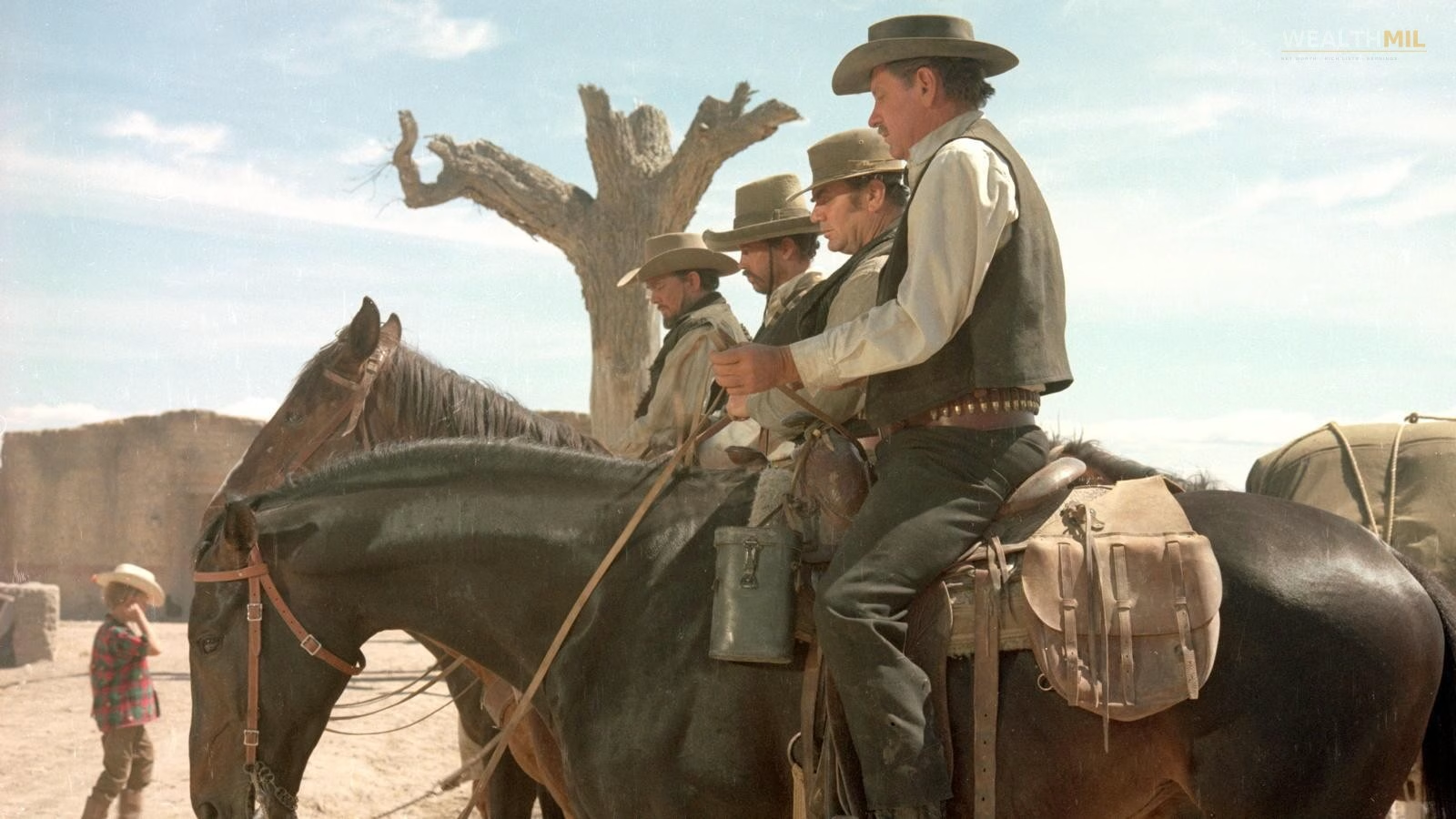
The nickname “Bo” reportedly came later in his life and eventually became his professional identity in Hollywood. His Southern background and real-life struggles gave him a natural toughness that casting directors frequently used in westerns, crime dramas, and action films.
Bo Hopkins moved to Hollywood after discovering acting
After his military service, Hopkins became interested in acting and theater. He initially studied stage production and acting through scholarship opportunities before eventually moving toward professional performance work. His decision to pursue acting was not universally supported by people around him, but he remained committed to the idea of building a career in entertainment.
Hopkins spent time in New York working in stage productions before relocating to Hollywood. Like many aspiring actors during that period, he balanced acting classes with regular jobs to support himself financially. Reports indicate he worked parking cars while studying at the famous Actors Studio, where he trained alongside future major Hollywood talents.
His early years in Hollywood were filled with smaller television appearances and minor film roles. These performances allowed him to gain experience while building relationships within the industry. Although success did not happen overnight, his distinctive appearance and screen presence quickly caught the attention of directors looking for authentic, rough-edged performers.
Hopkins entered Hollywood during a transformative era in American filmmaking. The late 1960s and 1970s saw studios moving toward grittier and more realistic storytelling, which suited his acting style perfectly. This shift helped create opportunities for character actors like Hopkins to thrive.
The Wild Bunch became Bo Hopkins’ breakthrough role
One of the biggest turning points in Hopkins’ career came with his role in The Wild Bunch, directed by Sam Peckinpah. Released in 1969, the western became famous for its brutal realism, groundbreaking action sequences, and morally complex characters. Hopkins played Clarence “Crazy” Lee, a violent gang member whose unpredictable behavior made him stand out in the ensemble cast.
The film introduced Hopkins to mainstream audiences and established him as a strong supporting actor capable of handling intense material. Working alongside stars like William Holden and Ernest Borgnine also raised his profile significantly within the industry.
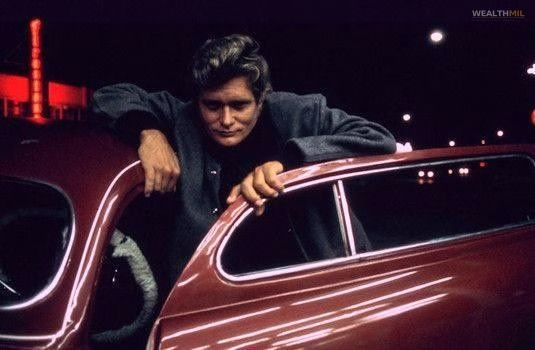
Director Sam Peckinpah became an important figure in Hopkins’ career. Peckinpah later cast him again in films including The Getaway and The Killer Elite. These collaborations strengthened Hopkins’ association with gritty crime stories and violent action dramas.
The Wild Bunch remains one of the defining westerns of its era, and Hopkins’ performance continues to be remembered by fans of the genre. The movie helped establish the reputation he carried for the rest of his career as a believable and compelling character actor.
American Graffiti introduced Bo Hopkins to a wider generation of viewers
While Hopkins became known for westerns and crime dramas, another major milestone came through George Lucas’ American Graffiti in 1973. The coming-of-age film explored youth culture, cars, and music in early 1960s America. Hopkins played “Little” Joe Young, the leader of a local greaser gang.
The film became both a commercial and critical success, eventually turning into one of the defining movies of the decade. It also launched or strengthened the careers of several actors, including Richard Dreyfuss, Ron Howard, and Harrison Ford.
Hopkins’ role in American Graffiti demonstrated his ability to bring charisma and humor to characters who could easily have become stereotypical tough guys. His performance balanced menace with personality, helping make the gang leader memorable without overshadowing the main story.
The success of American Graffiti also exposed Hopkins to younger audiences and expanded his career opportunities beyond westerns. His association with George Lucas added further prestige to his growing Hollywood résumé.
Even decades later, the film remains one of the titles most closely associated with Hopkins’ career. Fans frequently cite his role in American Graffiti when discussing memorable supporting characters from 1970s cinema.
Bo Hopkins became one of Hollywood’s most recognizable character actors
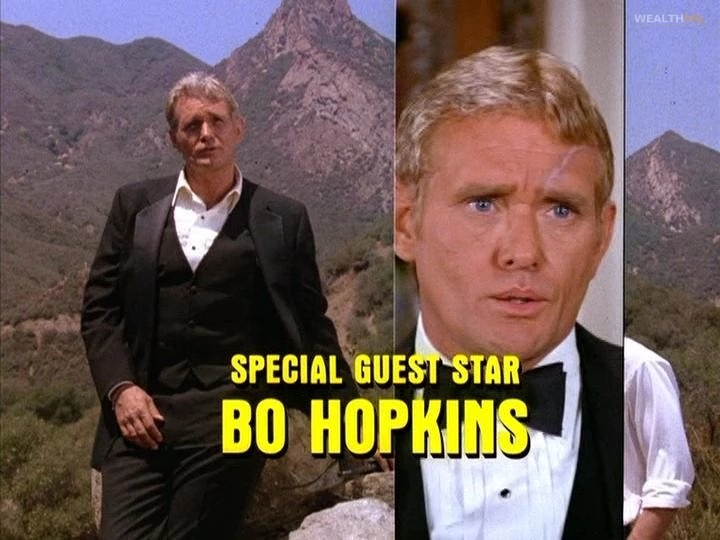
Throughout the 1970s and 1980s, Hopkins built a reputation as one of Hollywood’s most reliable supporting actors. He frequently appeared in films that required rugged, unpredictable, or morally ambiguous characters. His natural screen presence made him particularly effective in action movies, westerns, and crime dramas.
Some of his notable film appearances included White Lightning, The Day of the Locust, A Small Town in Texas, and Midnight Express. These films allowed him to work with respected directors and major stars throughout his career.
Hopkins also maintained a strong television presence. He appeared in popular shows such as Dynasty, The Rockford Files, Charlie’s Angels, Fantasy Island, and The A-Team.
Character actors like Hopkins played an essential role in Hollywood during this period. While they rarely received top billing, they provided depth and credibility to films and television series. Hopkins excelled at portraying men who felt authentic and lived-in rather than polished or glamorous.
His career longevity reflected both talent and adaptability. Over the years, he moved comfortably between westerns, thrillers, dramas, and television productions without losing his distinctive identity as a performer.
Bo Hopkins worked with some of Hollywood’s biggest filmmakers
One reason Hopkins remained active for so many years was his ability to collaborate effectively with influential filmmakers. Directors appreciated his professionalism and the realism he brought to supporting roles. His filmography includes projects connected to several important Hollywood figures.
George Lucas and Sam Peckinpah were among the earliest directors to recognize his potential. Later, Ron Howard also became a recurring collaborator and friend. Hopkins’ final film appearance came in Howard’s 2020 drama Hillbilly Elegy.
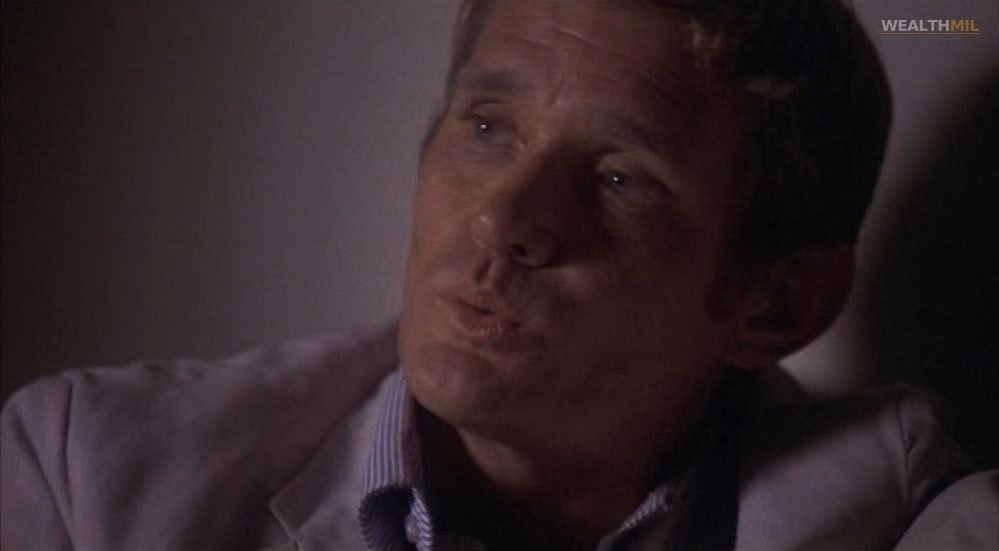
Working with respected directors helped Hopkins remain relevant even as Hollywood changed over the decades. He adapted to different filmmaking styles while maintaining the rugged authenticity that defined his performances.
Hopkins also represented a generation of actors who specialized in supporting work rather than celebrity-driven stardom. These performers often became essential to creating believable cinematic worlds, especially in ensemble casts and gritty dramas.
Although he never became a traditional leading man, his contributions to major films earned him respect among filmmakers and audiences alike.
Bo Hopkins’ personal life stayed relatively private
Compared to many Hollywood actors, Hopkins maintained a fairly private personal life. Reports indicate he was married twice and had two children. He was married to Sian Eleanor Green from 1989 until his death in 2022.
Earlier in his life, Hopkins had a relationship with actress Sondra Locke during the 1970s. However, he generally avoided becoming a tabloid figure and focused more heavily on work than celebrity culture.
Later in life, Hopkins reportedly stepped away from acting for several years before eventually returning to select projects. During this period, he also worked on writing his autobiography and reconnecting with fans.
Friends and colleagues frequently described him as approachable and deeply appreciative of his audience. His official website reportedly received messages from fans worldwide throughout his later years.
Despite the tough image associated with many of his characters, those who knew him personally often described him as warm and humorous away from the camera.
Bo Hopkins died in 2022 at the age of 84
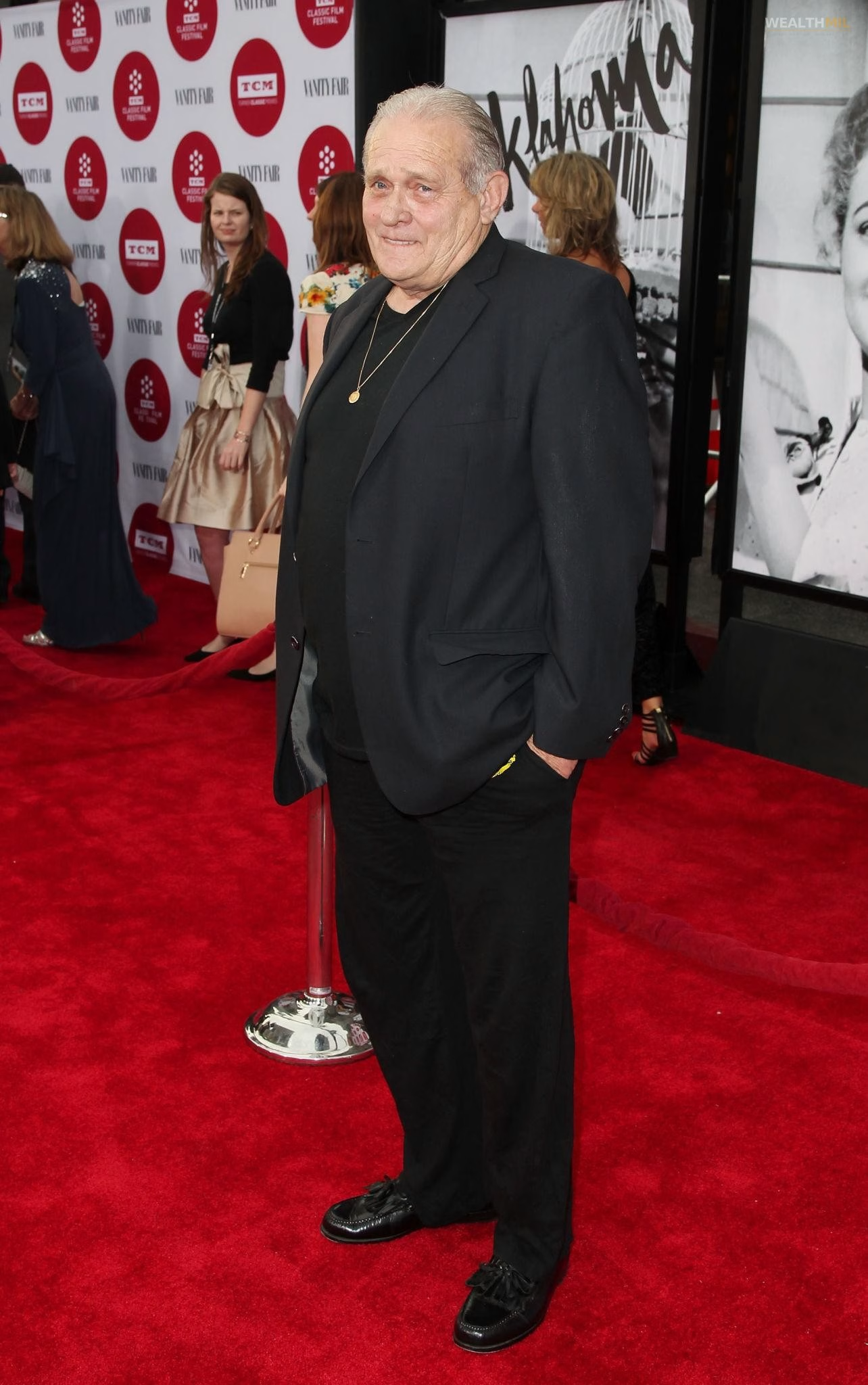
Bo Hopkins passed away on May 28, 2022, at the age of 84. According to reports confirmed by his wife, he died after suffering a heart attack earlier that month. He passed away at Valley Presbyterian Hospital in Van Nuys, California.
News of his death led to tributes from fans, journalists, and members of the entertainment industry. Many remembered him as one of the defining character actors of 1970s American cinema. His performances in films like The Wild Bunch and American Graffiti were repeatedly highlighted in obituaries and retrospectives.
Entertainment publications emphasized the sheer range of his work. Across more than 100 screen appearances, Hopkins portrayed criminals, lawmen, soldiers, bikers, and ordinary working-class men with equal conviction.
His passing also sparked renewed appreciation for the era of filmmaking he represented. Hopkins belonged to a generation of actors who helped shape the gritty realism associated with New Hollywood cinema during the late 1960s and 1970s.
Even after his death, his performances continue reaching new audiences through streaming platforms and classic film retrospectives.