

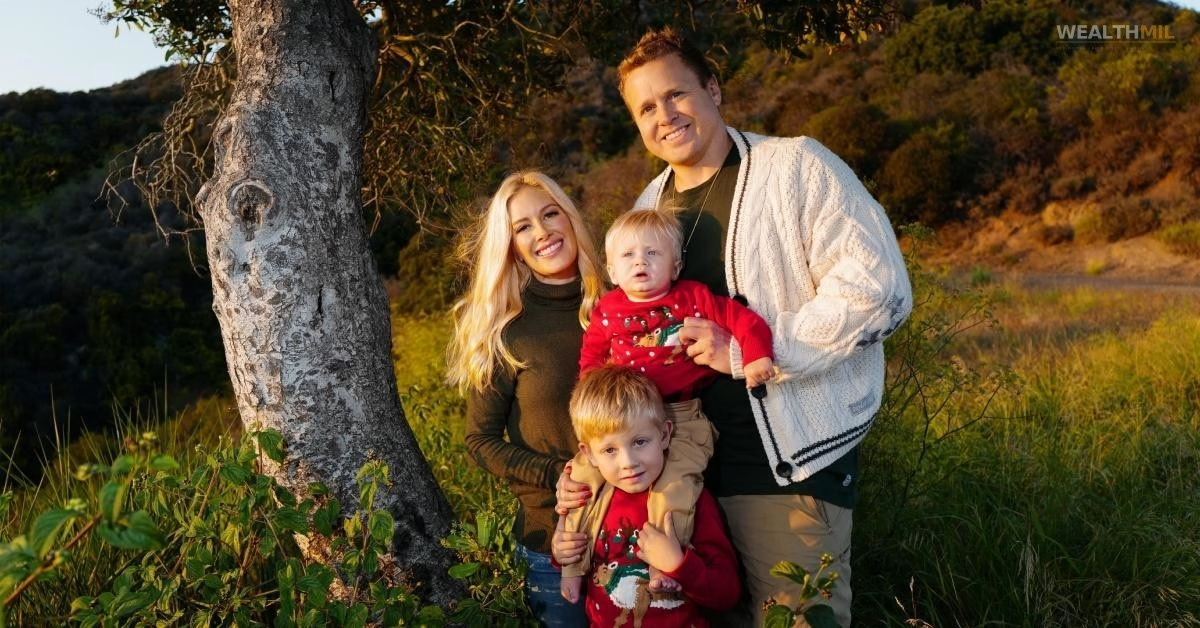
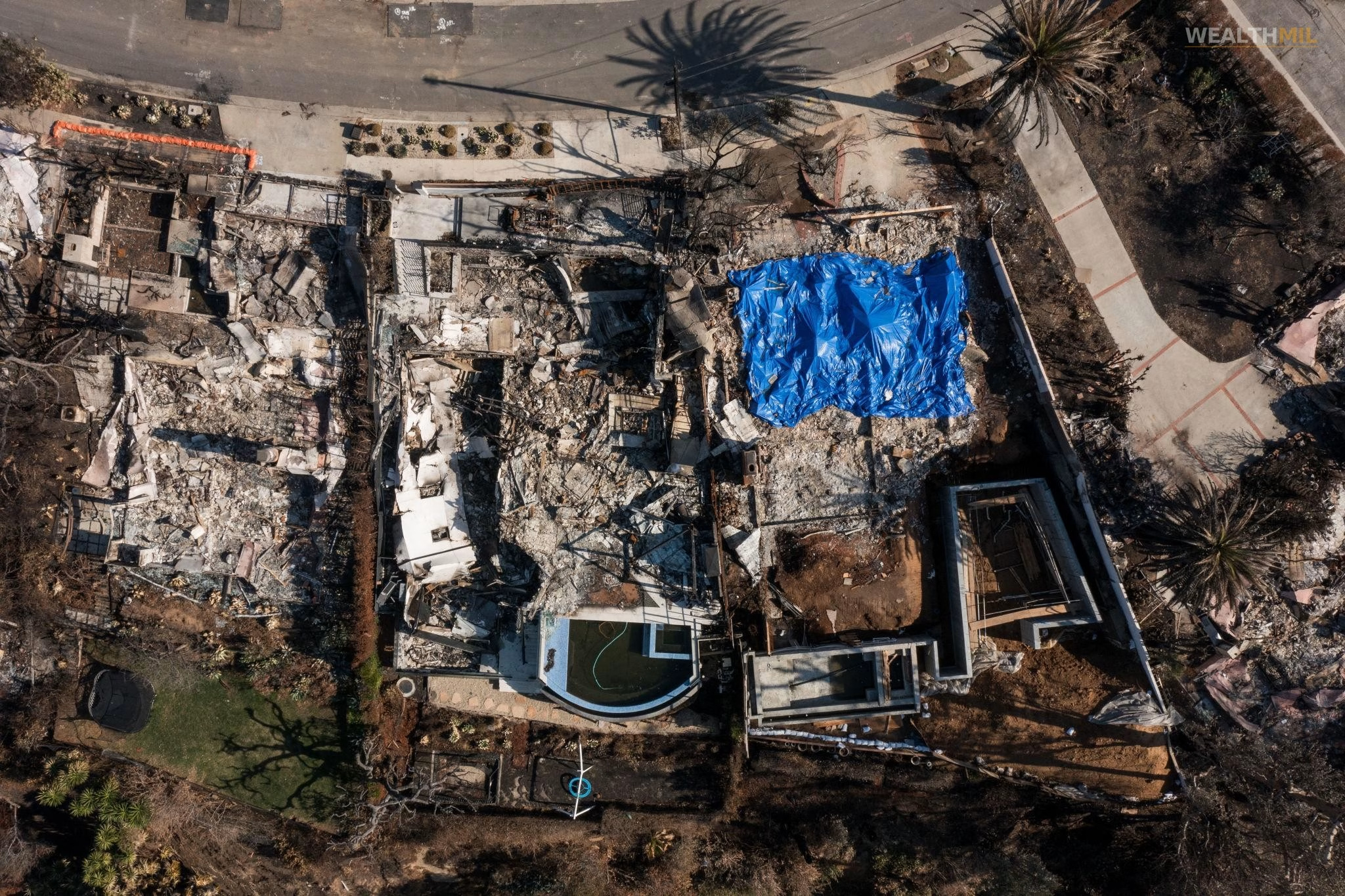
The destruction caused by the 2025 California wildfires left thousands of homeowners facing life-altering decisions, and Heidi Montag and Spencer Pratt are among those still dealing with the aftermath.
The reality television couple lost their Pacific Palisades home in the blaze, and despite receiving an insurance payout, rebuilding is not financially feasible. Their situation highlights a growing issue in wildfire-affected areas where insurance coverage, construction costs, and property values no longer align in a way that makes recovery straightforward.
The Financial Gap Between Insurance and Rebuilding Costs
Montag and Pratt purchased their home in 2017 for $2.52 million, later seeing its value rise to an estimated $3.8 million. The property, just under 2,300 square feet, would traditionally cost around $2.3 million to rebuild based on pre-fire construction estimates in upscale Los Angeles neighborhoods. However, post-wildfire conditions have drastically changed that equation, with rebuilding estimates now reportedly reaching as high as $5 million.
In an interview with The Independent, Heidi Montag explained the situation clearly, saying,
“They’re saying it’s going to cost $5 million to rebuild the house that cost a third of that. We just don’t have the finances.”
This sharp increase reflects broader industry challenges, including labor shortages, rising material costs, and delays in permits. These factors have made rebuilding not just expensive but, in many cases, impractical for homeowners without significant financial reserves.
What the Insurance Payout Actually Covers
Initially, there was confusion around the couple’s insurance situation, with Spencer Pratt stating they had been dropped by their provider months before the fire. However, due to mortgage requirements, homeowners must maintain some form of insurance coverage. In California, when private insurers withdraw, homeowners often turn to the state-backed FAIR Plan, which acts as a last-resort safety net.
According to reporting by The New York Times, the couple did have coverage through the FAIR Plan and received a payout of approximately $1 million. While this might seem substantial, it falls far short of the current rebuilding estimates. Even under older cost models, the payout would leave a gap of over $1 million, and under current conditions, that shortfall could exceed $4 million.
This gap illustrates a growing problem in wildfire-prone regions where insurance coverage often does not keep pace with real rebuilding costs. As a result, homeowners are left with funds that are insufficient to restore what they lost.
Why Rebuilding May Not Make Financial Sense
Even if Montag and Pratt were able to secure additional funding, rebuilding may not be the smartest financial decision. If reconstruction costs truly reach $5 million, the total investment would far exceed the property’s previous market value. This creates a scenario where the cost of rebuilding is higher than what the home could realistically sell for in the current market.
Potential buyers face the same calculation. Purchasing the land and rebuilding would require a significant upfront investment that may not yield a proportional return. This reduces demand for such properties and further complicates the couple’s options. Selling the land could be one path forward, but its value may also be diminished due to rebuilding costs and risk factors tied to wildfire zones.
The couple now faces a difficult choice between rebuilding at a loss, selling the property for less than its former value, or relocating entirely. Each option comes with its own financial and emotional challenges. Compounding the issue is the fact that they are still responsible for their mortgage, adding ongoing financial pressure despite the loss of their home.
Their situation reflects a broader crisis affecting many homeowners in California’s high-risk areas. Wildfires are not only destroying properties but also disrupting the financial frameworks that once made homeownership stable and predictable. For Montag and Pratt, the loss extends beyond physical property, impacting long-term security and future planning.
In the end, their story underscores a harsh reality. Insurance alone is no longer enough to guarantee recovery after a disaster, especially in regions where rebuilding costs have surged beyond traditional expectations.