The idea that Sam Altman holds no equity in OpenAI sounds almost impossible at first glance. As the public face of one of the most valuable and influential companies in the world, many assume he must control a massive ownership stake. Yet recent disclosures and courtroom revelations confirm that his official equity stands at zero, at least for now.
This unusual situation has sparked widespread curiosity, especially as other early figures in the company have accumulated staggering paper wealth. To understand why Altman’s stake is structured this way, it is necessary to look at OpenAI’s origins, its transition into a hybrid model, and the legal battle that currently overshadows everything.
The Nonprofit Roots That Shaped OpenAI’s Structure
When OpenAI was founded in 2015, it was not designed to create billionaires. The organization began as a nonprofit with a mission to develop artificial general intelligence safely for the benefit of humanity. This structure meant that traditional equity ownership was not part of the original plan.
At the time, Altman was already financially secure from his leadership at Y Combinator. His role at OpenAI was positioned more as a steward than a profit-seeking executive. Avoiding equity helped reinforce that image, signaling that his decisions would not be driven by personal financial incentives.
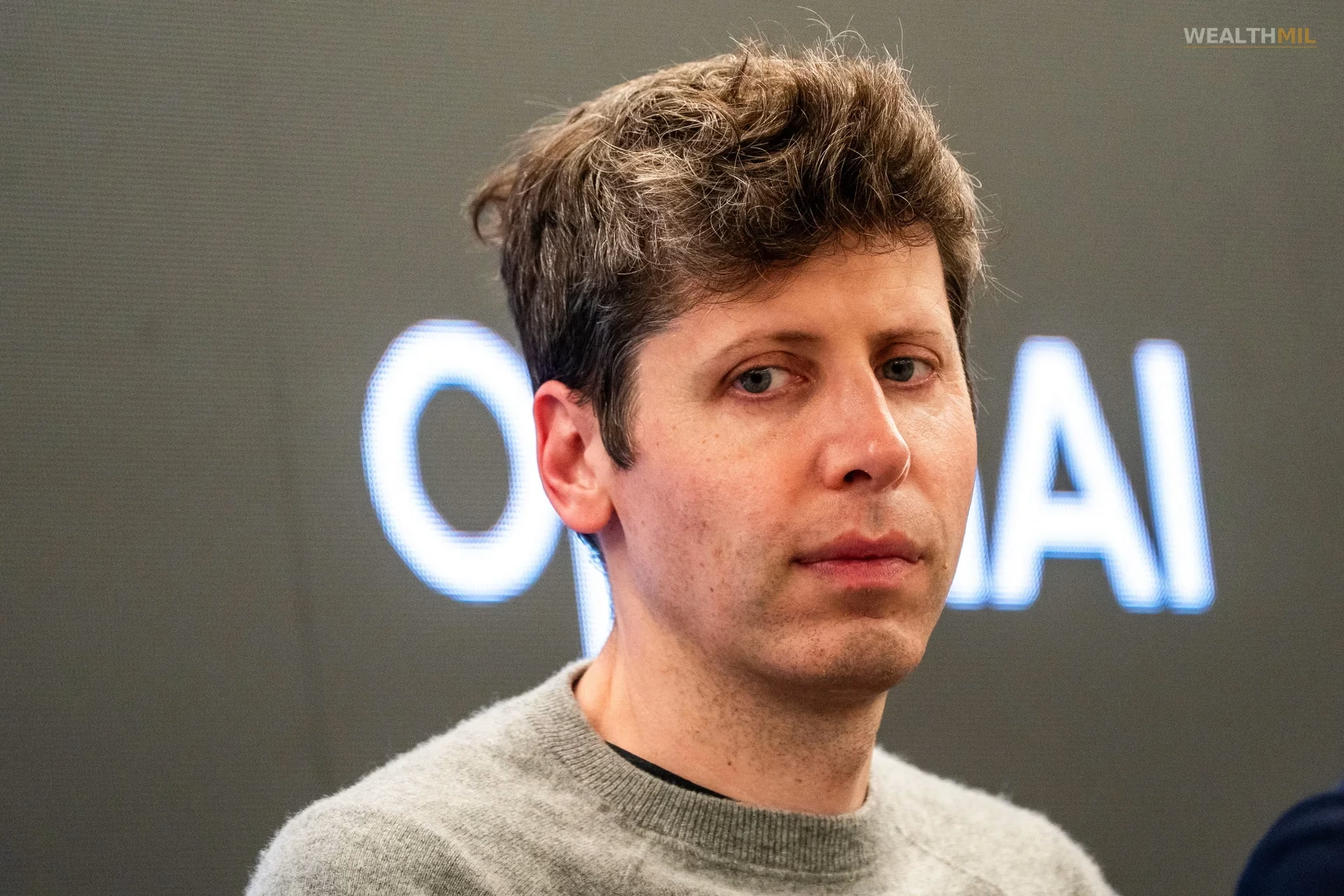
However, the rapid evolution of artificial intelligence changed everything. As the scale of the opportunity grew, so did the need for capital. Training advanced AI systems requires enormous computational resources, which in turn demand billions of dollars in investment.
To compete at the highest level, OpenAI transitioned from a pure nonprofit into a unique capped-profit structure. This allowed the company to raise funds while still maintaining a mission-driven framework. Investors could earn returns, but those returns were limited compared to traditional venture-backed companies.
During this transition, several key figures secured significant equity stakes. Greg Brockman and Ilya Sutskever are among those whose holdings are now valued in the tens of billions. These stakes were often granted rather than purchased, reflecting the unconventional nature of OpenAI’s evolution.
Meanwhile, external investors also benefited enormously. Early backers like Ashton Kutcher, through his venture firm, saw dramatic returns as OpenAI’s valuation surged. Employee equity pools have also ballooned, collectively representing one of the largest concentrations of paper wealth in modern tech.
Against this backdrop, Altman’s zero-percent stake stands out even more.
Why Sam Altman Still Has No Equity
There are several overlapping reasons why Altman has not taken a share of OpenAI, and they go beyond simple optics. One major factor is the ongoing legal conflict with Elon Musk, who has accused OpenAI of straying from its nonprofit mission.
Musk’s argument centers on the idea that OpenAI was meant to serve humanity rather than generate massive private wealth. If Altman were to grant himself a multi-billion-dollar stake while this case is ongoing, it could strengthen Musk’s claims in court. In that context, maintaining zero equity is not just symbolic but strategically important.
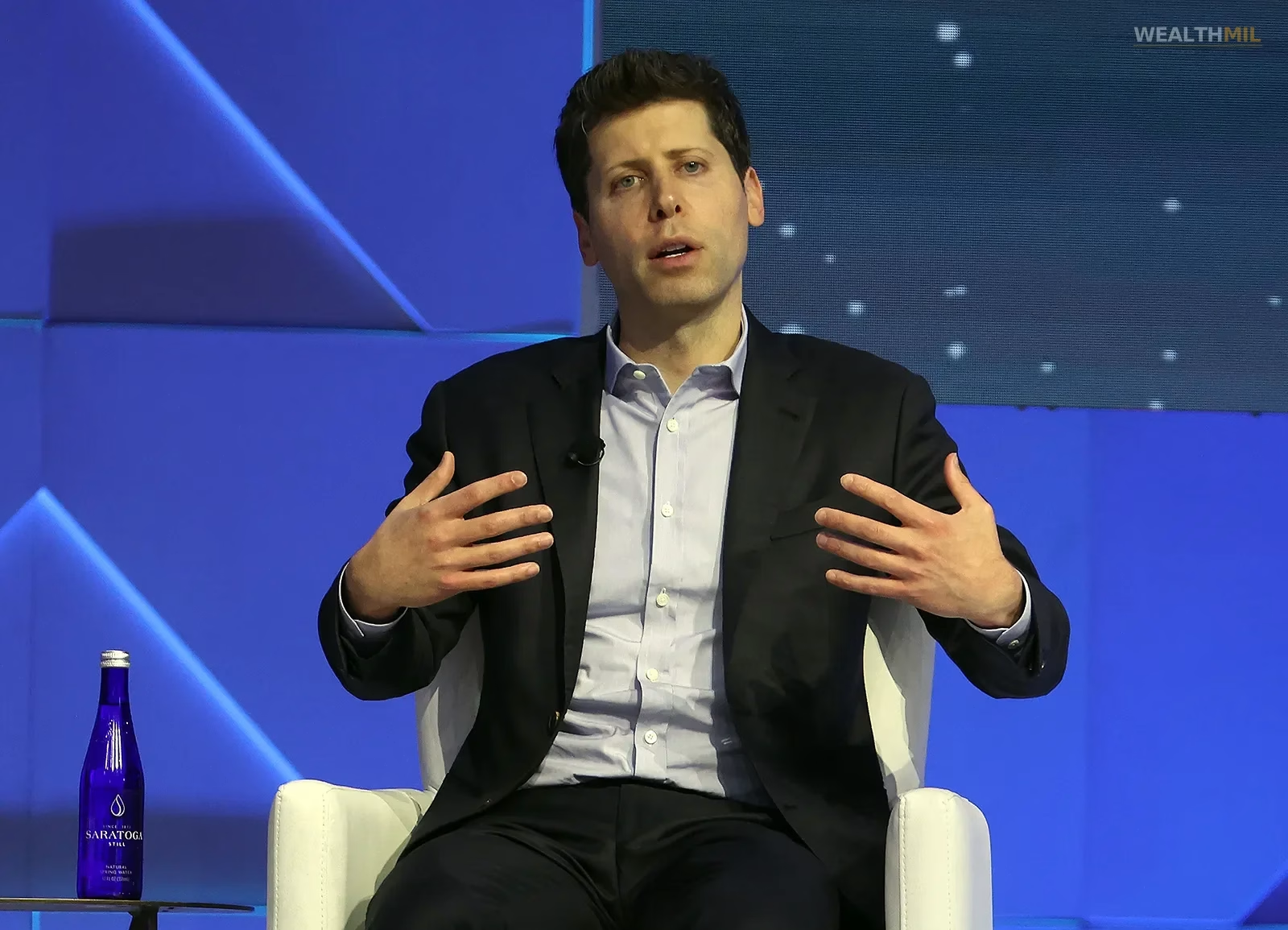
Another factor is governance and perception. As the CEO and most visible leader, Altman’s actions are scrutinized more intensely than those of other executives. Awarding himself a massive stake could raise concerns among investors, regulators, and the public, especially given OpenAI’s unique structure.
Instead, the company’s internal records reportedly list his equity status as “to be determined.” This suggests that while he currently owns nothing, the possibility of a future allocation remains open.
Building Wealth Outside OpenAI
Despite having no official ownership in OpenAI, Altman is far from financially disadvantaged. His personal wealth, estimated in the billions, comes from a wide range of investments that intersect with the AI ecosystem.
One of his most notable holdings is a significant stake in Reddit. As OpenAI increasingly relies on large datasets to train its models, partnerships with platforms like Reddit have become more valuable, indirectly benefiting Altman’s portfolio.
He has also invested heavily in energy and hardware companies positioned to support the AI boom. For example, his involvement with Helion Energy reflects a bet on future power demands, as advanced AI systems require unprecedented levels of electricity.
Similarly, his backing of Rain AI aligns with the growing need for specialized chips capable of handling AI workloads. These strategic investments allow Altman to benefit from OpenAI’s growth without directly holding equity in the company itself.
The most intriguing aspect of Altman’s situation is the “TBD” label attached to his potential stake. In Silicon Valley, many believe this is not a permanent absence of equity but a delayed decision.
If the legal challenges surrounding OpenAI are resolved in his favor, the company’s board could choose to grant him a significant equity package retroactively. Such a move might be tied to milestones like a successful initial public offering or achieving a specific valuation target.
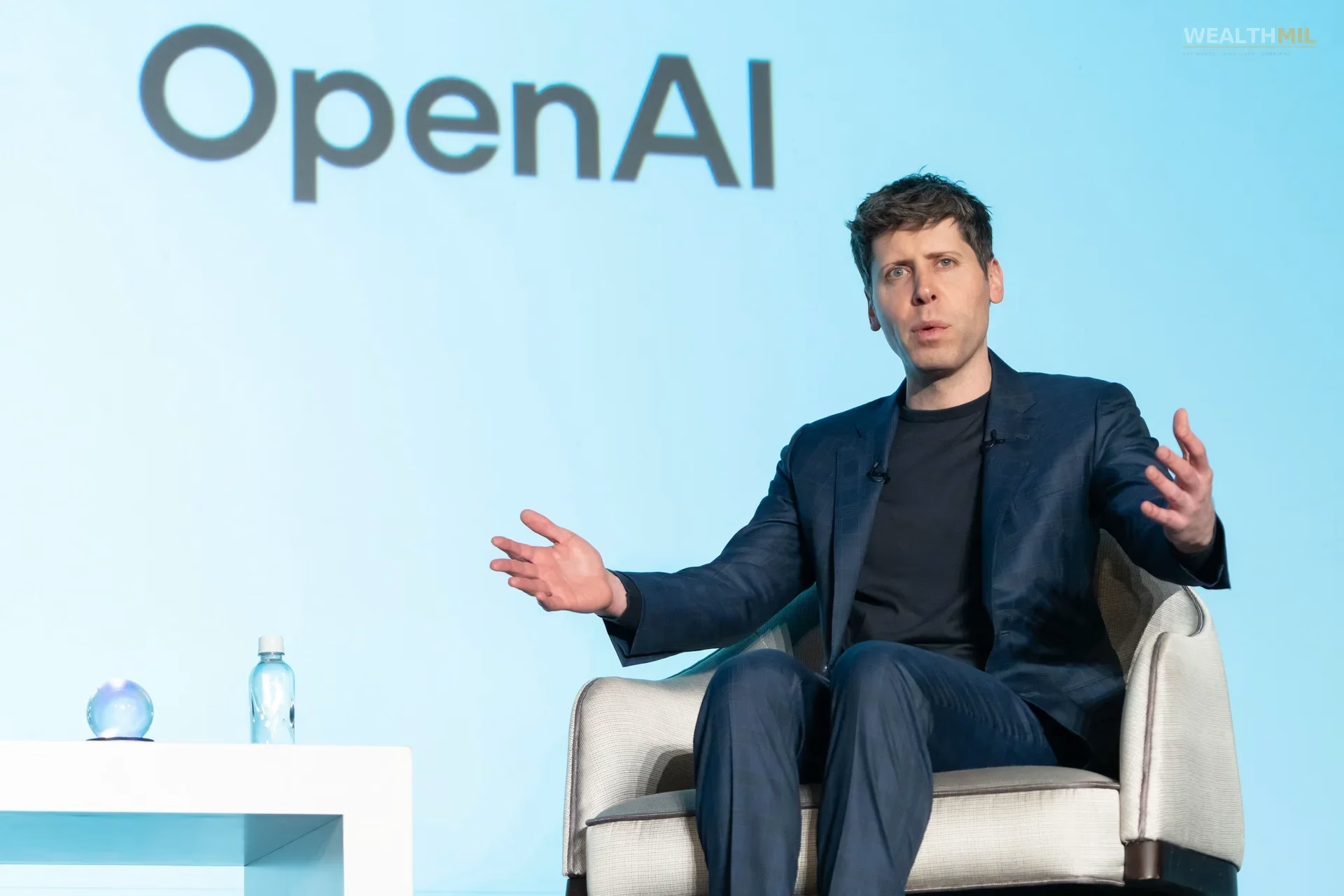
Given OpenAI’s trajectory, any future stake could instantly place Altman among the wealthiest individuals in the world. For now, however, waiting appears to be the safer and more strategic option.
What Happens If Elon Musk Wins
The stakes of the ongoing legal battle extend far beyond Altman’s personal finances. If Elon Musk prevails, the consequences for OpenAI could be severe.
One potential outcome is the reversal of OpenAI’s capped-profit structure, effectively returning it to a purely nonprofit model. This would drastically reduce its valuation, as a nonprofit cannot operate like a traditional commercial entity or pursue a public listing.
Such a ruling could also wipe out the massive equity stakes currently held by employees and investors. Billions of dollars in paper wealth could disappear overnight, and planned moves like a future IPO would become impossible.
For Altman, this scenario would mean more than just losing a potential equity windfall. It would threaten the entire foundation of the company he leads, along with the broader ecosystem built around it.
Sam Altman’s lack of equity in OpenAI is not an oversight or a mistake. It is the result of a carefully managed balance between mission, perception, and legal strategy. By avoiding ownership for now, he preserves the company’s original narrative while steering one of the most high-stakes legal battles in tech.
At the same time, his extensive investments ensure that he remains deeply connected to the financial upside of the AI revolution. Whether or not he eventually takes a direct stake in OpenAI, his influence and wealth are already tied to its success.
For now, the zero-percent figure is less a limitation and more a calculated position. What happens next will depend on legal outcomes, market conditions, and how OpenAI continues to evolve in an industry moving faster than ever before.