
The idea of a trillionaire once felt like science fiction, but that changed when Elon Musk reportedly crossed the $1 trillion net worth mark in June 2026. While the milestone stunned the financial world, a growing discussion has shifted toward an alternate possibility: what if Bill Gates had reached that level first?
According to financial analysis and historical data, Gates may have quietly missed becoming the world’s first trillionaire by sticking to a safer investment philosophy decades earlier. That possibility hinges on one key factor: how much of Microsoft he chose to keep.
The Microsoft Stake That Could Have Made History
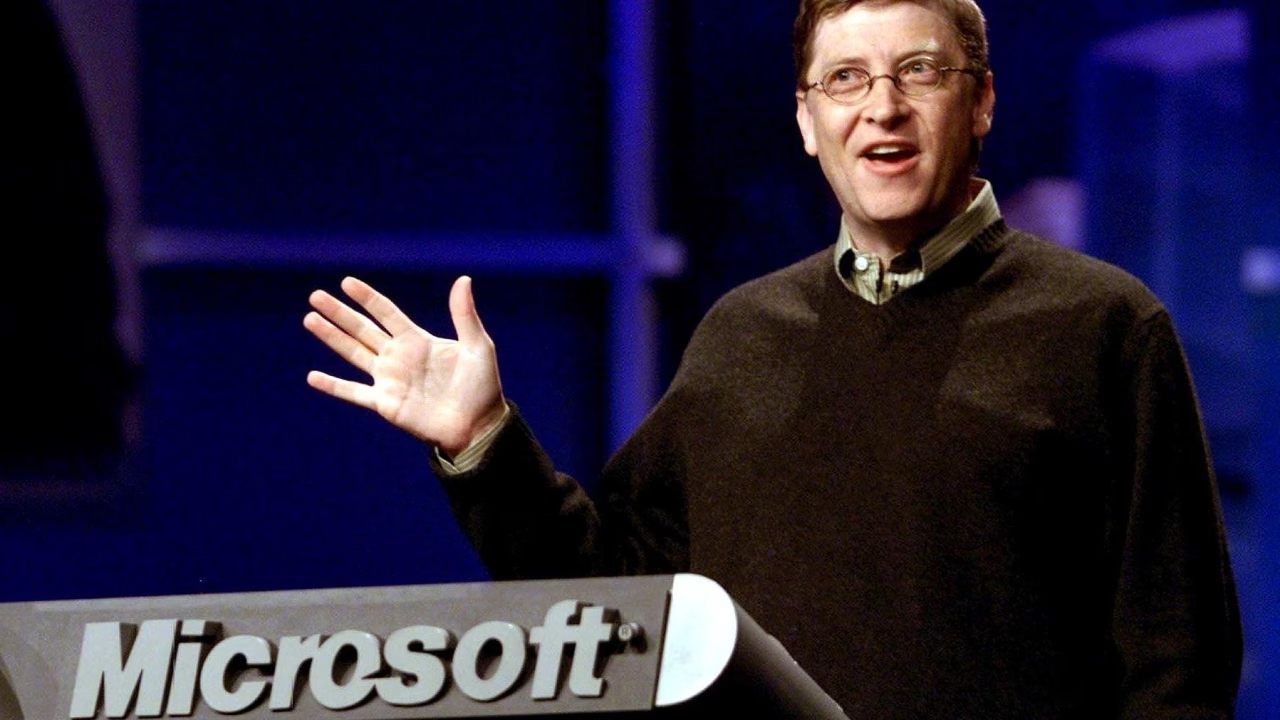
When Microsoft went public in 1986, Bill Gates owned about 45% of the company. Even at the time, that level of ownership was extraordinary, instantly making him one of the richest individuals in tech. As Microsoft grew into one of the most valuable companies in the world, that early stake became the foundation of Gates’ fortune.
However, over time, Gates gradually reduced his holdings. By the early 2000s, his stake had dropped significantly, and today he owns only a small fraction of the company. This shift was not accidental but rather part of a deliberate strategy shaped by his relationship with Warren Buffett.
Had Gates retained even 35% of Microsoft, his wealth trajectory would have looked dramatically different. When Microsoft’s market value approached nearly $2.9 trillion in early 2024, that hypothetical stake would have been worth over $1 trillion on its own. In other words, Gates could have reached trillionaire status more than two years before Musk.
Gates and Warren Buffett first met in 1991, a meeting that would reshape Gates’ financial outlook. Initially skeptical, Gates later admitted he was impressed by Buffett’s thinking, recalling how he was struck by the “amazingly good questions” Buffett asked during their first conversation.
Buffett has long championed diversification, famously stating, “Diversification is protection against ignorance.” Following that philosophy, Gates began selling portions of his Microsoft shares and reinvesting through his private firm, Cascade Investments. This approach spread his wealth across industries, including hospitality, agriculture, and various public companies.

From a risk management perspective, the move made sense. Microsoft experienced periods of stagnation, particularly in the early 2000s, and diversification helped Gates maintain his position as one of the world’s richest individuals for over a decade. Still, that same strategy may have cost him the chance to achieve an unprecedented financial milestone.
A Different Path Compared to Other Tech Billionaires
Gates’ decision stands in contrast to figures like Larry Ellison, who maintained a large ownership stake in Oracle over decades. Ellison still controls a significant portion of Oracle, meaning most of his wealth remains tied to the company’s performance.
This concentrated approach carries more risk but also greater upside. If Oracle’s valuation were to climb to similar levels as Microsoft’s, Ellison’s net worth could surge dramatically. The comparison highlights a fundamental divide in wealth-building strategies among tech founders: stability versus maximum growth.
Meanwhile, the case of Steve Jobs offers yet another perspective. Jobs famously sold most of his Apple shares after being ousted in the 1980s, leaving him with a relatively small stake when the company later exploded in value. Even with Apple surpassing $3 trillion at times, Jobs would not have reached trillionaire status based on his eventual holdings.
Looking back, Gates’ decision to diversify was widely seen as prudent and even visionary. It protected his wealth from volatility and enabled him to fund large-scale philanthropic efforts through the Bill & Melinda Gates Foundation. His fortune, though smaller than it might have been, has arguably had a broader global impact.
Yet the numbers tell a compelling “what if” story. A slightly different approach, holding onto a larger Microsoft stake, could have rewritten financial history. Instead of Elon Musk, Bill Gates might have been remembered as the first person to cross the trillion-dollar threshold.
The reality underscores a simple truth about wealth at this level: the difference between historic and unimaginable often comes down to a single decision made decades earlier.