

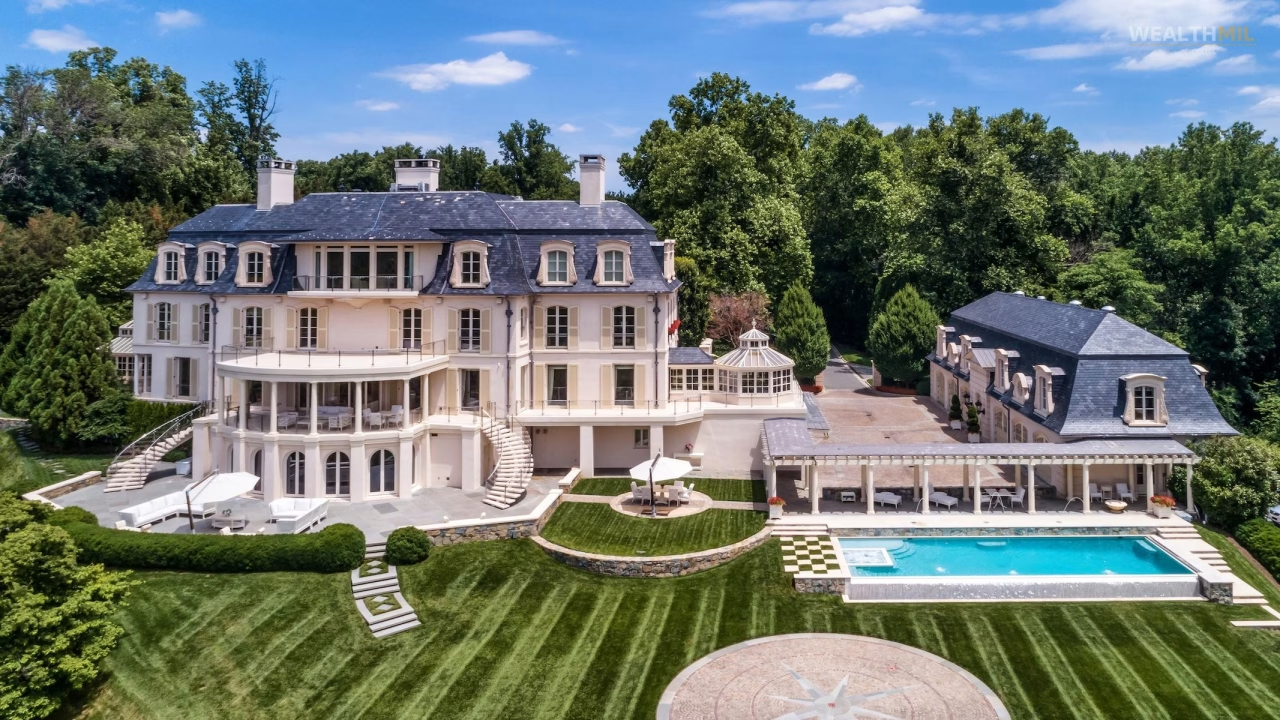
Former Washington NFL team owner Dan Snyder is once again attempting to sell his ultra-luxury Virginia estate, relisting the property for $49.9 million after previously seeking $60 million. The sprawling mansion, located in Alexandria, remains the most expensive residential listing in the Washington, D.C. area, but its return to the market highlights the growing challenges of selling trophy homes at the highest price tier.
Originally purchased in 2021 for $48 million, the estate set a regional record at the time. Despite its prestige, scale, and rare historical connection, the property has yet to attract a buyer willing to meet its ambitious valuation.
A Record-Breaking Estate With Presidential Roots
The property, often referred to as River View, sits on 16.5 acres overlooking the Potomac River, roughly 13 miles from downtown Washington. What sets it apart from other luxury listings is its historical significance. The estate occupies the largest privately owned portion of land that was once part of George Washington’s Mount Vernon holdings.
Although the home was completed in 2018, it was designed in a Federal architectural style to echo early American estates. The mansion spans approximately 16,000 square feet and includes eight bedrooms and 15 bathrooms, blending classical aesthetics with modern luxury amenities.
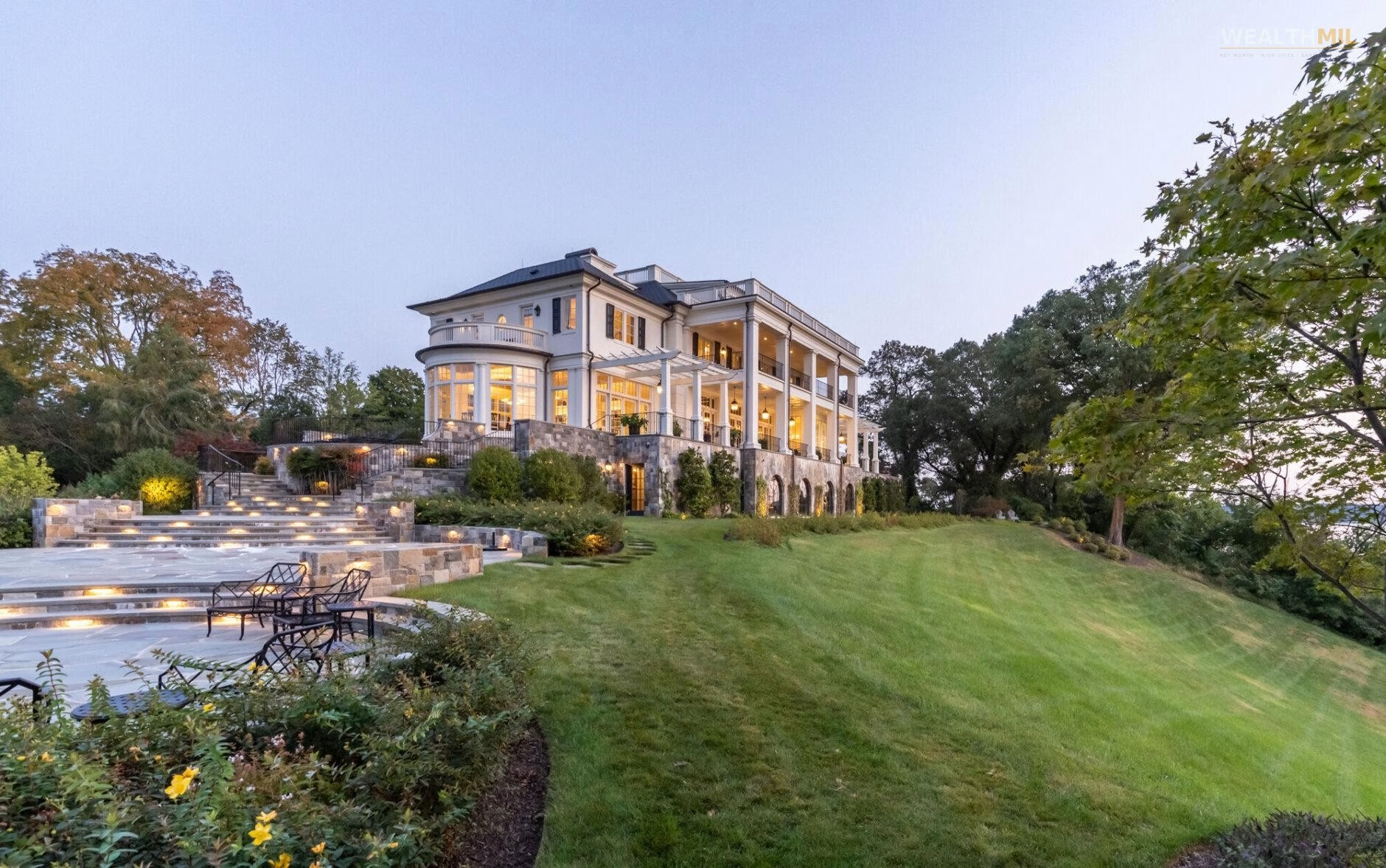
Nearly every room is oriented toward river views, emphasizing privacy and exclusivity. The estate also features a guest house, carriage house, private dock, and formal gardens inspired by Mount Vernon’s original landscaping plans. Inside, high-end amenities include a private theater, spa complex, fitness center, and expansive entertainment spaces.
Price Cuts Reflect a Shifting Luxury Market
Snyder first listed the property publicly in 2024 with a $60 million asking price, positioning it as a landmark sale for the region. However, the home failed to secure a buyer, leading to a significant price reduction to $49.9 million.
While the new price still places the estate at the top of the local market, it signals a more realistic approach to pricing. At this level, even small shifts in buyer demand can have a major impact, and the pool of potential buyers remains extremely limited.
A sale near the current asking price would likely result in minimal profit once ownership costs, taxes, and brokerage fees are factored in. If the final sale falls below that threshold, the deal could effectively become a financial loss, underscoring the risks of high-end real estate investments.
A Pattern of High-Profile Real Estate Challenges
This is not the first time Snyder has faced difficulties selling luxury property. His previous estate in Potomac, Maryland followed a similar trajectory, initially listed for $49 million before undergoing multiple price reductions.
That property, built on land once owned by Jordan’s royal family, ultimately failed to sell through traditional channels. In a surprising move, Snyder and his wife donated the estate to the American Cancer Society in 2024. The charity later sold the property at auction for just $11.84 million, a fraction of its original asking price.
The outcome highlighted a key reality of ultra-luxury real estate. Even properties marketed as “one-of-a-kind” can struggle without sufficient buyer demand, especially outside traditional high-end markets like Beverly Hills or Palm Beach.
Why Finding a Buyer May Still Be Difficult
Despite its unique features, the Alexandria estate faces a fundamental challenge. The Washington, D.C. region, while wealthy, does not have the same concentration of ultra-high-net-worth buyers actively seeking $50 million homes.
Unlike markets known for luxury real estate turnover, the D.C. area tends to favor more understated wealth, often tied to institutions rather than individual buyers willing to spend at this level. This limits competition and reduces the likelihood of bidding wars that can drive up prices.
At the same time, the property’s scale and specificity may narrow its appeal. While its historical connection and riverfront location make it exceptional, they also position it as a niche asset that requires a very particular buyer.