

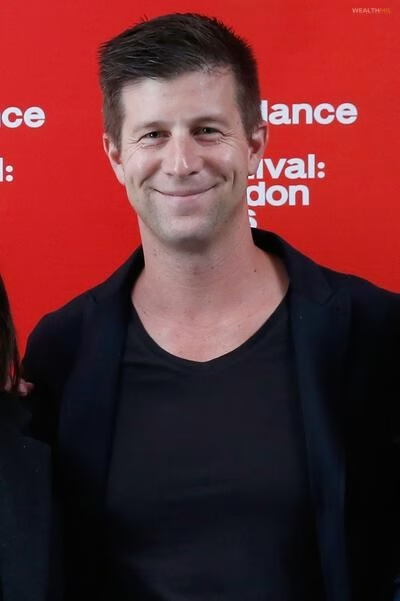
Paul Bernon has quietly built one of the more unconventional careers in entertainment and business. Unlike producers who operate solely inside Hollywood, Bernon developed his reputation by moving between independent filmmaking, real estate investment, venture capital, and entrepreneurship. His career path has allowed him to establish influence in both creative and corporate spaces, creating a professional identity that extends far beyond the entertainment industry. Over the years, this mix of industries has played a major role in shaping his estimated net worth and long-term financial stability.
Although many people recognize Bernon through his film credits or public relationship with reality television personality Bethenny Frankel, his professional portfolio is far broader than celebrity headlines. He has financed and produced critically recognized independent films while simultaneously growing business interests through investment firms and strategic partnerships. According to multiple reports, Paul Bernon’s estimated net worth is believed to be in the multi-million-dollar range, largely tied to his real estate background, production work, and investment ventures.
Paul Bernon’s education helped shape both his creative and business mindset
Bernon’s career trajectory reflects a combination of artistic interest and financial discipline. He studied film at Boston University before later earning a graduate degree in real estate from New York University. That educational combination became a defining factor in his professional life because it allowed him to navigate both entertainment and investment industries with confidence.
While many aspiring filmmakers move directly into production work, Bernon initially focused on developing business experience. In an interview referenced by Newsweek, he explained that he wanted to understand finance, management, and business operations before fully entering independent film production. This approach separated him from many traditional Hollywood producers who often build careers strictly through studio or creative networks.
His understanding of finance later became an advantage in independent cinema, where securing funding and managing budgets can determine whether projects get made. Bernon’s background in business gave him practical knowledge about risk management and long-term investment planning. Those skills later helped him finance projects while maintaining broader corporate interests outside entertainment.
The balance between business strategy and artistic ambition became central to Bernon’s identity. Rather than treating film as a side passion, he built a structure where creative projects and financial ventures supported each other. That dual-industry approach remains one of the biggest reasons his net worth has remained stable across changing entertainment trends.
Real estate became one of the foundations of Paul Bernon’s wealth
Before becoming widely known in entertainment circles, Bernon established himself in real estate and investment management. Reports from The Boston Globe identified him as a principal at Rubicon Real Estate, a company involved in managing large commercial and industrial properties across New England.
The real estate sector likely provided Bernon with the financial stability necessary to pursue independent film production without relying entirely on Hollywood financing structures. Real estate often creates long-term wealth through property appreciation, leasing income, and investment partnerships, making it a strong foundation for diversified entrepreneurs.
Bernon later expanded his business activities through PMB Ventures, an investment company connected to industries including entertainment, sports, venture capital, and technology. According to public portfolio information referenced in biographical sources, the company has invested in ventures ranging from sports organizations to startup companies.
This diversified investment approach helped separate Bernon from producers whose wealth depends solely on box office performance. By maintaining exposure to multiple industries, he reduced the financial volatility often associated with independent film production. His corporate ventures also strengthened his long-term financial position beyond Hollywood earnings alone.
The connection between real estate and filmmaking may seem unusual at first, but both industries require strong networking, financing, and negotiation skills. Bernon’s ability to move between those worlds became one of the defining elements of his career growth.
Burn Later Productions helped establish Bernon in independent film
One of Bernon’s most important professional moves came in 2012 when he co-founded Burn Later Productions alongside Sam Slater. The company focused heavily on independent films rather than large studio blockbusters, allowing Bernon to support smaller creative projects with strong storytelling potential.

Burn Later Productions quickly gained credibility within indie film circles. Early projects included films like Drinking Buddies, which starred actors including Olivia Wilde and Anna Kendrick. The movie performed well critically and helped establish Burn Later as a serious independent production company.
The company also became known for supporting character-driven stories rather than purely commercial productions. Bernon repeatedly emphasized storytelling quality in interviews, signaling that the company wanted artistic credibility alongside financial viability. The Boston Globe quoted him saying storytelling was “really paramount” to him.
This focus helped Burn Later Productions build respect among filmmakers and festival audiences. Independent cinema often relies on reputation and creative trust, and Bernon’s willingness to finance thoughtful projects strengthened his standing within the industry. Over time, the company’s growing filmography became a significant contributor to his public profile and professional value.
Paul Bernon produced several notable independent films
Bernon’s filmography includes a wide range of independent projects across drama, comedy, and documentary genres. One of his earliest recognized projects was Teacher of the Year, a short film screened at the Tribeca Film Festival.
He later became associated with projects such as Drinking Buddies, Adult Beginners, Results, The Intervention, Small Crimes, and Lemon. Many of these films premiered at respected festivals including Sundance and SXSW, which are major launchpads for independent cinema.
In 2018, Bernon worked on Hearts Beat Loud, a film starring Nick Offerman and Toni Collette. The movie received positive reviews and strengthened his reputation as a producer interested in emotionally grounded storytelling rather than franchise filmmaking.
His production work also included collaborations with well-known actors like Claire Danes, Jim Parsons, and Priyanka Chopra Jonas through the film A Kid Like Jake.
Although independent films rarely generate superhero-level box office revenue, they can build lasting industry credibility. Bernon’s consistent involvement in respected indie projects positioned him as a producer with both creative taste and financial backing.
A Peabody Award added credibility to his entertainment career
One of Bernon’s most respected achievements came through the documentary Best Kept Secret. The film focused on autism and educational challenges, earning significant critical recognition. Bernon served as an executive producer on the project, which later received a prestigious Peabody Award in 2014.
The award added an important layer of credibility to his entertainment career because it demonstrated involvement in socially impactful storytelling rather than purely commercial filmmaking. Documentary recognition also expanded his profile beyond traditional indie comedy and drama projects.

According to biographical references, Bernon was later recognized as a “visionary leader” for advocacy efforts connected to disability awareness. While entertainment success often centers around revenue, projects like Best Kept Secret highlighted his interest in meaningful subject matter.
Awards and critical recognition may not directly determine net worth, but they influence industry reputation and future opportunities. Producers with respected portfolios often attract stronger creative partnerships, better financing opportunities, and wider professional networks.
This blend of social impact projects and financially grounded business operations helped Bernon maintain credibility across multiple professional spaces. His career demonstrates that independent film producers can still build influential reputations without relying entirely on mainstream blockbuster systems.
Venture capital and startup investments expanded Bernon’s business portfolio
Beyond film and real estate, Bernon also became active in venture capital and startup investing. Publicly referenced PMB Ventures portfolio holdings include investments connected to sports, technology, hospitality, and lifestyle brands.
This diversification matters because startup investments can significantly increase long-term wealth if companies grow successfully. Venture investing also places Bernon within broader entrepreneurial and innovation circles outside traditional entertainment.
Reports linked PMB Ventures to businesses including Reggora, WiTricity, and point.me, alongside interests in sports-related ventures and consumer brands. These investments suggest Bernon’s wealth strategy relies on long-term portfolio growth rather than dependence on a single industry.
The venture capital world also complements entertainment production in interesting ways. Both industries involve evaluating risk, identifying promising ideas early, and building relationships with talented creators or founders. Bernon’s experience in financing films likely translated naturally into evaluating startup opportunities.
This diversified portfolio strengthens the argument that Bernon’s net worth reflects a carefully balanced career rather than celebrity exposure alone. His financial success appears rooted in multiple revenue streams tied to business ownership and long-term investments.

Sports ownership became another part of Bernon’s expanding profile
Bernon’s investments eventually expanded into sports ownership, further broadening his professional identity. Public sources identify him as a co-owner of Angel City FC, one of the most visible franchises in women’s professional soccer.
Angel City FC gained major attention because of its celebrity-backed ownership structure and emphasis on community-driven branding. The team became part of the rapidly growing women’s sports business terrain, which has attracted increasing investment in recent years.
Sports ownership can become highly valuable over time as franchise valuations rise. Bernon’s involvement in sports aligns with his broader investment philosophy of participating in industries with long-term growth potential. It also connects him to another major entertainment-adjacent business sector.
The sports industry increasingly overlaps with media, streaming, advertising, and celebrity branding. Bernon’s experience in film production and venture investment likely positioned him well to understand the commercial possibilities surrounding modern sports franchises.
His growing involvement in sports ownership reflects how diversified his career has become. Instead of remaining confined to one industry, Bernon consistently expanded into sectors connected to entertainment, media, investment, and consumer engagement.
Public attention increased during his relationship with Bethenny Frankel
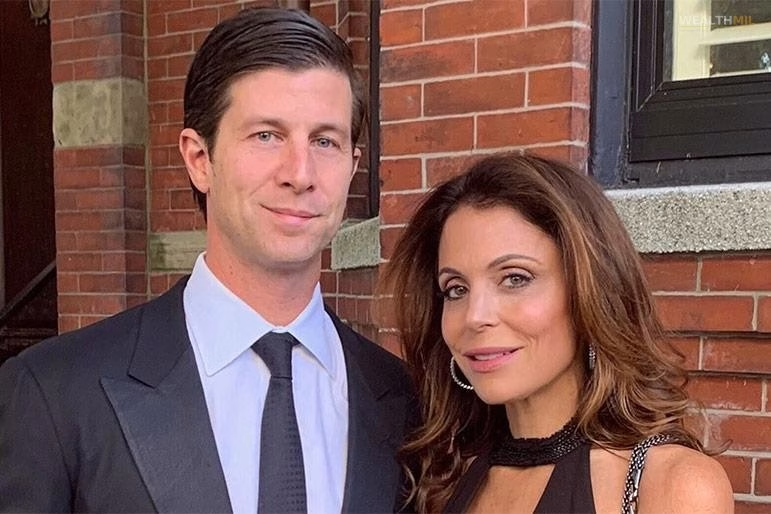
Although Bernon had already established himself professionally, mainstream public recognition increased significantly during his relationship with Bethenny Frankel. The former Real Housewives of New York City star frequently appeared alongside him in media coverage between 2018 and 2024.

Celebrity relationships often create additional visibility for business figures who otherwise operate behind the scenes. In Bernon’s case, public interest in Frankel’s personal life introduced him to a broader audience outside film and investment circles.
However, media coverage sometimes overshadowed the scale of his actual professional portfolio. While entertainment headlines focused on celebrity relationships, Bernon continued managing production projects and investment ventures across multiple industries.
Unlike reality television personalities who build brands primarily through media exposure, Bernon’s wealth appears more closely connected to ownership, investment, and financing structures. His public profile may have increased through celebrity attention, but the foundation of his net worth existed well before mainstream tabloid coverage.
The relationship also demonstrated how entertainment, entrepreneurship, and celebrity culture increasingly intersect. Bernon occupied a space between investor, producer, and public figure, giving him visibility in several industries simultaneously.
Paul Bernon’s net worth reflects diversification more than celebrity fame
One of the most important aspects of Bernon’s financial story is that his wealth appears tied primarily to diversification. His career includes independent film production, commercial real estate, venture investing, startup funding, and sports ownership. Each industry contributes differently to his financial profile.
Independent film production alone rarely guarantees long-term wealth unless producers achieve massive commercial success. Bernon’s strategy differed because he maintained parallel business operations capable of generating stability outside entertainment cycles.
Real estate likely provided foundational financial security, while venture investments created long-term growth opportunities. Film production added industry credibility and creative fulfillment, while sports ownership expanded his portfolio into another fast-growing sector.
This multi-industry approach reflects a modern version of entrepreneurship where professionals increasingly avoid relying on a single revenue stream. Bernon’s career demonstrates how blending corporate strategy with creative industries can create durable long-term financial value.
Although exact numbers vary across reports, estimates placing his net worth in the multi-million-dollar range appear consistent with the scale of his business and entertainment activities. His portfolio suggests wealth built steadily over time through ownership and strategic investment rather than overnight celebrity success.
Paul Bernon represents a different kind of Hollywood success story
Bernon’s career stands apart from traditional Hollywood narratives because he never relied entirely on acting fame, studio executive power, or blockbuster franchises. Instead, he built influence by combining independent storytelling with disciplined business expansion.
His professional identity reflects the growing overlap between entertainment and entrepreneurship. Modern producers increasingly operate as investors, brand strategists, and venture partners rather than focusing only on filmmaking. Bernon represents that shift clearly through his involvement in startups, real estate, and sports alongside film production.
At the same time, his commitment to independent cinema helped maintain artistic credibility. Projects tied to Burn Later Productions often focused on character-driven stories and festival recognition instead of purely commercial spectacle. That balance between creativity and corporate thinking became central to his reputation.
Paul Bernon’s net worth ultimately reflects more than celebrity association or entertainment headlines. It represents years of diversification across industries that reward strategic investment, networking, and long-term growth. His career demonstrates how modern entrepreneurs can successfully move between creative and corporate spaces while building financial stability in both worlds.