
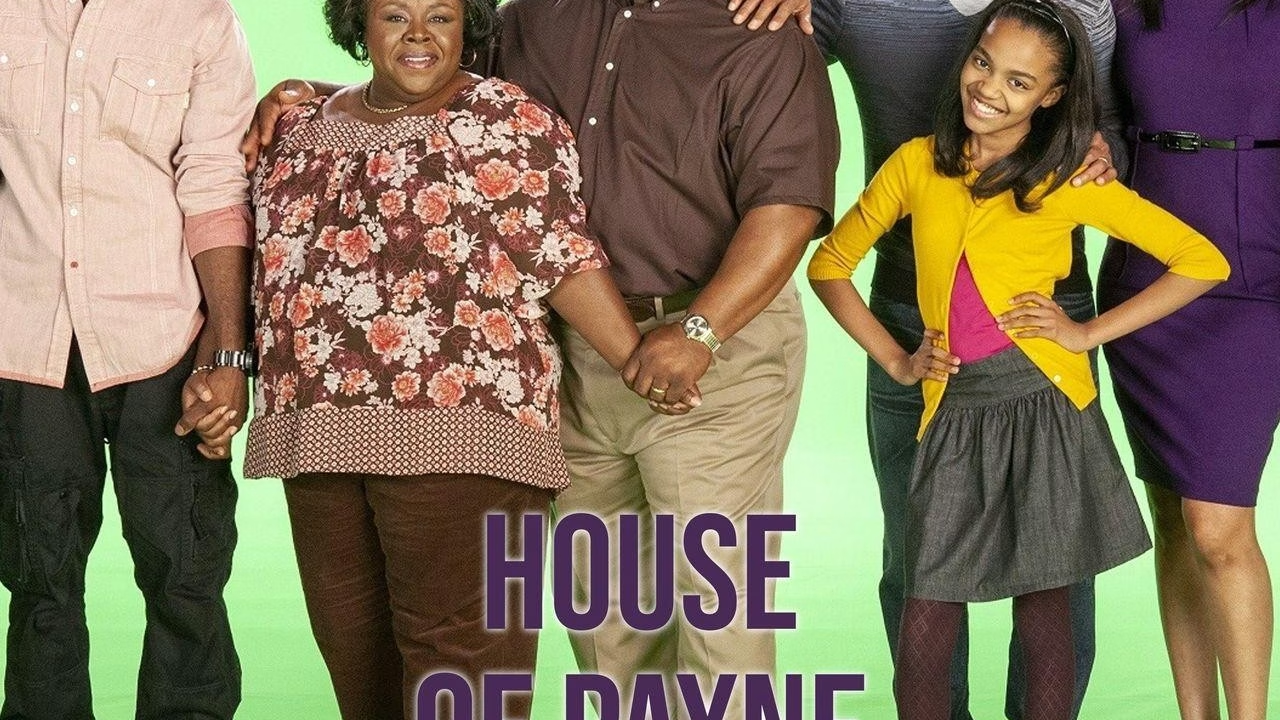
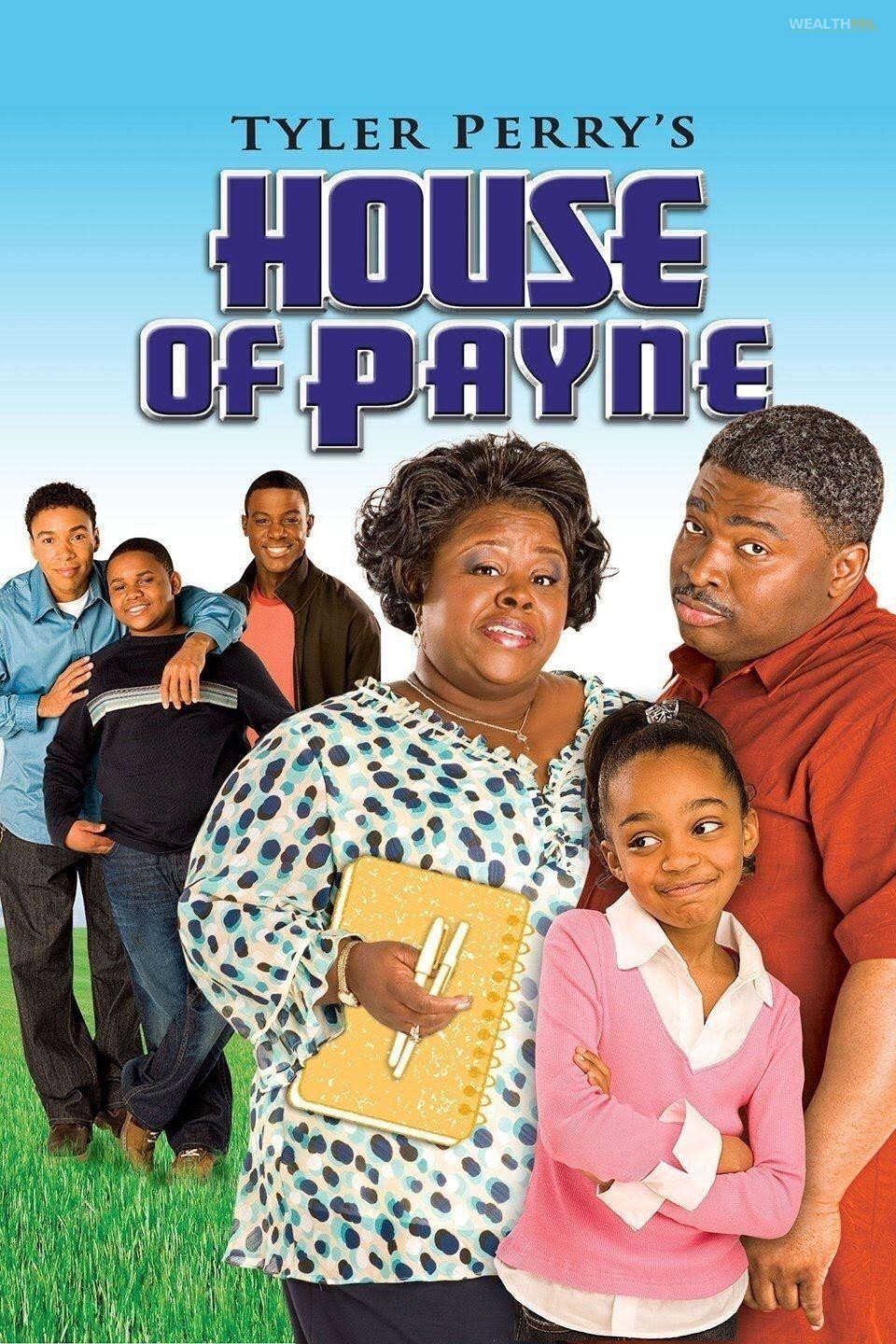
Tyler Perry’s rise in television took an unusually risky turn when Hollywood executives refused to make House of Payne on his terms. Instead of changing the sitcom to satisfy network expectations, Perry decided to finance the project himself, putting roughly $5 million into 10 episodes before he had a conventional television deal. The gamble eventually helped secure a landmark 100-episode commitment from TBS and gave Perry ownership of the series.
The decision was especially significant because Perry already had proof that his audience would support his work. His stage productions had built a dedicated following before Diary of a Mad Black Woman became a box-office success in 2005. Madea’s Family Reunion followed in 2006 and further established Perry as a filmmaker who could attract audiences without relying entirely on Hollywood’s traditional system.
Tyler Perry Walked Away When Networks Wanted a Different Show
Perry initially took House of Payne to network executives, but the proposed changes went far beyond ordinary development notes. According to the Los Angeles Times [Los Angeles Times source], executives wanted the central character changed from a firefighter and did not want longtime Perry collaborators Cassi Davis and LaVan Davis in major roles.
The network also wanted fewer religious references and additional writers involved in the project. Perry eventually summarized the situation with a blunt assessment: “They wanted a different show.” Rather than reshape the sitcom into something he did not recognize, he walked away from the traditional development process.
That decision left Perry with a difficult choice. Without a network paying for the production, he could either abandon the project or take the financial risk himself. He chose the second option.
Perry Put $5 Million Behind His Own Audience
Perry financed approximately $5 million worth of 10 completed House of Payne episodes. The strategy was unusual because these were not simply pilot episodes intended to convince executives to order a season. Perry had already produced enough material to let actual television audiences determine whether the concept worked.
Working with Debmar-Mercury, Perry placed the episodes in 10 U.S. test markets. The results quickly gave him leverage that a conventional pitch could not.
The Los Angeles Times reported that House of Payne performed at roughly twice the audience level of Seinfeld reruns in Baltimore. In New York, it also drew about twice the audience of the Bernie Mac Show episodes it replaced. In Houston, its rating was reportedly hundreds of times higher than that of The Steve Harvey Show.
Debmar-Mercury executive Ira Bernstein admitted that the results surprised him, saying Perry had demonstrated that “he knew his audience better than anybody.” That audience data transformed the project from an expensive personal gamble into a proven television property.
The Experiment Led to a 100-Episode TBS Deal
The test run helped produce one of the most unusual television deals of the period. In August 2006, TBS and Debmar-Mercury announced plans for 100 episodes of House of Payne, with the arrangement widely reported as being worth around $200 million when the broader distribution economics were considered.
The deal became associated with the 10/90 model. A distributor could test 10 episodes and, if the series performed successfully, move toward a much larger 90-episode commitment. The structure offered a faster path toward the large episode libraries traditionally needed for lucrative syndication.
More importantly for Perry, he maintained ownership of the show. Broadcasting & Cable reported that “Tyler Perry owns all the rights and we distribute it,” highlighting just how different the arrangement was from the usual creator-for-hire model.
Perry also maintained extraordinary creative control. The Los Angeles Times [Los Angeles Times premiere report] reported that TBS had no creative input into the series, while Perry directed the episodes and used a writing staff to preserve his voice.
House of Payne Proved the Gamble Was Worth It
When House of Payne premiered nationally on TBS in June 2007, the audience numbers strengthened Perry’s case. The first two episodes attracted approximately 5.2 million and 5.8 million viewers, respectively. At the time, the second episode became the most-watched original sitcom telecast in ad-supported cable history.
The series eventually reached 254 episodes, creating a substantial television library. Next TV [Next TV source] later reported that BET acquired rights to all 254 episodes in 2015.
The importance of Perry’s gamble went beyond one sitcom. His approach demonstrated that a creator with an established audience could potentially finance content independently, prove demand through targeted testing and negotiate distribution while retaining ownership. The model was subsequently used for other sitcoms, including Meet the Browns and Are We There Yet?, while Debmar-Mercury later applied a similar structure to Anger Management.
That makes House of Payne more than an early television success for Tyler Perry. It was a pivotal example of how owning the content can be as important as creating it, and Perry’s decision to risk his own money helped establish a business model that became closely associated with his name.